
“The lecturers brought everything along with them that students might need when it comes to a specialised industry.”



If you want to work in the exciting hub of ship operations, this specialised degree gives you a global perspective of managing business for international trade.
The multi-billion dollar maritime industry is the backbone of modern trade, with approximately 93,000 ships trading across the world. On this specialist degree course you will develop the essential skills and understanding for a great career – exploring everything from maritime law to insurance to logistics to ports’ environmental and economic impact.
Led by tutors with a range of academic and industry expertise, you will study the latest management and business practices and learn to apply them to this specialist industry – exploring real-world scenarios and learning to put theory into practice. You will get to grips with the complexities of the global transport trade, learn to manage the day-to-day operation of ships and ports, explore the intricate web of law, regulations and economic interests which manage the industry – and learn how to apply that knowledge to keep the industry functioning smoothly.
On graduating, you will be well placed to make an immediate contribution in the workplace, showing the in-depth knowledge, keen problem-solving and decision-making skills and hands-on attitude to deliver practical solutions to everyday management challenges.
And you will also have plenty of opportunities to develop your professional network in the industry, from working alongside students from across the globe to our maritime events and guest speakers – including Solent alumni and industry figures at every level.
Contact international admissions
Email: admissions.international@solent.ac.ukCall: +44 (0)23 8201 5066Accredited by:

Accredited by:

This course has been accredited by a professional body
If you're not quite ready for a full undergraduate degree, there's alternative entry through one of our foundation years
After successfully completing your studies, there's an opportunity to continue your studies at Solent
If you have an appropriate Level 5 qualification, you can top it up to a degree in just a year
You have the opportunity to study abroad in one of our partner universities for a semester on this course
This degree is suited to students who have an interest in the world of shipping, ports and logistics, combined with a desire to make your mark on an exciting, dynamic and essential global industry.
As a graduate you’ll have a wide range of options in the industry available to you, including port management, port agency, ship management, terminal operations and ship operations.


Hear from Solent alumni about where their careers have taken them and how studying at Solent prepared them for their future.
“The lecturers brought everything along with them that students might need when it comes to a specialised industry.”
Students are taught by academic staff from a wide range of industry backgrounds with expertise in port and ship operations, ship finance, maritime law, chartering, general management, and logistics.
The University cannot guarantee any particular members of staff will teach specific aspects of the course in the future, but will endeavour to ensure the teaching team maintains their balance of experience and qualifications.
Our vibrant campus brings state-of-the-art facilities to enhance your learning and elevate your student experience. Our award-winning teaching building, The Spark is centred around students and offers a stimulating study environment with flexible learning spaces.
Away from studying, why not try out the gyms, fitness studios and sports halls in our £28 million Sports Complex, or watch a blockbuster film at our student-run cinema with Dolby Atmos audio.
Broaden your horizons by adding an international dimension to your CV – essential to achieving success in today’s fast-changing, global environment.
Studying, working or volunteering in another country could be the experience of a lifetime. Enhance your degree by developing important global skills such as knowledge of other countries, language skills, intercultural awareness, adaptability and confidence.
For more information, please email international.mobility@solent.ac.uk.

This module will provide you with the foundation knowledge that is essential to the understanding of shipping as business. This knowledge forms the basis for understanding maritime commercial law and practice.
Develop your understanding of global trade and the relationship between supply and demand for natural resources. Explore how trade routes develop and change in response to new discoveries and socio-economic development.
Shipping is high volume industry with a need to measure cargo, fleet capacity and distances. To be prepared for this business environment, you will learn how to summarise and communicate numerical information and develop skills to deal with complex data.
This module introduces you to economics of the main maritime trades. This covers the impact of the shipping cycle and how freight markets work alongside economic theory and business practice relating to maritime industry.
Identify vessel requirements for the vast array of commodities transported by ship and consider some of the more specialised vessels that work in the industry related to the cargo they carry. Look at how changes in technology and a need for a more sustainable approach will drive change in the industry.
Gain a foundation of knowledge of the typical organisation of shipping companies, ports and other firms that enable the transportation of goods – and people – by ship. You will also look into the organisation of companies that support seaborne trade, such as shipyards, ship chandlers, brokers, insurance firms and more.
Solent’s curriculum framework builds on our unique, creative and applied approach to teaching. The transformation of students’ lives is at the heart of our mission as a university, and our curriculum – informed by the latest theory – reflects this shared educational vision.
Find out more
The student achievement team are on hand to help you succeed during your studies at Solent. They aim to contact you at key times during your time here with personalised information, advice and guidance, by email or phone.
Access Solent provides information, advice and guidance for disabled students.
All students can access Succeed@Solent, Solent's online guide to getting better grades. It offers extensive, practical information and advice on topics such as academic writing, research and presentations.
The shipping industry is directly linked to global development and the drivers of supply and demand for commodities across the world. As such, the ever-growing industry needs graduates who appreciate and understand the complexity of and interactions between ships, cargoes and ports, and can make decisions in a fast-moving world.
There are around 120 commercial cargo-handling ports in the UK. The UK ports industry is the second largest in Europe, handling over 500 million tonnes of freight each year, as well as over 60 million international and domestic passenger journeys (Maritime UK).
This course will prepare you for the fast-paced, complex work of international ports and shipping, providing you with the knowledge and confidence to make an immediate contribution to the workplace.
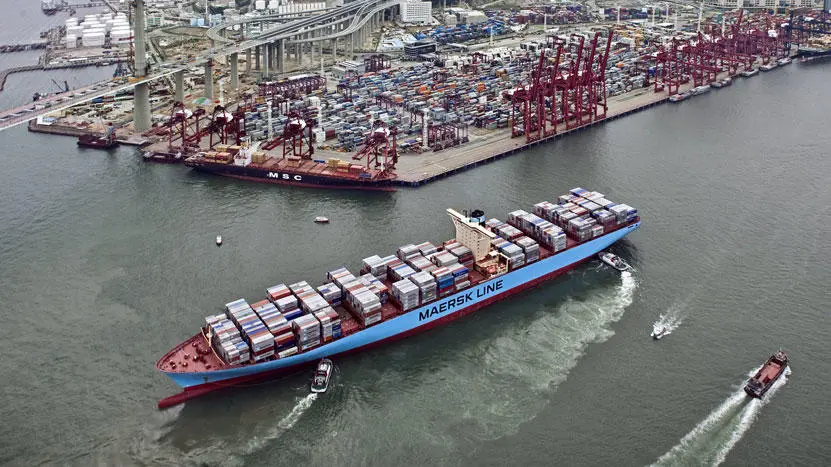
Hear from Solent alumni about where their careers have taken them and how studying at Solent prepared them for their future.
“The lecturers brought everything along with them that students might need when it comes to a specialised industry.”
The Solent Futures team is committed to getting students into great careers.
While you are studying, the team can help you with finding work experience or placements, link you with a mentor, check your CV, or offer one-to-one guidance.
If you're in your final year, we also have graduate job opportunities just for Solent graduates.

6th
UK uni for sustained employment
Longitudinal Educational Outcomes, 2022
Accredited by:
Accredited by:

Thinking about studying further than an undergraduate degree? Alumni can get 20% off their postgraduate study.

Keen to learn more about the business of maritime? With a rich blend of theoretical knowledge and practical skills, Solent’s International Maritime Business master’s programme...

Over 90 per cent of the world’s goods are transported by sea, making shipping and shipping logistics a vital part of world trade. Solent University’s international shipping and...

Is it time to take your maritime career to the next level? This two year distance learning programme is ideally suited to maritime professionals who are hoping to move into...
The tuition fees for the 2024/25 academic year are:
For further information, please visit our tuition fees page.
While most course costs are covered by your tuition fees, some essential resources and optional extras may need to be paid for separately. These additional costs are listed below. For advice on budgeting and managing your money, please contact student.funding@solent.ac.uk.
The 2024/25 other costs are:
Optional costs
Solent University offers a range of bursaries and scholarships that provide financial assistance or waive fees for tuition or accommodation. Each bursary or scholarship has specific eligibility criteria. Check out our bursaries and scholarships pages to find out more.
Cost of living support
At Solent, we understand that the cost of living crisis may be of some concern. To help, we've put together some detailed information to show what support is available and how to make your money go further.
There is no charge to attend graduation, but you will be required to pay for the rental of your academic gown (approximately £45 per graduate, depending on your award). You may also wish to purchase official photography packages, which range in price from £15 to £200+. Graduation is not compulsory, so if you prefer to have your award sent to you, there is no cost. Extra guest tickets will go on sale after results publication and will be sold on a first-come-first-served basis. The cost per ticket is currently £15. Please note, we do not guarantee there will be any extra tickets available to purchase.
Please select an option below:
As a general guide, we look for qualifications that are equivalent to the British high school A-levels.
If you are applying from outside the UK, find information about entry requirements, visas and agents for your country here.
For further information about EU qualifications, please contact admissions.
As a general guide, we look for qualifications that are equivalent to the British high school A-levels.
If you are applying from outside the UK, find information about entry requirements, visas and agents for your country here.
For further information about international qualifications, please contact admissions.
All international applicants need to be aware that the English language requirements to attend Solent University, and the English language requirements to obtain a visa from the Home Office, may be different. This means that if you meet the Solent University language requirement to gain a place on the course, you may still have to meet additional requirements to be granted with a visa by the Home Office.
We strongly advise all applicants to visit the Home Office website which outlines all the requirements for a successful visa application and to take a look at our 2023 course entry statement document.
Contact international admissions
Email: admissions.international@solent.ac.ukCall: +44 (0)23 8201 5066Full-time
Any student applying for the first year of a full-time/sandwich undergraduate course must apply through UCAS (University and Colleges Admissions Service). This includes mature, overseas and EU students.
Nearly all schools and colleges offer their students the facility of applying electronically through the UCAS website using 'Apply'; it may also be used by those applying independently in the UK and overseas. This facility and all course information can be found on the UCAS website: www.ucas.com.
Your application should reach UCAS by 31 January if you hope to enter a course the following autumn. Early application is advised for the most popular subject areas. Late applications may be made until the end of June. The UCAS Code for the University is S30, code name SOLNT.
Find out what happens after you apply
Contextual offers
Solent endeavours to offer learning opportunities to students from all backgrounds. When we receive and review an application, we take into consideration the context and personal circumstances of applicants when making a decision, which means our advertised entry tariff could be reduced.
Top-up route:
We welcome applications from students currently studying a Foundation Degree, DipHE, HNC, HND or modules of an undergraduate degree course at another university, who wish to enter directly into Years 2 or 3 of one of our undergraduate degree courses. Please contact our admissions team for more information: contact us
Applicants who do not have English as their first language will be required to demonstrate an approved level of proficiency in the use of the English language. The agreed minimum requirements for this course are:
Qualifications are checked before enrolment, and international students must bring their original certificates or certified copies when coming to study at the University.
Pre-Sessional English programme
The University also offers a pre-sessional English programme for international students who wish to improve their level of English before starting a degree course.