news
Business, marketing and events
Finding a career in PR, social media and events
University graduate, Becca Cristofaro is building her career in communications, putting her industry experience into practice.
11 November 2026
16 November 2026 • by Solent press team
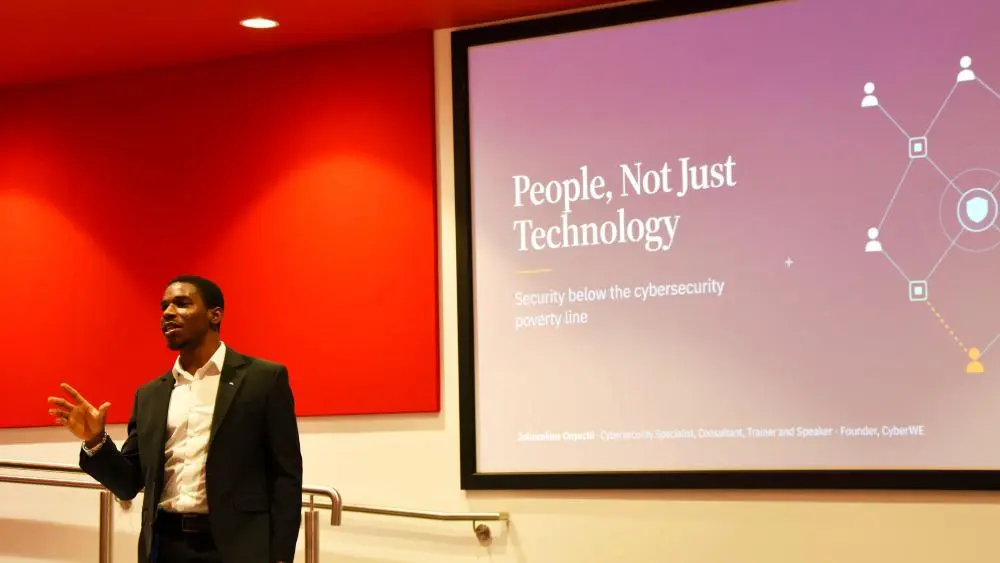
Staff and students heard from leading cybersecurity specialist Johncollins Onyechi at the University on 12 November 2026.
Hosted by Solent's Computing and AI Research Group, the guest lecture, People, Not Just Technology: Security Below the Cybersecurity Poverty Line, explored why people remain at the centre of most cyber security breaches and what organisations with limited resources can do to protect themselves.
Industry reports continue to show that human behaviour plays a key role in the majority of cyber incidents. During the session, Johncollins - a cybersecurity specialist, consultant, trainer and speaker whose work focuses on human factors and making cyber security accessible to underserved organisations - examined the growing challenges faced by charities, small businesses and care providers that hold sensitive information but often lack the resources for enterprise-level cyber protection.
Drawing on real-world examples, he looked at why these organisations are increasingly targeted by cybercriminals, and shared practical, affordable approaches to improving security.
A key message from the session was the importance of creating a culture where people feel able to report mistakes without fear of blame. Johncollins said:
"Human error is common in every organisation, and one of the most effective ways of addressing it is blame-free reporting. If someone reports an incident or a mistake, we should not blame them. We should thank them for reporting it and encourage that culture, so that when something does go wrong, the organisation hears about it early.
"What I want students to take away is that this understanding of human factors is important across the technology sector. It applies not just to cybersecurity, but to AI, networking, cloud engineering and many other areas. It’s about understanding how people respond to incidents and how we can make security work better for everyone."
Johncollins Onyechi is the founder of CyberWE, a UK cyber awareness, training and mentoring community, and volunteers with Tech She Can and Vostundu.
He is a STEM Ambassador, chaired the CyberFirst 2026 North West England Schools Competition, and was recognised in the inaugural Visibility 50 Africa list for technology and policy leadership.
The session also offered career insights for students interested in the sector, highlighting opportunities to develop skills through mentoring, volunteering and community initiatives, including CyberWE.
Frankie Deane, a student of BSc (Hons) Cyber Security course at Solent University said: "I found it really interesting that he talked about how the human factor in cybersecurity is important, but it’s also important not to blame people who unwittingly make mistakes. Creating a culture where people feel okay to report their mistakes, rather than hiding them, is important because that ultimately causes a bigger problem."
Eunice Addison Asante, a student of MSc Cyber Security course at Solent University , added: "It made me understand how much I can help in this space. I now understand that there are people who don’t have the resources to protect themselves, and I can help them with the knowledge I have, in ways that don’t cost so much money."

The talk concluded with a question-and-answer session, giving attendees the opportunity to discuss emerging cyber security challenges and developments with the speaker.
Course Leader, Prof (Assoc) Dr Shakeel Ahmad, said, “At Solent University, we are committed to ensuring our students graduate with the knowledge, confidence and industry awareness needed to succeed in their careers. Giving them access to experienced professionals like Johncollins enables students to learn from those working in the sector, gain valuable insight into real-world challenges, and better understand the career opportunities and pathways available to them. These experiences play an important role in developing both their employability and their confidence as future professionals."
AI is transforming industries at an incredible pace, shaping the future of work and everyday life. To help our students stay ahead of the curve and boost their employability, Solent University offers all students the opportunity to earn a free AI qualification alongside their course.
University graduate, Becca Cristofaro is building her career in communications, putting her industry experience into practice.
11 November 2026
Engineering apprentice puts university learning into practice at Nursling firm.
30 October 2026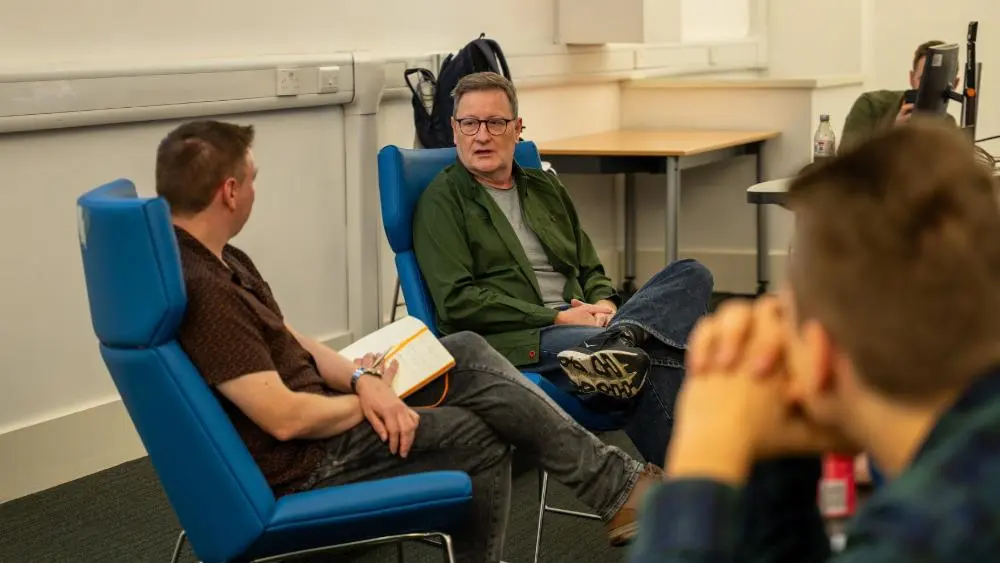
Broadchurch creator Chris Chibnall shares industry insight with Solent screen students.
28 October 2026
Students gain real-world broadcast experience delivering a live sports show to a worldwide audience.
22 October 2026