Ella Newman
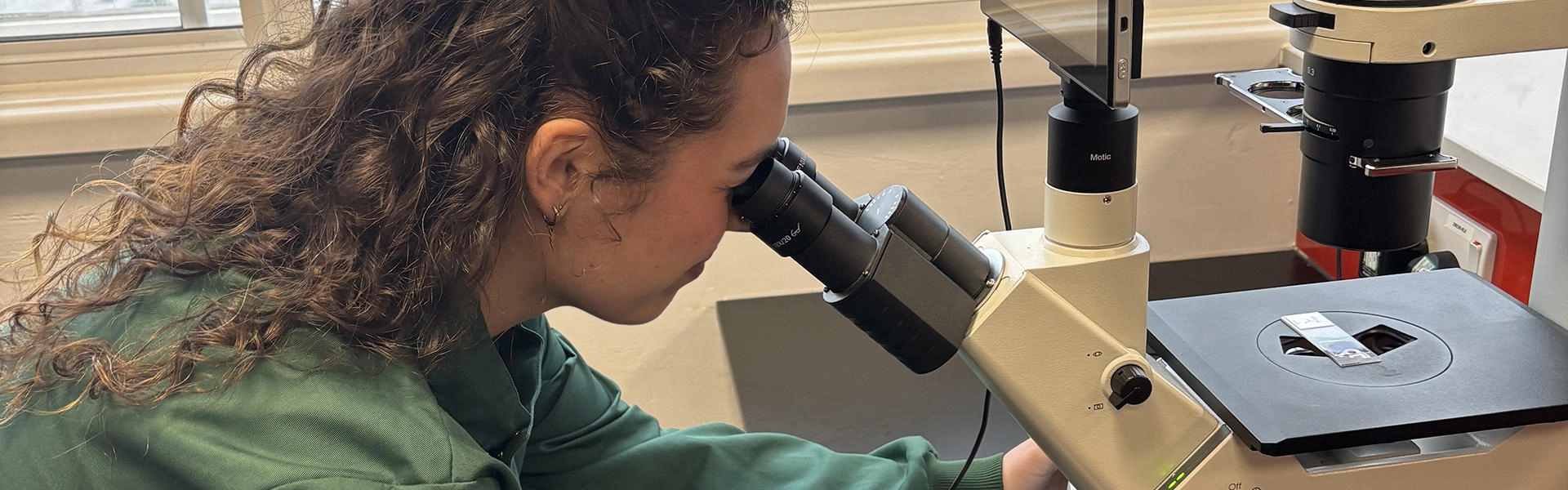
Meet Ella, the first Solent student offered a place on the NHS Scientist Training Programme, ahead of 11,000+ applicants.
Job title:Trainee Clinical Scientist in Histopathology (STP)
Employer:NHS
Studied:BSc (Hons) Biomedical Science
Tell us a little about your career so far.
My path to Solent wasn’t a straight line. I took three gap years after finishing school because I wasn’t sure what I wanted to do, and I didn’t want to rush into choosing a university or a course. At one point I was set on studying psychology but I’m very glad that didn’t happen in the end! I actually applied to Solent through clearing, so it was a fairly last-minute decision, but it turned out to be exactly the right one.
Alongside my studies I worked as a manager at Tesco for five years, and in my final year I was also employed by Solent in a lab job, so by the end of my degree I was juggling two jobs at once as well as my coursework. I got a First in the end and I think that combination of managerial experience and lab experience is exactly what the NHS Scientist Training Programme (STP) panel saw in me when I applied.
What drew you to biomedical science, and to histopathology in particular?
It really started with a week of work experience shadowing a GP neighbour of mine, just as the country was coming out of COVID. I saw first-hand the pressure the workforce was under and how much had changed with technology. During consultations I found myself far more curious about what happened after a sample was taken, where it went, what was done with it, than about the consultation itself. My dad had also been ill, and I wanted to understand how doctors arrived at a diagnosis.
Through conversations with that GP, the role of histopathologist came up, and something just clicked. I wanted to understand the “why” behind a diagnosis, not just the outcome and I found it fascinating that every clinical decision ultimately came down to a lab result. That’s where biomedical science fell into place for me.

Solent made it possible to work throughout my degree, which gave me experience and confidence outside the classroom, and my lecturers constantly flagged opportunities and encouraged me to go after them.
How did the course itself shape your interest in this specific career?
Solent brought in a lot of guest speakers, and in my second year we had a talk from someone working in recruitment for the Scientist Training Programme. It sounded incredible, but also completely out of reach, it felt like something to admire rather than actually pursue.
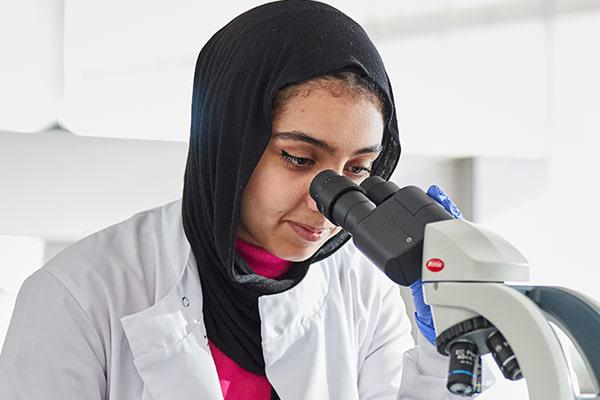
Then our year-two pathology module came round, with a strong practical element alongside the written work. We had real freedom to spend time in the lab looking at slides, and that’s when it really grabbed me, it combined my love of art and problem-solving with genuine mystery-solving. I ended up spending huge amounts of time in that lab, and even mentored a fellow student who wasn’t enjoying pathology as much; by the end he was doing really well too, which was a nice moment. Volunteering at a local pharmacy during COVID also confirmed for me that I wanted a role that helped patients, even if, like my STP role, that help happens behind the scenes rather than face-to-face.
Tell us about applying for the Scientist Training Programme – what was that process like?
Honestly, daunting. There were around 11,000 applicants nationally for just five places in my specialism, so you never quite believe it will be you. It was the only job I applied for after graduating. I put everything into it. The process moved from about 11,000 applicants down to a longlist of 3,000, and then down to interview rank 9 in the country, which felt completely unreal.
My lecturers were incredible throughout. Dr Jamil Jubrail helped me get my application into the right style and content, and both he and Aref Kyyaly ran a mock interview with me that set me up well, even though they obviously didn’t know the real questions in advance. On the morning of the interview itself I was so nervous. I’d never had a formal academic interview before, and Aref sat with me and talked me through it. Our lab technician, Mikaela Lee, was another huge support. Honestly, the whole biomedical science team at Solent were fantastic, from encouragement to practical advice.
You never think numbers like 11,000 could ever be you. Just apply. What’s the worst that can happen?
What will your day-to-day look like once you start?
It’s a three-year programme based in Southampton, with a part-time funded master’s degree. The first part is a structured, roughly three-month rotation through different specialisms, cytology, genetics, dissection and more, where I’ll need to meet set criteria in each area before moving on.
My job involves seeing a specimen through from receipt to reporting, dissecting samples, working through diagnostic processes, and eventually moving into more senior work such as lab management, expert reporting, and looking down the microscope myself to help reach a diagnosis. I’ll also sit in on multidisciplinary team meetings where patient diagnoses and next steps are discussed.
Do you feel Solent set you up for the Industry?
Completely. The practical, lab-based learning set Solent apart for me compared with other universities, and it’s where I learned best. My dissertation and viva were brilliant preparation too. Going back through old student protocols to troubleshoot problems, then standing up and defending my work under pressure, taught me skills you simply don’t get from a textbook.
What tips would you give someone hoping to follow a similar path?
Be proactive. Opportunities don’t just land in your lap, you have to go and find them. I sought out work experience and shadowing even before I knew what I wanted to specialise in and just apply, even if the odds look impossible. I told myself this was probably never going to happen, right up until it did. What’s the worst that can happen, they say no? Solent gave me the confidence to believe I was already becoming a scientist, not just studying to be one.
Start making your own waves
Course studied
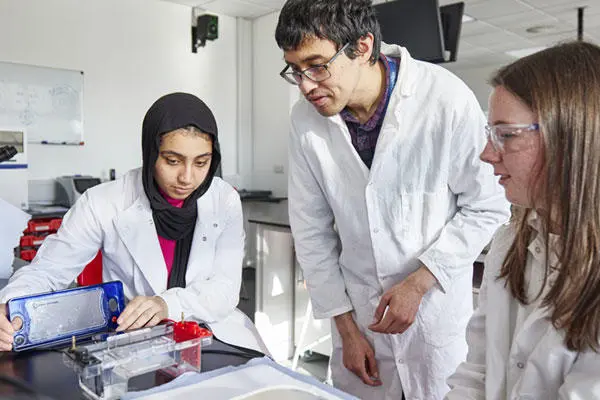
BSc (Hons) Applied Biomedical Science Apprenticeship
Gain the critical academic and clinical skills to progress through your biomedical science career.
Find out more