George Hammerton
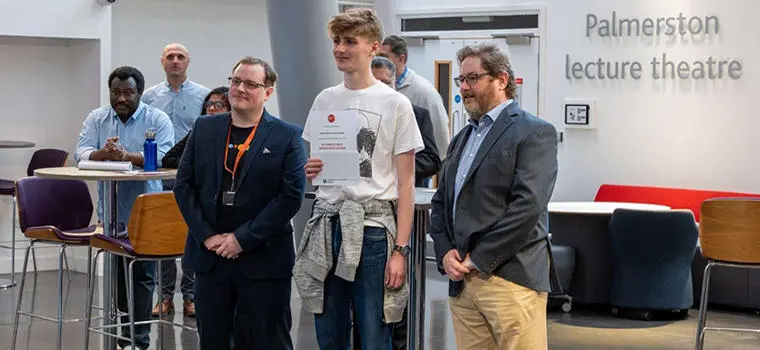
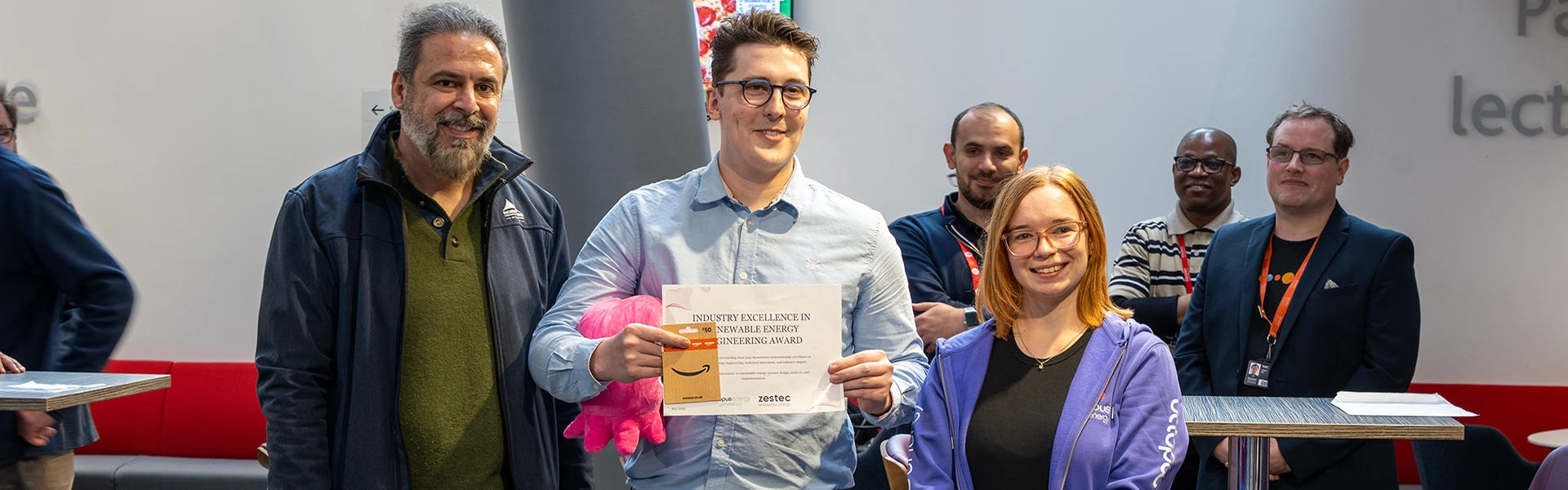
Industry Excellence in Renewable Energy Engineering Prize winner for his work on solar PV and storage to cut diesel use on Isles of Scilly.
Job title:Graduate
Studied:BEng (Hons) Renewable Energy Engineering
From the shop floor to clean energy, tell us about your career so far.
My career started in practical engineering. I completed a mechanical engineering apprenticeship, working in precision manufacturing for aerospace, motorsport and energy, building strong foundations in design, CAD and problem-solving.
I later worked at Centrax on gas turbine systems, including Siemens and Rolls-Royce technology, gaining exposure to hydrogen-blended fuel systems. I've also worked on battery assembly, solar PV design and energy efficiency projects, moving steadily from general engineering into renewable energy and low-carbon infrastructure.
So, what does your day-to-day look like right now?
I've just graduated from Solent with a First-Class degree, and I'm preparing to start an MSc in Sustainable Energy Technologies at the University of Southampton this September. Right now, my days involve building technical knowledge, reviewing energy-system concepts, and thinking about how my final-year project could evolve into future research and career opportunities. It's an exciting bridge between finishing one chapter and starting the next.
Is the renewable energy industry what you expected?
It's exciting because it sits at the centre of some of the biggest challenges we face: climate change, energy security and grid reliability. One thing I've learned is that renewable energy isn't just about building more generation; it's about storing, moving, controlling and using energy efficiently too. That complexity is exactly what makes the industry so interesting to me


Solent felt like a place where I could build on my hands-on background rather than leave it behind. The course gave me the opportunity to connect practical engineering experience with academic study and develop a clearer direction in renewable energy systems.
What's got you genuinely excited for what's next?
I'm preparing for my MSc, where I'll explore intelligent optimisation of renewable energy systems, especially utility-scale solar and energy storage. I want to build on my Solent dissertation by investigating how AI and real-time data could help coordinate generation, storage and demand more effectively. The idea of solar farms, batteries and grids working together as one intelligent network to support net zero genuinely excites me.
Did you take the traditional route into university?
Not at all — mine was a practical route. I started in engineering at college, then completed a mechanical engineering apprenticeship, gaining hands-on experience across aerospace, motorsport and energy sectors. After a few years in industry, I wanted to specialise in the clean energy transition, which led me to Solent. My advice to my younger self: every stage contributes to the bigger picture, even when the path isn't fully clear yet.
Why did Solent stand out to you?
I chose Solent because the course closely matched where I wanted to take my career. I was looking for something that connected practical engineering with real energy challenges — solar, wind, storage, power systems and sustainability — all in one place. It felt like the right fit for someone who wanted theory and real-world application working together, rather than just one or the other.

I am very grateful for my time at Solent. The degree helped me turn a practical engineering background into a clear direction in renewable energy, and my final-year project gave me the opportunity to explore a real challenge in the transition to net zero.
What made your lecturers stand out?
Their approachability stood out most, along with how well they supported students from different backgrounds and interests. I valued being able to shape my own direction within renewable energy, especially during my dissertation. Their guidance helped me turn a broad interest in solar and battery storage into a focused, high-quality project on reliability and resilience. This support made a real difference to my final results.
What were the facilities like?
The facilities really helped bring engineering theory to life. Having access to practical spaces, software, laboratories and project resources made it easier to connect what I was learning to real systems. The modelling tools and engineering software were especially valuable. My final-year project involved solar PV simulation and an 8,760-hour dispatch model, so having the right digital tools and academic support mattered enormously.
Did your degree actually prepare you for the industry?
Yes, completely. It helped me understand renewable energy not as isolated technologies, but as part of bigger energy systems, covering solar PV, wind, storage, power distribution and sustainability. It also built my confidence in technical modelling, report writing, presentations and project management, skills that matter just as much in industry as technical knowledge, especially when projects need to be realistic and environmentally sound.
Did Solent support you when you needed it most?
Definitely, especially during my final-year project. My lecturers helped me refine the scope of my dissertation, keep it realistic, and focus on the most important engineering questions. That support helped me produce something I was genuinely proud of and gave me real confidence in tackling complex renewable energy problems. The learning resources and industry-connected projects made the experience feel genuinely valuable throughout.
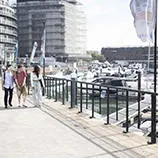
Southampton's perfect for studying engineering and renewable energy — a student-friendly city with the coast and green spaces nearby, strong links to the maritime, transport and sustainability sectors, and everything close enough to make student life effortless.
What's your top tip for anyone wanting to break into renewable energy?
Stay curious and build both practical and analytical skills. This industry needs people who understand technology and can think in systems. Learn the fundamentals: electrical and mechanical systems, storage, data and project management. And remember, you don't need a perfect route mapped out from day one. Apprenticeships, college, work experience, any starting point can lead into energy, as long as you keep moving forward.
Start making your own waves
Course studied
FdEng Renewable Energy Engineering
Find out more
HNC Renewable Energy Engineering
Find out more
MEng Renewable Energy Engineering
Find out more