news
General
Erasmus Charter to expand international opportunities
Solent has awarded the Erasmus Charter for Higher Education, opening exciting opportunities for staff and students.
30 September 2026
24 June 2026
A Southampton Solent University student has produced a bold, research-led design response to one of the most pressing challenges facing the justice system, one that could reshape how we think about incarceration.
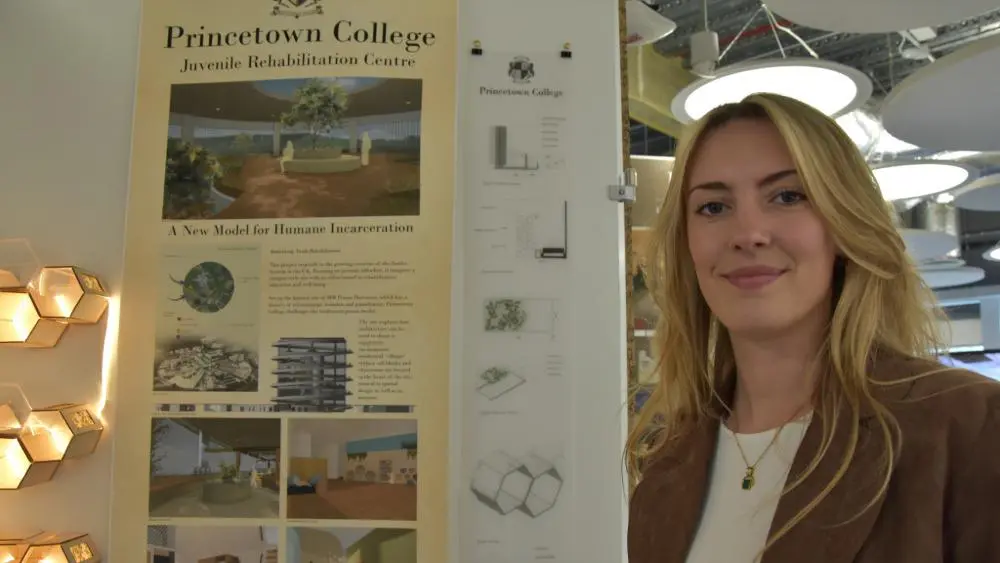
Harriette Rossall, a final-year BA (Hons) Interior Design Architecture student, has developed Beyond Punishment: Designing a Humane Model for Incarceration, a Final Major Project that transforms the historic site of H.M. Prison Dartmoor into a rehabilitation-focused juvenile campus inspired by Norwegian prison philosophy, with humanity at its heart.
The UK justice system is under enormous pressure, with overcrowded facilities, high reoffending rates and a rising prison population prompting widespread calls for reform.
"I believe our society is stuck in the past," Harriette says. "When we think of prisons, we imagine dark, cold cells with little inspiration. If we created a place where the purpose changed from punishment to education, we would not be turning out as many reoffenders."
Inspired by the Norwegian model, widely regarded as among the most humane in the world, Harriette's design replaces the imposing cell blocks of Dartmoor with an open, campus-style network of buildings.
Set across the remote moorland site, the proposal includes educational facilities, counselling spaces, sensory rooms, family visiting areas and modular accommodation for up to 200 young people aged 10 to 17.
Reports from the Institute for Government, World Health Organisation briefings on prison mental health and academic essays examining trauma, deprivation and incarceration all informed the project before a single design decision was made.
Harriette found that traditional custodial environments frequently worsen the very behaviours they aim to correct, with young people particularly vulnerable to negative peer influence and the psychological damage of institutional living.
Her response was to design around wellbeing, prioritising counselling rooms, sensory spaces and family rooms. the residential villages, grouped by age and inspired by the geometry of the honeycomb, are designed to feel communal rather than carceral.
Harriette graduates this summer with a portfolio that demonstrates exactly what Solent's approach to education is designed to produce. By placing real-world research, industry-relevant skills and genuine social impact at the heart of her degree, she leaves university not just with a qualification but with work that speaks directly to one of the most contested debates in public policy.
Solent has awarded the Erasmus Charter for Higher Education, opening exciting opportunities for staff and students.
30 September 2026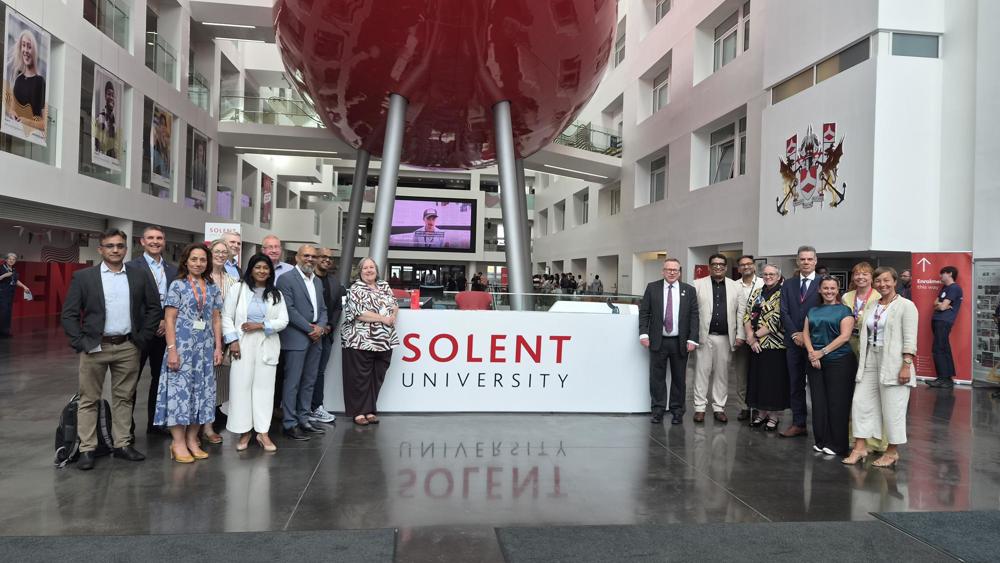
Exeed College and Solent agree partnership to deliver degrees across the Middle East
29 September 2026
Interior Design at Solent has been ranked eighth in the UK in the Guardian Good University Guide 2027
17 September 2026
Southampton Solent University's BA (Hons) Architectural Design & Technology course has been ranked 15th out of 57 institutions.
15 September 2026