news
General
Erasmus Charter to expand international opportunities
Solent has awarded the Erasmus Charter for Higher Education, opening exciting opportunities for staff and students.
30 September 2026

15 June 2026
A final-year Architectural Design and Technology student at Southampton Solent University has proposed a creative campus and retreat designed to support the mental health and wellbeing of musicians, artists and creatives.
Harry Sharp's Final Major Project, Serenity Studios, puts forward a retreat in North Somerset designed for musicians, artists and creatives, combining professional studio spaces with calm zones, residential pods, social areas and strong connections to the surrounding landscape. For Harry, the project is deeply personal:
"As someone with dyslexia and ADHD, my mind is constantly moving. It makes me a highly creative person, allowing me to pour my energy into everything from architectural design to character art and songwriting. But that level of creativity is a double-edged sword - it is a great talent, but it can also be a heavy burden," he says.
"We often romanticise the trope of the 'tortured artist', but studies show that artists are facing a severe mental health crisis, battling burnout, depression, and anxiety. Serenity Studios was born out of my own experiences and these alarming industry statistics. I wanted to design a sanctuary that proves you do not need to suffer to create great art."
The design responds directly to the pressures facing people working in the music and creative industries, where anxiety, depression, burnout and financial stress are widely documented.


Architecturally, the project is rooted in its semi-rural setting. Blue Lias stone, exposed Glulam timber, large areas of glazing, green roofs and sheltered outdoor spaces come together to create a warm, grounded and restorative environment.
The layout steps down into the valley, using the landscape as both a visual and acoustic buffer, drawing users from active communal spaces into quieter areas for recording, focused work and rest.
The design also considers neurodiversity throughout, with adjustable lighting, acoustic control, sensory comfort and a variety of environments giving users a choice over how and where they work.
"By stepping away from high-pressure urban studios and using biophilic design to bring natural daylight, timber, and the Somerset landscape into the recording environment, we can build spaces that protect an artist's mental health just as much as they inspire their work," Harry adds.
Studying Architectural Design and Technology at Solent has given Harry the technical skills and creative confidence to tackle complex, real-world design challenges, combining tools including Revit and AutoCAD with a human-centred approach that puts people and their wellbeing at the heart of every decision.
“Harry stands out as a highly creative student with an exceptional eye for architectural design, proportions, and sympathetic material combinations that settle effortlessly into their surroundings. His appreciation of designing buildings into the surrounding context has grown remarkably through his time studying on the architecture course at Solent University,” says Matt Swan, Lecturer Architectural Technology. “His development reflects his abilities and desire with talent being sharpened by thoughtful teaching and a culture of experimentation.”
Architectural Design and Technology at Solent University combines creative design thinking with technical expertise, preparing students for careers across the built environment. By placing employability, adaptability and real-world experience at the heart of every degree, Southampton Solent University is positioning itself at the forefront of a new model of higher education, one that puts students' futures first.
Find out more about Solent’s architecture courses here.
Solent has awarded the Erasmus Charter for Higher Education, opening exciting opportunities for staff and students.
30 September 2026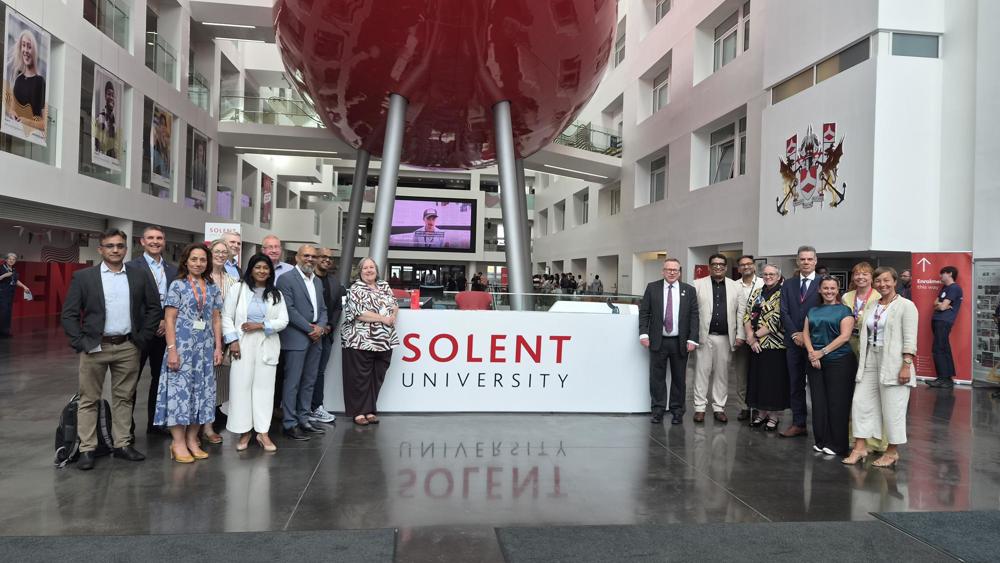
Exeed College and Solent agree partnership to deliver degrees across the Middle East
29 September 2026
Interior Design at Solent has been ranked eighth in the UK in the Guardian Good University Guide 2027
17 September 2026
Southampton Solent University's BA (Hons) Architectural Design & Technology course has been ranked 15th out of 57 institutions.
15 September 2026