
BA (Hons)Music Performance and Production
Apply through Clearing
- 2026
- 2027
Why study a music performance and production degree at Solent University
Play and produce your tracks. Combining performance techniques and studio recording skills, using digital and analogue studios, this degree is ideal to help launch your career in the music industry.
- 0rdin the UK for student satisfaction in music studies, out of 79 institutions (CUG 2026)
- Top0%of UK unis for teaching quality, out of 130 institutions (Times Good University Guide 2026)
- 0%positivity measure for learning resources in the subject of music (NSS 2025)
- Solent is one of the largest Pro Tools Training Locations in the UK. You'll have the opportunity to gain additional training in Pro Tools software.
- Students can experience mixing in Dolby Atmos, the leading immersive audio format. Solent is also an Academic Partner of Dolby Institute, meaning students have the opportunity to showcase their Dolby Atmos mixing work on the Dolby website, and access Dolby training materials.
- Learn from an enthusiastic and dedicated team of professional producers, composers, musicians, sound engineers and DJs with a wealth of international industry experience.
- Solent is home to industry-standard facilities, including multiple recording studios and a fully accredited Dolby Atmos cinema.
- Access an extensive collection of musical instruments, high end microphones, pro tools and logic digital editing workstations, analogue processing, synthesisers and live sound mixers include Allen and Heath.
- Get work experience at festivals and recording opportunity at Abbey Road.
Any questions?
Contact international admissions
Email: Call:Course overview
Solent’s music performance and production programme offers a broad range of creative and technical learning in music and production carefully balanced with the acquisition of academic skills involving research and critical thinking. Students will gain experience both specific to the music industry and relevant to other careers.
The course features extensive study of the music industry including copyright, contract law and career pathways. Students are also expected to develop transferable skills in research, IT, presentation, teamwork, creative thinking, communication and project management.
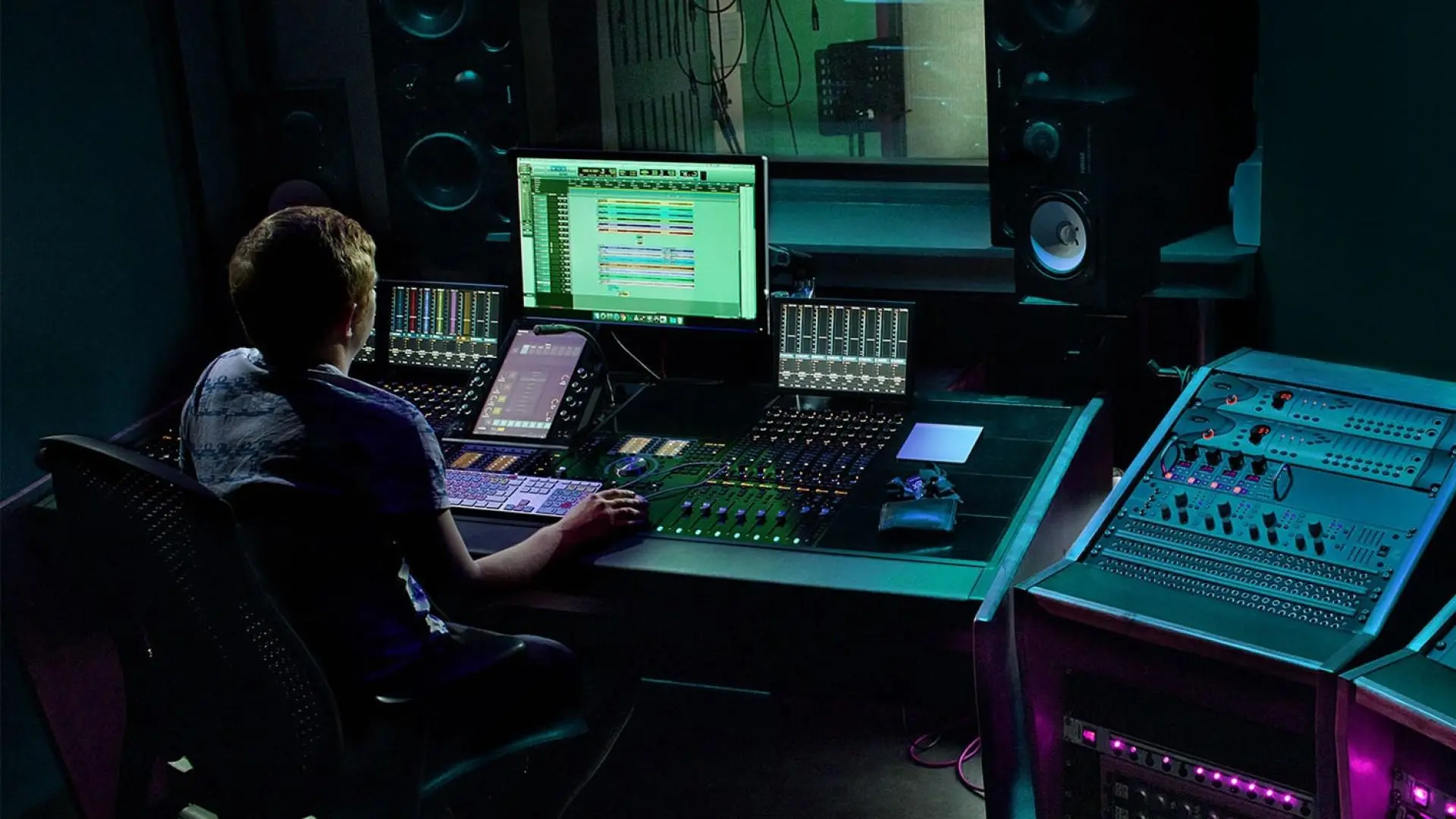
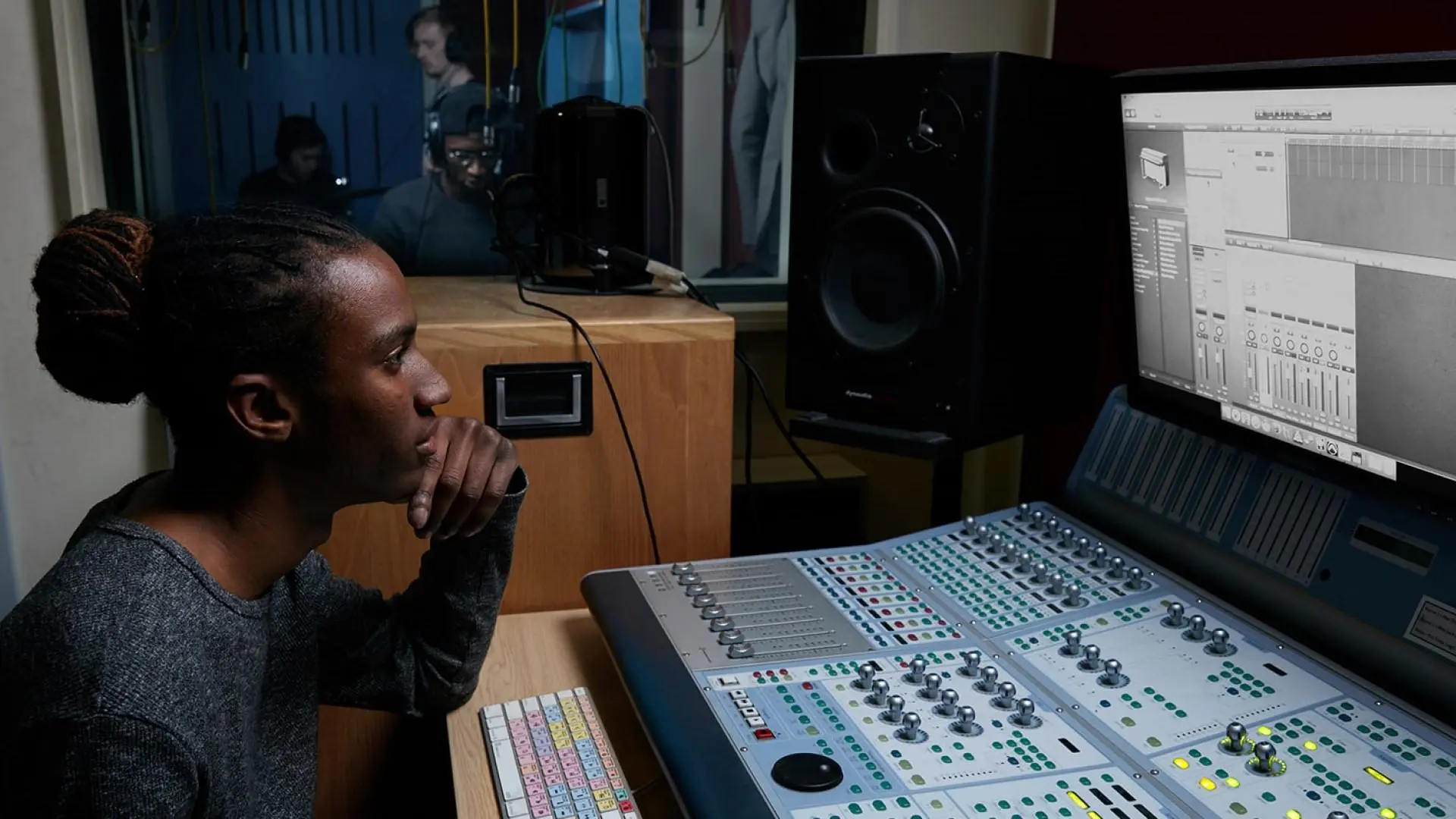
Student learning is aided by access to our industry standard facilities. These include nine recording studios (networked with Protools Ultimate, Ableton and Logic Pro), a range of mixing workstations, and a Production Lab with 24 Apple workstations. You’ll also have access to large rehearsal rooms fully equipped with backline and PAs.
The curriculum is delivered by an experienced and dedicated course team, many of whom are active industry experts with professional experience in performance, studio and live sound, electronic sound design and the business and culture of music production. Staff frequently engage with on-going research in music composition, performance and production. The team’s industry links also enable a handpicked selection of students to record at the world renowned Abbey Road Studios. Students also have the opportunity to take part in the annual Anthems event, performing to their peers and members of the public.
If you’re looking to study our BA (Hons) Music Performance and Production degree but don’t have the relevant qualifications or experience, the music foundation year will help you develop the core skills and knowledge to progress. Find out more about the music foundation year.

Who is this course for?
This course is suitable for both schooled and self-taught musicians and producers who are passionate about developing their creative, technical and academic skills.
What does this course lead to?
Graduates from this course have gone on to work in diverse areas such as professional performance, songwriting, artist development, live sound, online mixing, sound engineering, teaching and technical support.
Meet the team
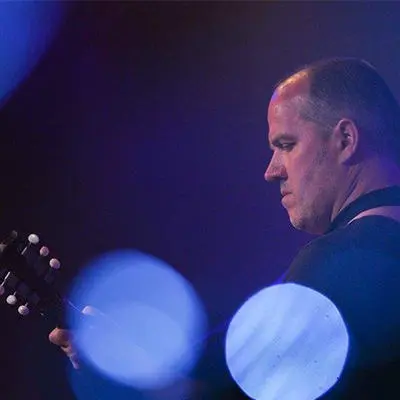
Patrick Ainsworth
Course Leader

Toni Diaz
Senior Lecturer
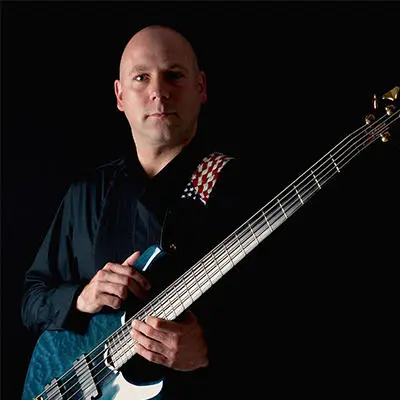
Greg Mudd
Senior Lecturer

Andy Harris
Lecturer
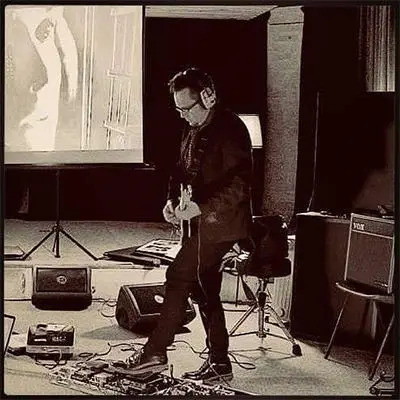
Daniel Pennie
Senior Lecturer
Matt Brombley
Lecturer

Colin Willsher
Associate Lecturer

Alex Diaz
Associate Lecturer

Brendan Johnson
Associate Lecturer
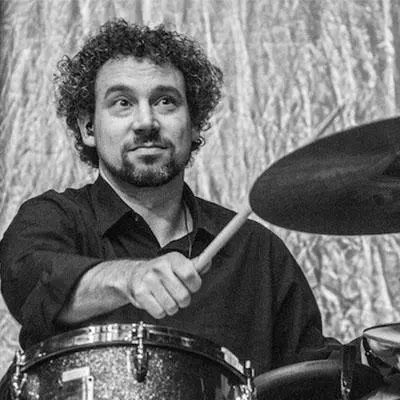
Ted Carrasco
Associate Lecturer

Paul Statham
Associate Lecturer
The University cannot guarantee any particular members of staff will teach specific aspects of the course in the future, but will endeavour to ensure the teaching team maintains their balance of experience and qualifications.
Facilities
Workshops take place in our nine recording studios, including Pro Tools Ultimate, Logic and Ableton digital audio workstations; microphones by Neumann, Coles, AKG and Shure; analogue processing includes Neve, Universal Audio, Focusrite, Empirical Labs, and Portico; software includes Native Instruments Komplete, and Plugins by Sonnox, McDSP and Celemony.
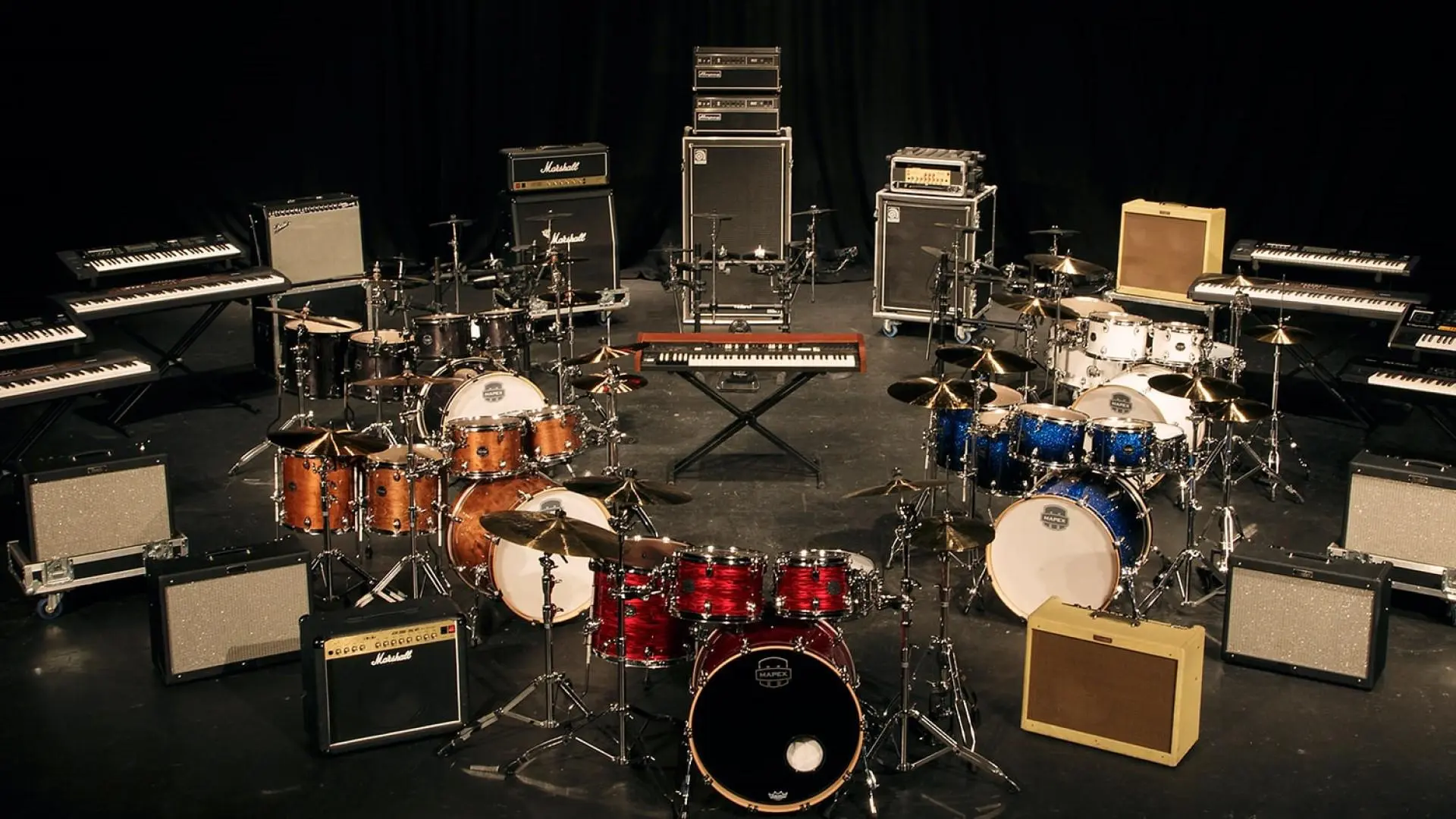
Instruments provided include drums by DW and Mapex, Synthesiser collection including moog, Roland,ARP, Arturia and Sequential analog synthesisers, Korg Kronos, Marshall, Orange, Friedman, Fender and Vox valve guitar amplifiers, Ampeg and Eden bass amps. Live sound training includes digital mixers from DLive, and Midas, point source and line array speaker systems. All students also have free access to over 100 microphones, as well as Zoom portable recorders and DSLR cameras. Some microphones are available for take-home use.


International opportunities
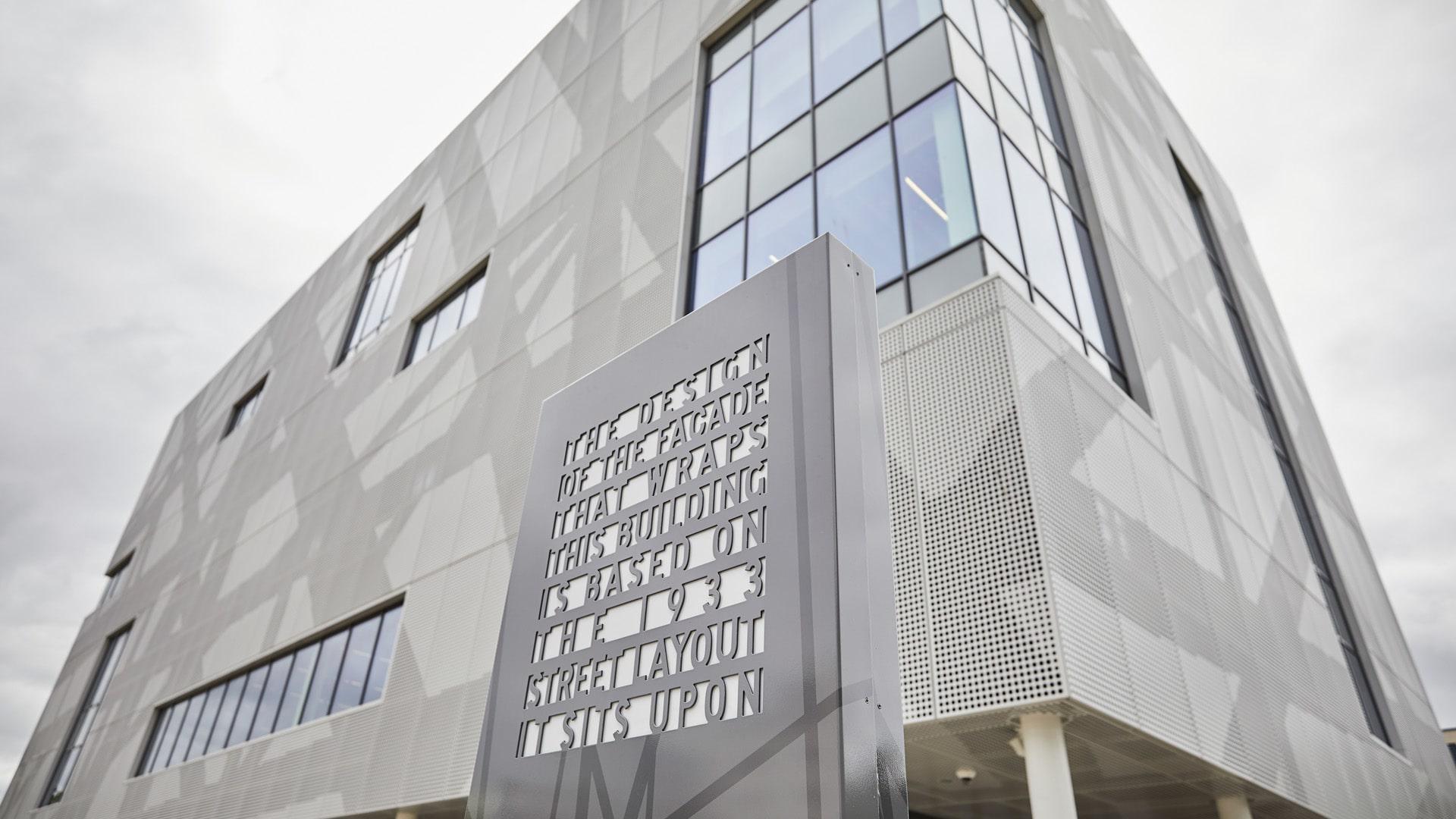
Broaden your horizons by adding an international dimension to your CV – essential to achieving success in today’s fast-changing, global environment.
Studying, working or volunteering in another country could be the experience of a lifetime. Enhance your degree by developing important global skills such as knowledge of other countries, language skills, intercultural awareness, adaptability and confidence.
For more information, please email international.mobility@solent.ac.uk.

What you'll study
Core modules
Principles of Popular Music
During this module, you'll learn how to practise and rehearse efficiently in both solo and ensemble contexts and/or you'll be introduced to multitrack music recording and mixing techniques.
Introduction to Artist Development
The music industry is fiercely competitive; artists and producers need to be committed to their own creativity and innovation in order to be successful. In this module, you'll learn and develop performance and/or production skills and implement these in practical projects, as well as begin to plan your portfolio career options.
Introduction to Professional Musicianship
In this module, you'll learn how to curate, rehearse and perform in an outward-facing professional quality performance and to manage all aspects of a real-world studio session. In addition, you'll be introduced to the theoretical aspects of music required for professional performers and producers.
Live Performance and Electronic Press Kit
In this module, you'll research and create the materials best suited to promote yourself as a creative artist. You will also curate a professional quality set of musical material - prepared using efficient rehearsal techniques and demonstrating the performance required for an outward facing performance. The material you produce can be used to inform your electronic press kit and/or online presence.
Core modules
Developing Your Career
This module focuses on the development of your performance and/or production skills with a greater emphasis on reflective practice. You'll also be encouraged to research potential income streams through investigations and case studies.
Developing Your Professional Musicianship
This module focuses on the development of your journey as a professional musician and/or producer. You'll learn how to put a band together and perform in an outward-facing professional quality performance. You'll also learn how to conduct yourself in a professional manner in the recording studio. In addition, you will identify and evaluate your current skills and link these to potential income streams and creating your networks, with a view to begin working in the music industries before you finish your university studies.
Commercial Music Making
This module encourages you to explore individual and group music making while considering the commercial functionality and potential of your outputs. Through creative workshops involving composition, arranging techniques, case studies, song analysis, song writing and associated recording/production and/or performance techniques, you will work with existing music and/or create original music.
Songs and Sonic Exploration
This module explores the links between contemporary songwriting, sound design, and sonic experimentation. Interrelationships between music, sound and image are examined and established techniques are combined with emerging practices and tropes in the creation of a portfolio of music and sound artefacts.
Core modules
Artist Development
As you prepare for life beyond university, it is essential that you continue the alignment of your practical music skills and artistic identity with potential portfolio careers. During this module, you will study and practise musical skills with tutor guidance in order to be able to make music in a variety of styles and create your own musical pathways.
Major Research Project
You will undertake a sustained piece of academic or business research relevant to your subject specialism - completing either a dissertation, a practical project, or a consultancy project, with guidance provided by the teaching team. The project will demonstrate your critical analytical skills, your ability to work autonomously on a large-scale project, and your ability to communicate your work in line with academic and/or professional expectations.
Live Project Brief
Freelance and collaborative work forms the basis of much of our industry, yet many clients are reluctant to take a chance on new sound engineers, producers or partnerships. This module helps you grow your network of clients and collaborators by engaging in an outward facing project as a first step in building your portfolio of clients.
Advanced Music Performance and Production
This module brings builds on all your previous skills development. You'll be introducted to advanced styles of critique, enquiry and analysis, and the meanings of ‘advanced performance’ and 'advanced production' are further unpicked. You'll be encouraged to use the studio as a creative tool for music making and you will workshop material in front of your tutors and peers in preparation for a final assessed performance.
Any questions?
Contact international admissions
Email: Call:Block teaching at Solent
You will learn by:
You may be assessed at the end of each block by:
- Recordings
- Individual presentations
- Written assessments
- Live performances
- Blogs
- Video production
As part of this course, you will study one module at a time, giving you the chance to build a deeper understanding and see the results of your hard work more quickly. With regular assessments and feedback, rather than exams all at once, you’ll also benefit from improved focus, and a more manageable workload.
Learn more about block teaching
Study support
The student achievement team are on hand to help you succeed during your studies at Solent. They aim to contact you at key times during your time here with personalised information, advice and guidance, by email or phone.
The disability advice team provides information, advice and guidance for disabled students.
All students can access Succeed@Solent, Solent's online guide to getting better grades. It offers extensive, practical information and advice on topics such as academic writing, research and presentations.
Why choose a career in music performance and production
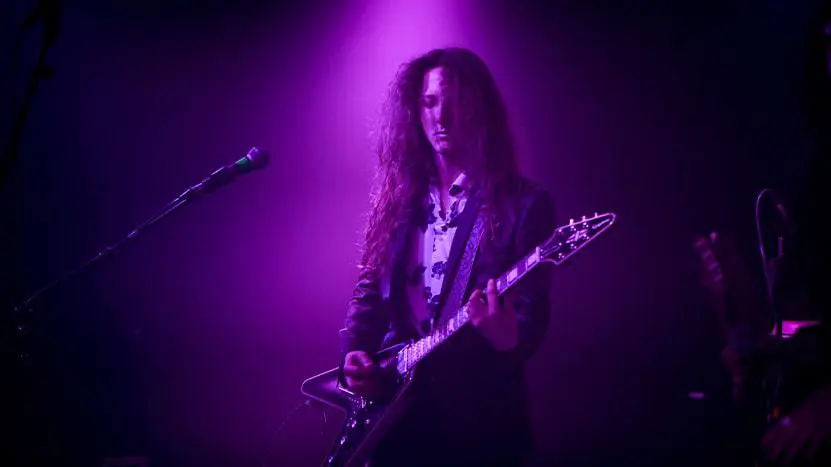
The growth in the range of media outlets and the live event sector means that the best sound and music professionals are in demand. In addition, the entrepreneurial nature of the industry means that there are opportunities to be created if you have the drive and skills. This course gives you a chance to begin building your networks of contacts and practice your skills so you can pursue the wide and varied career opportunities in music performance and production.
Upon graduation you'll be well placed to work in a variety of roles including music performer, music producer, session musician, songwriter, live sound engineer, or mix engineer.
You could earn:
Sound engineer
Starting salary: £25,000 approx.
More experienced sound engineers can expect to earn between £25,000 and £50,000. Engineers working with very successful artists may command higher salaries.
Music producer
Per hour: £25 to £55
Most music producers work on an hourly basis, with fees starting at around £25 to £55 per hour. Experienced music producers can charge up to £200 per hour, depending on their previous work and level of skill. If you're a music producer on live events, salaries may be more fixed. The BBC, for example, employs producers on its music programmes and live events. An entry level salary for this kind of role ranges from approximately £18,000 to £25,000.
Musician
Per session: £140 to £180
Income will vary widely depending on, for example, whether you're working freelance or as part of an orchestra, or whether you're performing a gig in a pub or in a concert venue. Musicians' Union (MU) provides minimum casual stage rates for groups performing on stage (usually in a theatre or concert venue) ranging from £164 to £182.75 (for a single performance plus rehearsal on the same day), as well as a national gig rate for groups performing in pubs, clubs and functions ranging from £139.50 to £186.
The stated salaries are published on prospects.ac.uk.
Solent Careers
The Solent Careers team is committed to getting students into great careers.
While you are studying, the team can help you with finding work experience or placements, link you with a mentor, check your CV, or offer one-to-one guidance.
We also have graduate job opportunities just for Solent graduates.

Top 25%
of UK unis for sustained employment
Longitudinal Educational Outcomes, 2025
Certificate in Practical Artificial Intelligence
Every student at Solent University will also have the option to study an additional Certificate in Practical Artificial Intelligence qualification alongside their course. Free of charge, the course ensures you'll be prepared for a fantastic and varied career after graduation.

Tuition fees
The tuition fees for the 2026/27 academic year are:
- UK, ROI, EU (settled status) and Channel Island full-time fees: £9,790 per year
- International full-time fees: £19,081 per year
For further information, please visit our tuition fees page.
Extra course costs
While most course costs are covered by your tuition fees, some essential resources and optional extras may need to be paid for separately. These additional costs are listed below. For advice on budgeting and managing your money, please contact student.funding@solent.ac.uk.
The additional costs for this academic year are not yet available. For guidance, previous additional costs have been:
Compulsory costs
- You will be required to purchase a pair of good quality headphones, which cost between £40 and £150.
Optional costs
- Optional trips to music performances are based on ticket prices and current transport costs.
Bursaries, scholarships and financial support
Solent University offers a range of bursaries and scholarships that provide financial assistance or waive fees for tuition or accommodation. Each bursary or scholarship has specific eligibility criteria. Check out our bursaries and scholarships pages to find out more.
Cost of living support
At Solent, we understand that the cost of living crisis may be of some concern. To help, we've put together some detailed information to show what support is available and how to make your money go further.
Graduation costs
There is no charge to attend graduation, but you will be required to pay for the rental of your academic gown (approximately £45 per graduate, depending on your award). You may also wish to purchase official photography packages, which range in price from £15 to £200+. Graduation is not compulsory, so if you prefer to have your award sent to you, there is no cost. Extra guest tickets will go on sale after results publication and will be sold on a first-come-first-served basis. The cost per ticket is currently £20. Please note, we do not guarantee there will be any extra tickets available to purchase.
Any questions?
Contact international admissions
Email: Call:Entry requirements
Please select an option below:
Key entry requirements
104-120 UCAS tariff points
- A minimum of two completed A-levels, a BTEC Extended Diploma at DMM or BTEC Diploma at DM or equivalent qualification, or a combination of qualifications which comply with the minimum entry requirement of 104 UCAS points.
- Direct entry into the second or third years may be considered for this course. Applicants over the age of 21 may be considered based on relevant experience, without having the required tariff points.
- Alternative entry to this course is available through the Music Foundation Year.
Key entry requirements
As a general guide, we look for qualifications that are equivalent to the British high school A-levels.
All applicants are expected to be able to sing or play drums, bass, guitar or keyboards to the standard required for public performance.
If you are applying from outside the UK, find information about entry requirements, visas and agents for your country here.
For further information about EU qualifications, please see our course entry requirements document.
Key entry requirements
As a general guide, we look for qualifications that are equivalent to the British high school A-levels.
If you are applying from outside the UK, find information about entry requirements, visas and agents for your country here.
For further information about international qualifications, please see our course entry requirements document.
Note to all international students requiring a visa
All international applicants need to be aware that the English language requirements to attend Solent University, and the English language requirements to obtain a visa from the Home Office, may be different. This means that if you meet the Solent University language requirement to gain a place on the course, you may still have to meet additional requirements to be granted with a visa by the Home Office.
We strongly advise all applicants to visit the Home Office website which outlines all the requirements for a successful visa application.
How to apply
Full-time
Any student applying for the first year of a full-time/sandwich undergraduate course must apply through UCAS (University and Colleges Admissions Service). This includes mature, overseas and EU students.
Nearly all schools and colleges offer their students the facility of applying electronically through the UCAS website using 'Apply'; it may also be used by those applying independently in the UK and overseas. This facility and all course information can be found on the UCAS website: www.ucas.com.
Your application should reach UCAS by 14 January if you hope to enter a course the following autumn. Early application is advised for the most popular subject areas. Late applications may be made until the end of June. The UCAS Code for the University is S30, code name SOLNT.
Find out what happens after you apply
Contextual offers
Solent endeavours to offer learning opportunities to students from all backgrounds. When we receive and review an application, we take into consideration the context and personal circumstances of applicants when making a decision, which means our advertised entry tariff could be reduced.
Find out more about Solent's contextual offers
Alternative entry options
Top-up route:
We welcome applications from students currently studying a Foundation Degree, DipHE, HNC, HND or modules of an undergraduate degree course at another university, who wish to enter directly into Years 2 or 3 of one of our undergraduate degree courses. Please contact our admissions team for more information: contact us
Language requirements
Applicants who do not have English as their first language will be required to demonstrate an approved level of proficiency in the use of the English language. The agreed minimum requirements for this course are:
- IELTS minimum 6.0 overall with a minimum of 5.5 in each individual component.
- Duolingo English Language Test - 115 overall with minimum of 95 in each component or equivalent.
TOEFL IBT tests taken prior to 21 January 2026
- Minimum overall score of 80 with a minimum of 20 in each individual component.
TOEFL IBT tests taken from 21 January 2026
- Minimum overall score of 4.5 with a minimum of 4 in each individual component.
Qualifications are checked before enrolment, and international students must bring their original certificates or certified copies when coming to study at the University.
Pre-Sessional English programme
The University also offers a pre-sessional English programme for international students who wish to improve their level of English before starting a degree course.
Any questions?
Contact international admissions
Email: Call:Make your application
- 3 years