“All the lecturers had their own unique way of teaching and a wealth of real-world experience.”



Leading to rewarding careers, a criminology degree equips you to understand the complex reasons behind offending, public and judicial responses to criminality, and its social impacts.
Contact international admissions
Email: Call:Criminology is a fascinating, inspiring, and often provocative, discipline. What is crime? Why do people offend? How do we manage offenders, some of whom might be dangerous? How do we protect our online environments and the people who use them? These are just some of the questions we explore on BA (Hons) Criminology.
Solent's BA (Hons) Criminology degree is industry-led, with learning activities and assessments geared towards preparing you for your future career in the criminal justice and policing sectors. An interactive learning style encourages participation, enabling students to practice the skills required for success in the modern criminal justice system. The academic team have years of experience in professional practice, academia, and research to share with you and our support will guide you through the many areas involved in the study of crime.
Designed with input from industry experts, this course aims to deliver an immersive and transformative learning experience through a focused block teaching model. Through dedicated attention on individual criminological themes, students will engage deeply with critical criminological theories and the complexities of the criminal justice and policing systems, without the distraction of competing deadlines.
At Solent, we provide a space where your interests, ideas and insights are encouraged, so you can excel both academically and professionally. Membership of the British Society of Criminology ensures that you also benefit from a wider professional network.
Central to the course is a distinct commitment to employability, bridging the gap between academic rigour and professional practice. The curriculum is innovative and forward-thinking, with a focus on the expanding impact of technology, internationalisation, research-informed content, and contemporary contexts. It is designed to cultivate essential transferable skills - such as data analysis, critical reasoning, and effective communication - alongside subject-specific expertise, to develop agile, confident, and professionally resilient students, who are fully prepared to succeed in the diverse landscape of the criminal justice sector and beyond.
If you’re looking to study our criminology degree but don’t have the relevant qualifications or experience, the health, sport and social sciences foundation year will help you develop the core skills and knowledge to progress. Find out more about the health, sport and social sciences foundation year.
This course also offers the option of a placement year. A placement year allows you to put what you've learned in your first and second years into practice in the workplace, gaining valuable real-world work experience before you graduate. Our course and placements teams will help you find the perfect industry placement in your chosen field.
If you’re looking for a career path in criminology or a similar professional/voluntary capacity, this is the course for you.
You will develop analytical and research skills that can be transferred to a broad range of careers, not only in criminology-related fields but also within the wider justice and voluntary sector. And you will also be able to make valuable industry connections through site visits, guest speakers and the range of lecturing staff, who remain credible in their research and practitioner status with industry.
Solent criminology graduates will be well placed for a huge range of careers in criminology and criminal justice, from probation and policing services to charity and social service work with offenders and young people.
Hear from Solent alumni about where their careers have taken them and how studying at Solent prepared them for their future.
“All the lecturers had their own unique way of teaching and a wealth of real-world experience.”
The course team have had extensive experience of the criminal justice system and its related disciplines, providing students with personal insights gained through first-hand experience. Some staff members attend and speak at the European Criminology Society Conference, National NSPCC Safeguarding Conference, New Jersey Leadership Conference, International Association of Chief Officers, National Catholic Church Diocese Conference and the Mencap South Regional Conference.
The University cannot guarantee any particular members of staff will teach specific aspects of the course in the future, but will endeavour to ensure the teaching team maintains their balance of experience and qualifications.
Students have access to our portable crime scene and mock courtroom, in the Investigating Crime Scenes, and Forensic Evidence modules.
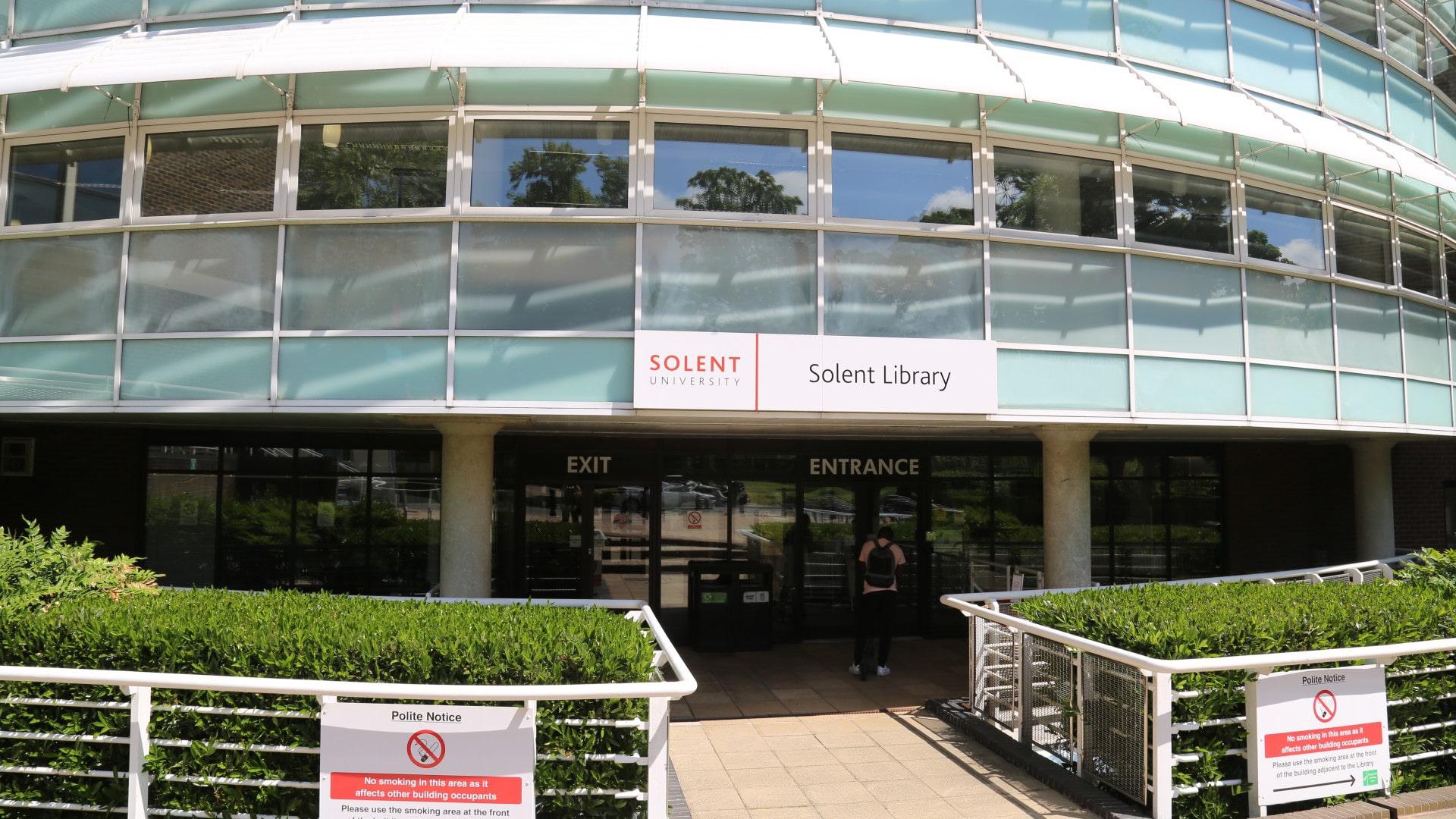
You'll also find an extensive range of criminology resources, journals and online materials in the Solent Library.
Broaden your horizons by adding an international dimension to your CV – essential to achieving success in today’s fast-changing, global environment.
Studying, working or volunteering in another country could be the experience of a lifetime. Enhance your degree by developing important global skills such as knowledge of other countries, language skills, intercultural awareness, adaptability and confidence.
For more information, please email international.mobility@solent.ac.uk.
This module introduces you to how the Criminal Justice System works in practice and the key organisations that make it function, such as the police, courts, prisons, and the Crown Prosecution Service. It follows the journey of a suspect from the point of arrest through to conviction and sentencing, showing how each stage of the process fits together.
This module introduces and explores how the police operate in England and Wales and the sometimes complicated relationship between society and their police. You will develop an understanding of the historical development of the police, and how British society has shaped this, and formulate an evidence-based appreciation of the organisation’s efficiency and effectiveness.
The 'Criminal Mind’ attempts to unravel the complexities of why criminal offending happens, by exploring the many varied and fascinating perspectives by which criminologists have explained crime and deviance. As a central topic to criminology, an understanding of why crime occurs can help policymakers and those working in the criminal and social justice sectors reduce its occurrence.
This module will equip you with a critical and practical understanding of how AI is transforming careers in modern policing and criminal justice. By examining the integration of AI tools (such as predictive policing and facial recognition to algorithmic risk assessment) you will learn to navigate the technological landscape of the justice sector.
Drawing on real-world case studies and scenarios, this module examines approaches to research and methods of analysis in greater depth, with specific attention given to their applicability in different research settings.
This module comprehensively investigates forms of global crime and not just how different societies respond to transnational global crime, but to undertake a detailed comparative assessment of professional practice in criminal justice and the enforcement activities of the criminal justice agencies and global institutions to prevent, prosecute, punish and protect (INTERPOL, UNODC, ICC).
This module will give you an introduction to essential learning on cybercrime and security that will ensure you gain the knowledge and skills needed for a role in criminal justice, policing, and the third sector.
Please note: Not all optional modules are guaranteed to run each year.
This module aims to develop an understanding of the key concepts of punishment, resistance and desistance with specific reference to comparative criminal justice responses (Britain, Scandinavia and South-East Asia) to offending and research on desistance from crime following the introduction of the 2012 Transforming Rehabilitation Programme in England and Wales.
This module provides an analytical understanding of true crime as a cultural, sociological, and digital phenomenon. You will examine and interpret the ethical complexities of representing trauma and the impact of "citizen detective" culture on the criminal justice system.
This module aims to develop students’ capacity to act as ethical, culturally aware, and effective professionals within contemporary organisational and justice-related environments. It introduces students to key theories of professional ethics, leadership, communication, and interpersonal behaviour, enabling them to critically evaluate how these concepts shape decision-making, accountability, and professional identity.
In this module, you will critically examine, and engage in discussions covering, a range of current controversies surrounding dangerousness, risk, and offences committed by those offenders deemed to be dangerous to the public.
This final module encourages you to bring together all the learning and skills you have acquired and developed over the previous two years and use them to solve a challenge in Criminal Justice, Policing, Investigation, or Social Justice.
Please note: Not all optional modules are guaranteed to run each year.
This module explores the nature and impact of terrorism and other forms of political violence in the modern world, including a critical examination of extremism and radicalisation. You’ll examine how terrorism is defined, why these definitions are often disputed, and what motivates individuals and groups to use violence for political ends.
This module critically examines the relationship between crime, gender and sexuality within contemporary society and the criminal justice system. You will learn to apply theory and methods to analyse and solve real-world issues in gender and sexuality within criminal justice and related fields.
Contact international admissions
Email: Call:As part of this course, you will study one module at a time, giving you the chance to build a deeper understanding and see the results of your hard work more quickly. With regular assessments and feedback, rather than exams all at once, you’ll also benefit from improved focus, and a more manageable workload.
Learn more about block teaching
The student achievement team are on hand to help you succeed during your studies at Solent. They aim to contact you at key times during your time here with personalised information, advice and guidance, by email or phone.
The disability advice team provides information, advice and guidance for disabled students.
All students can access Succeed@Solent, Solent's online guide to getting better grades. It offers extensive, practical information and advice on topics such as academic writing, research and presentations.
Crime and justice are real global concerns and criminology is a key skill within criminal justice and related fields. The industry offers a variety of employment opportunities that are valuable to society, interesting, stimulating, rewarding and professional.
Typical employers would include central and local government, the police, prison and probation services, court services, and security services.
The ties the team have with the professional world have helped past students obtain work experience, including volunteer placements, temporary paid work, work shadowing weeks, and internships.

Starting salary: £16,000 to £26,000
Graduates are often at the top end of the starting salary amount. Experienced crime scene investigators can earn between £24,000 and £35,000.
Starting salary (in training): £22,294
Once you've completed your training (which can take 15 or 21 months, depending on your qualifications) your salary will rise to £30,208, plus allowances. You'll also receive a range of Civil Service benefits.
Youth support worker: £19,308 to £28,787
Qualified professional youth workers can earn between £25,313 to £42,718. Salaries for local authority youth service managers vary according to the size of the authority and responsibility of the post, but can be in excess of £40,000.
The stated salaries are published on prospects.ac.uk. Income figures are intended as a guide only.
Hear from Solent alumni about where their careers have taken them and how studying at Solent prepared them for their future.
“All the lecturers had their own unique way of teaching and a wealth of real-world experience.”
The Solent Careers team is committed to getting students into great careers.
While you are studying, the team can help you with finding work experience or placements, link you with a mentor, check your CV, or offer one-to-one guidance.
We also have graduate job opportunities just for Solent graduates.

Top 25%
of UK unis for sustained employment
Longitudinal Educational Outcomes, 2025
Every student at Solent University will also have the option to study an additional Certificate in Practical Artificial Intelligence qualification alongside their course. Free of charge, the course ensures you'll be prepared for a fantastic and varied career after graduation.

Thinking about studying further than an undergraduate degree? Alumni can get 20% off their postgraduate study.

Embark on your journey to becoming a solicitor with full SQE 1 and 2 preparation.
Find out moreThe tuition fees for the 2026/27 academic year are:
For further information, please visit our tuition fees page.
While most course costs are covered by your tuition fees, some essential resources and optional extras may need to be paid for separately. These additional costs are listed below. For advice on budgeting and managing your money, please contact student.funding@solent.ac.uk.
The additional costs for this academic year are not yet available. For guidance, previous additional costs have been:
Optional costs
The course offers optional trips to all students to the USA and Strasbourg. The USA trip is around £1,400 to £1,500; the Strasbourg trip is around £500.
There will also be occasional trips to courts, police training, etc where students must pay for their own transport and subsistence. Study trips occur throughout the year, and although optional, prove very popular.
Solent University offers a range of bursaries and scholarships that provide financial assistance or waive fees for tuition or accommodation. Each bursary or scholarship has specific eligibility criteria. Check out our bursaries and scholarships pages to find out more.
Cost of living support
At Solent, we understand that the cost of living crisis may be of some concern. To help, we've put together some detailed information to show what support is available and how to make your money go further.
Graduation costs
There is no charge to attend graduation, but you will be required to pay for the rental of your academic gown (approximately £45 per graduate, depending on your award). You may also wish to purchase official photography packages, which range in price from £15 to £200+. Graduation is not compulsory, so if you prefer to have your award sent to you, there is no cost. Extra guest tickets will go on sale after results publication and will be sold on a first-come-first-served basis. The cost per ticket is currently £20. Please note, we do not guarantee there will be any extra tickets available to purchase.
Contact international admissions
Email: Call:Please select an option below:
As a general guide, we look for qualifications that are equivalent to the British high school A-levels.
If you are applying from outside the UK, find information about entry requirements, visas and agents for your country here.
For further information about EU qualifications, please see our course entry requirements document.
As a general guide, we look for qualifications that are equivalent to the British high school A-levels.
If you are applying from outside the UK, find information about entry requirements, visas and agents for your country here.
For further information about international qualifications, please see our course entry requirements document.
All international applicants need to be aware that the English language requirements to attend Solent University, and the English language requirements to obtain a visa from the Home Office, may be different. This means that if you meet the Solent University language requirement to gain a place on the course, you may still have to meet additional requirements to be granted with a visa by the Home Office.
We strongly advise all applicants to visit the Home Office website which outlines all the requirements for a successful visa application.
Full-time
Any student applying for the first year of a full-time/sandwich undergraduate course must apply through UCAS (University and Colleges Admissions Service). This includes mature, overseas and EU students.
Nearly all schools and colleges offer their students the facility of applying electronically through the UCAS website using 'Apply'; it may also be used by those applying independently in the UK and overseas. This facility and all course information can be found on the UCAS website: www.ucas.com.
Your application should reach UCAS by 14 January if you hope to enter a course the following autumn. Early application is advised for the most popular subject areas. Late applications may be made until the end of June. The UCAS Code for the University is S30, code name SOLNT.
Find out what happens after you apply
Contextual offers
Solent endeavours to offer learning opportunities to students from all backgrounds. When we receive and review an application, we take into consideration the context and personal circumstances of applicants when making a decision, which means our advertised entry tariff could be reduced.
Find out more about Solent's contextual offers
Top-up route:
We welcome applications from students currently studying a Foundation Degree, DipHE, HNC, HND or modules of an undergraduate degree course at another university, who wish to enter directly into Years 2 or 3 of one of our undergraduate degree courses. Please contact our admissions team for more information: contact us
Applicants who do not have English as their first language will be required to demonstrate an approved level of proficiency in the use of the English language. The agreed minimum requirements for this course are:
TOEFL IBT tests taken prior to 21 January 2026
TOEFL IBT tests taken from 21 January 2026
Qualifications are checked before enrolment, and international students must bring their original certificates or certified copies when coming to study at the University.
Pre-Sessional English programme
The University also offers a pre-sessional English programme for international students who wish to improve their level of English before starting a degree course.
Contact international admissions
Email: Call: