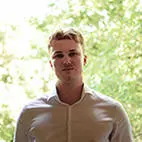
Will Swain
From Solent's OB truck to Sky News. Will Swain on trainee life, his Broadcast Newcomer TRIC Award win and keeping World Cup coverage on air.
Job title:Trainee News Operations Engineer
Employer:Sky News
Studied:BA (Hons) Television and Studio Production
Tell us a little about your career so far.
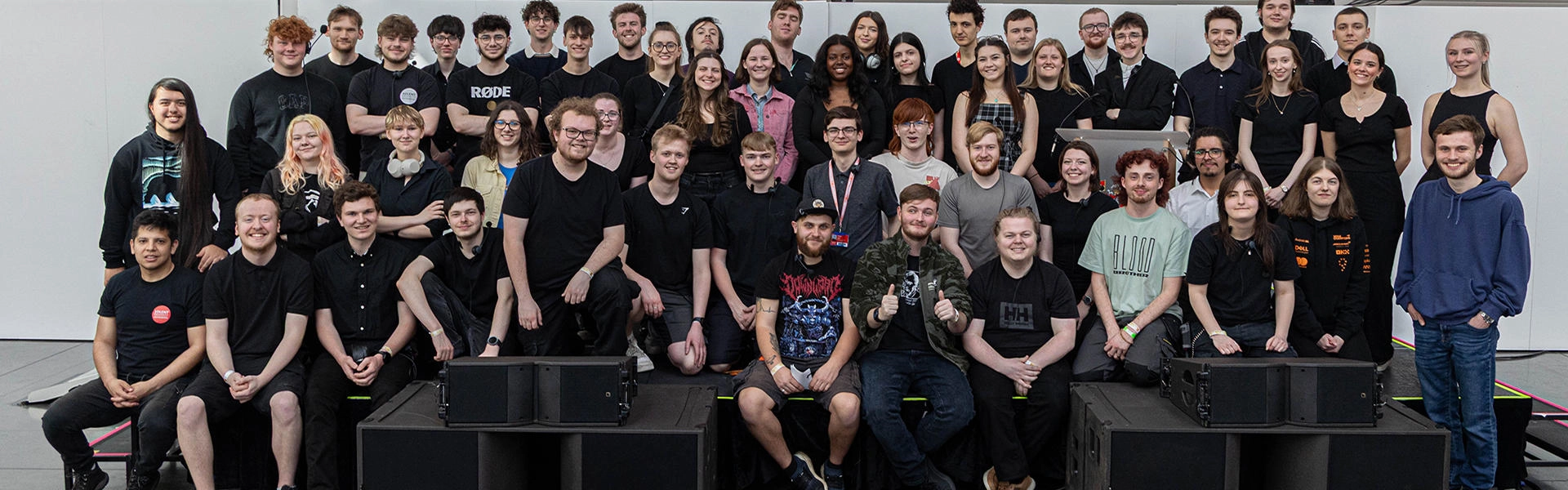
My career took a path I never expected. I started as Head of Sports Production with Sonar Events, leading weekly broadcasts of Solent Kestrels basketball games and working with the club president to keep improving our coverage. From there, I became Production Coordinator Intern with Solent Productions, managing teams across major festivals like Glastonbury, Boardmasters, Victorious and Camp Bestival, plus graduation ceremonies and Southampton Pride. In my final year, I hosted the National Student TV Awards, bringing 70 students together to run a weekend event for 250+ attendees and sponsors – one of my proudest projects.
Now I'm a Trainee News Operations Engineer at Sky News, working across departments to manage output, ingest content, coordinate global bureaux and handle live outside broadcasts.
Tell us about what you are doing now and what it involves – a typical working day.
If I had to describe a typical day in one word, it'd be unpredictable. I'm responsible for the content and delivery of Sky News and Sky Sports News, ingesting content, quality checking every video, audio clip and photo that goes on air, and lining up guests to make sure connections, video and audio all look right (framing included!). I work closely with our Satellite and Field Operations teams on outside broadcasts and anything involving a camera operator. Since starting, I've covered huge stories, from conflicts in the Middle East to Keir Starmer's resignation. I never know what's coming when I walk into work, so I'm always prepared for the unexpected.
What are you working on at the moment?
Any projects or plans you're excited about? Right now, I'm working night shifts, making sure the FIFA World Cup coverage comes in properly for Sky News and Sky Sports News. We've got camera operators out in the field for live two-way reports, sending back GVs and fan interviews. With the current heatwave, I'm also monitoring equipment stationed around the world, since some of it can overheat. Night shifts are solo, so I'm the only one quality assuring Sky News output overnight, which is a little scary to think about! I'm also spending time with other departments across Sport and News, since it's important to know what everyone does day-to-day so we can support each other when issues come up.

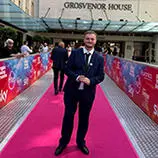
Getting involved with broadcasting societies gave me valuable hands-on experience and helped me build the confidence and practical skills I've carried into my role today. It reinforced how important it is to get involved outside the classroom.
What's your career highlight so far?
My career highlight so far has to be preparing to send a crew to Venezuela for a live presenting segment, where a presenter reports live from another part of the world for an hour of the show. We planned everything logistically: getting the crew there, sorting the kit, and setting up the network on-site. We use a system called LiveU, which lets us plug in cameras and transmit a signal with only a second's delay. We set up an autocue, monitors for the programme feed, cameras and audio – and it worked like magic. Getting a network signal in Venezuela was near impossible, so it's a moment I'll always remember. So much happening, with only seconds to fix it.
Do you feel Solent set you up for the Industry?
My studies helped prepare me for a career in the industry, giving me a solid grounding in the terminology, practices and methods used day-to-day. I work in live 24/7 news, which is something you can't fully prepare for, but learning the technical basics has meant I can make things happen under pressure.
Solent Creatives, the university's in-house creative agency, gave me genuine hands-on experience – and it's paid! You can work as a photographer, editor, or something completely different, all while working with actual clients. Those experiences gave me skills I still use every day in my role at Sky.
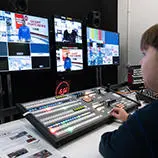
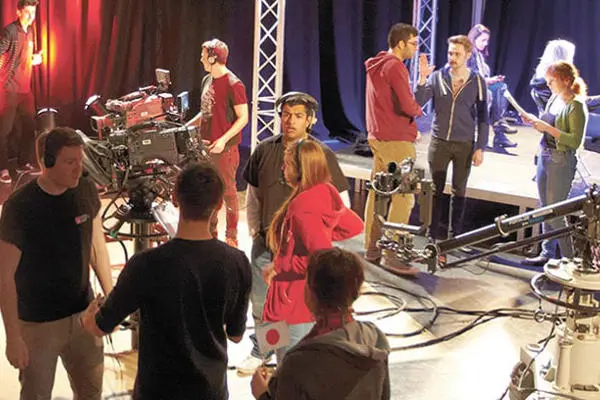
The facilities at Solent are amazing. Up-to-date cameras, sound equipment and studios, plus the star of the show: an Outside Broadcast Truck kitted with the same gear you'd see on the road in the industry.
What did you take away from your time at Solent University?
The biggest thing I took away from my time at Solent is the connections. Friends who now work in the industry and supported me all the way through university, and lecturers who taught me everything I know about television. They're working professionals with skills like no other, teaching everything from documentary making to live music productions and studio shows. I left feeling confident that, one way or another, I'd end up working in the industry.
What tips would you give to someone wanting a career in your industry?
One of the biggest tips I'd give anyone wanting a career in broadcast is to say yes to as many opportunities as you can: shadowing, volunteering, work experience or a new task. Every experience teaches you something and shows you're willing to get stuck in. Don't be afraid to ask questions either; people are usually happy to share their knowledge if you're keen to learn. Networking matters too. Broadcast is built on relationships, so getting to know people can open doors you didn't know existed. Be reliable, turn up with a good attitude, and be patient. Building a career takes time, but if you're enthusiastic and committed, the opportunities will come.
Start making your own waves
Course studied
BA (Hons) Film and Television
Find out more
BA (Hons) Post Production for Film and Television
Find out more
BA (Hons) Sports Journalism
Find out more