news
Law and criminology
Building the confidence for a career in criminal justice and rehabilitation
Criminology and Psychology graduate secures role supporting survivors of domestic abuse.
11 September 2026

23 January 2026
This article first appeared in The Psychologist.
According to statistics, more than 14 million people tune in to watch BBC One’s The Traitors. It’s a cat-and-mouse game of whodunit that has viewers chuckling in glee at their TV. But it’s also a deep dive into the psychology of ordinary, everyday people.
Here, psychologist and Southampton Solent University’s Lecturer in Psychology, Dr Shakiba Moghadam dissects the psychological decision-making at play in the series.
-
If you’ve ever watched BBC One’s The Traitors, you’ve probably had moments where you’re shouting at the TV wondering how the contestants didn’t spot some of the most obvious clues. What makes the show so exciting is that it’s essentially a live demonstration of a social psychology experiment, revealing how concepts like unconscious bias, suspicion, personality traits and group dynamics quietly shape our behaviours and attitudes.
One of the biggest forces at play in the show is unconscious bias. From the very first episode, contestants form impressions of one another based on very limited cues, like someone’s confidence, tone of voice, emotional expression, demographic background or how comfortable someone seems in the group. These snap judgments feel like “intuition”, but they’re actually psychological shortcuts our brain uses to cope with uncertainty. In a game built entirely on mistrust and lies, those shortcuts become even more influential on our behaviours and the formation of attitudes.
What’s more interesting is that suspicion rarely comes from concrete evidence. Instead, it’s often based on how someone feels toward others. In a group setting, a quiet person may come across as suspicious, whereas a confident, loud person may be more trusted. Let’s take Rachel as an example. She’s a relatively bubbly person, who seemingly gets along with everyone. But, at a closer look, she keeps escaping wider suspicion even though she is in fact a Traitor, and the two women who put her in the spotlight were suddenly banished. Likeability in this case may have saved Rachel, and others may not vote for her because they feel guilty or even a sense of betrayal. These assumptions are learned patterns throughout our lives, that help us navigate social life, but they’re far from reliable, or even the truth.
Voting behaviour is where these biases really show. In theory, players are meant to vote logically. In reality, many votes are driven by herd mentality, this being the pull to follow the group rather than stand apart. Once a few influential voices settle on a name, others often follow, even if they have doubts. Speaking against the majority feels risky. If you’re wrong, you become the next target. So, people stay quiet, agree outwardly and vote with the group, even if they disagree.
This is a classic example of normative social influence: we go along not because we believe the group is right, but because we want acceptance and safety. On The Traitors, social isolation is dangerous. Once you’re labelled “difficult” or “suspicious,” that label sticks. Ironically, this means group consensus often strengthens even when it’s incorrect.
Not everyone is equally vulnerable to herd behaviour, though. Certain personality traits can make people more susceptible. Individuals who are high in agreeableness, conflict-avoidant, or anxious about social rejection are more likely to go along with the majority. Those who rely heavily on external validation or who struggle with uncertainty may also defer to louder or more confident group members. By contrast, people who are more independent, assertive or comfortable being disliked are often better able to resist group pressure, though even they aren’t immune under stress.
Another powerful dynamic is the formation of in-groups and out-groups. Alliances form quickly, sometimes without explicit agreement. People feel safer with those who seem similar to them or who reinforce their views. Once an in-group exists, trust is extended generously within it, while outsiders are judged far more harshly. The same behaviour that’s excused in a friend is suspicious in someone outside the circle. When Reece tried to help others during a challenge, it later backfired as others became suspicious of him. On this occasion, altruism and kindness (qualities which make us decent humans) were not very well received.
Traitors often survive by embedding themselves within the in-group. Once someone is seen as “one of us,” their actions are interpreted more positively, and their intentions are questioned far less. Meanwhile, someone who doesn’t quite abide by herd mentality, or are perhaps quieter, more intense, or socially awkward, becomes an easy scapegoat. The group then builds a story around that person, reinforcing it by noticing only the evidence that supports the narrative and ignoring anything that contradicts it.
Suspicion also isn’t spread evenly. Under pressure, fatigue and uncertainty, people rely more on emotion and stereotypes than careful reasoning. The Traitors highlights this perfectly. Sleep deprivation, constant paranoia and the threat of elimination push contestants into survival mode. In that state, fairness and logic often take a back seat to social safety.
What makes this uncomfortable (and fascinating!) is how familiar it all feels. The same processes play out in workplaces, friendship groups, online spaces and wider society. Dominant opinions take hold, at times without question. Minority views are silenced. “Vibes” and “opinions” become evidence. And decisions feel rational simply because they’re shared.
Ultimately, The Traitors works and is entertaining because it exposes how socially-influenced our thinking really is. We don’t just think for ourselves, we think with others, often without realising it. Our biases feel like insight. Our group’s opinion feels like the truth. And being wrong together often feels safer than being right alone.
Criminology and Psychology graduate secures role supporting survivors of domestic abuse.
11 September 2026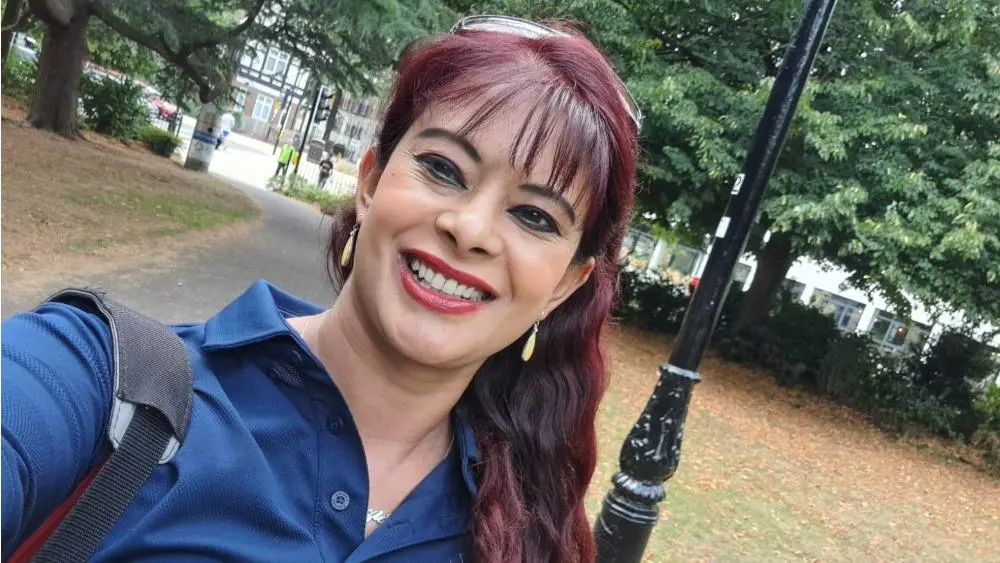
Arzia Abbasi shares her experience of balancing studies, parenthood and trauma advocacy after near-30-year education break.
11 August 2026
Psychology graduate heads to Ghana to make a difference for young people.
27 July 2026
Southampton Solent University's academics in sport and psychology share their tips on reaching your exercise goals in 2026.
21 January 2026