




LLM Professional Legal Practice
Embark on your journey to becoming a solicitor with full SQE 1 and 2 preparation.
Find out more

Explore the world of crime and get behind the psychology of criminology and social justice, on this BPS Accredited degree.
Contact international admissions
Email: Call:You will develop key industry skills in analytical thinking, crime scene investigations, presentation of evidential studies and critical thinking, along with the key knowledge of psychological and criminological theory to prepare you for a career in relevant fields and sectors. The course is designed and constantly refreshed with current thinking, thanks to a lecturing staff with plenty of experience and current connections within the criminal justice and criminology arena.
You will also benefit from a wide range of guest speakers who are industry experts, giving you a valuable window into real-world situations and challenges – as well as a network of employment opportunities. The courses are also supported by site visits, both locally and internationally, giving you the chance to explore the global perspective first-hand and draw on this in your learning journey.
With a strong emphasis on essential professional and career skills, along with a curriculum which reflects the changing face of criminology, the course is enriched with ‘real-world’ learning, reflecting current thinking and practice in Criminology, Psychology, and pedagogy - clearly informed by research and advanced professional practice.
If you’re looking to study our psychology with criminology degree but don’t have the relevant qualifications or experience, the social sciences foundation year will help you develop the core skills and knowledge to progress. Find out more about the social sciences foundation year.
This course also offers the option of a placement year. A placement year allows you to put what you've learned in your first and second years into practice in the workplace, gaining valuable real-world work experience before you graduate. Our course and placements teams will help you find the perfect industry placement in your chosen field.
Accredited by:

This course is suited to students who wish to follow a career path in criminology and psychology or similar professional/voluntary capacity. You will develop analytical and research skills that can be transferred to a broad range of careers, both within related fields and in the wider justice and voluntary sector.
The course gives you the chance to make valuable industry connections through site visits, guest speakers and the lecturing staff’s own extensive network, drawing on their research and practitioner status within the sector.
Accredited by the British Psychological Society, this degree would be suitable for students wishing to pursue a career in Forensic Psychology.
On graduating you will be well placed for various roles within criminology, criminal justice and related fields, including police and probation services, youth work and victim support, human rights, fraud investigations and many more.
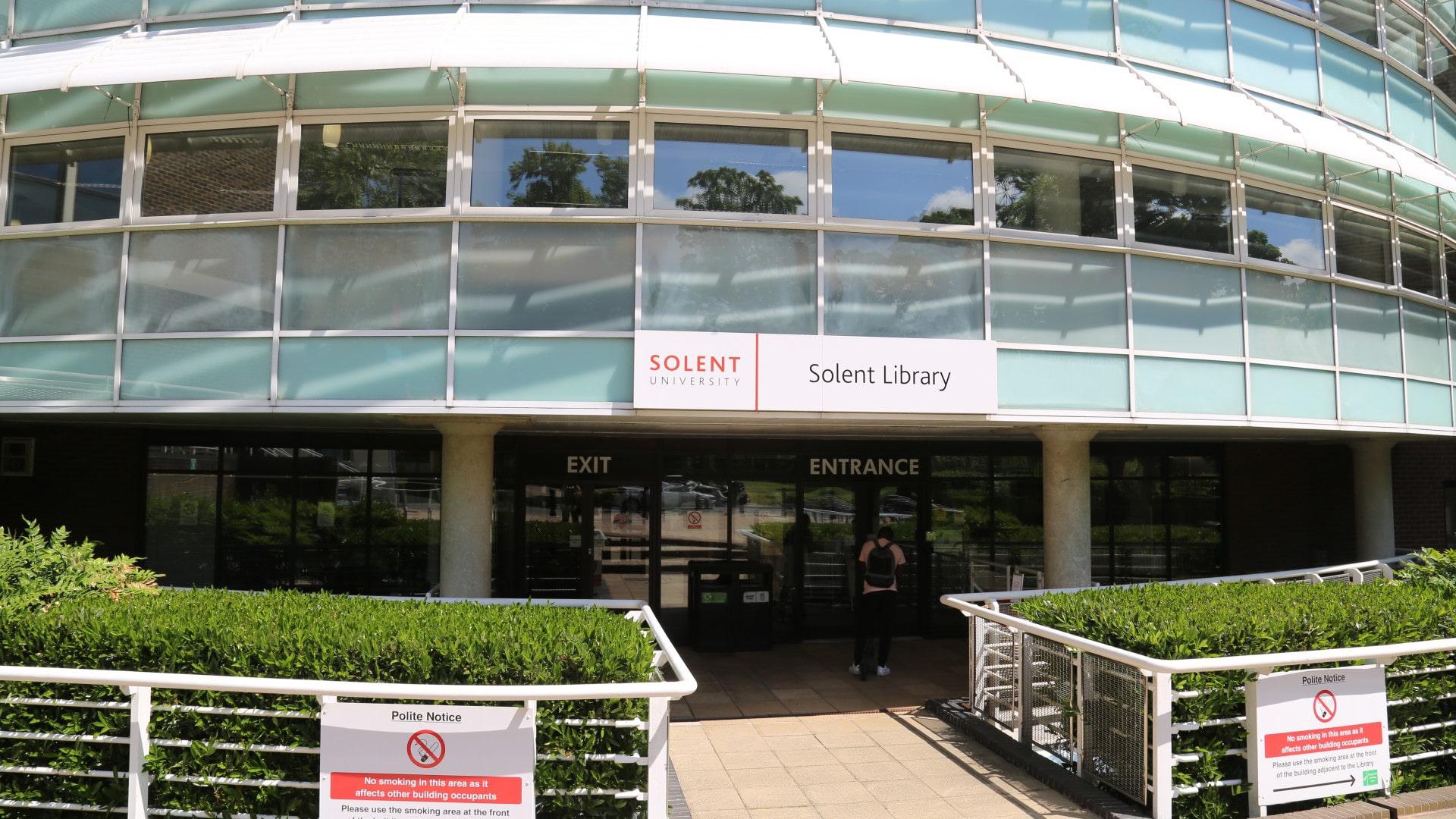
Students have access to our portable crime scene and mock courtroom. You'll also find an extensive range of criminology resources, journals and online materials in the Solent Library.
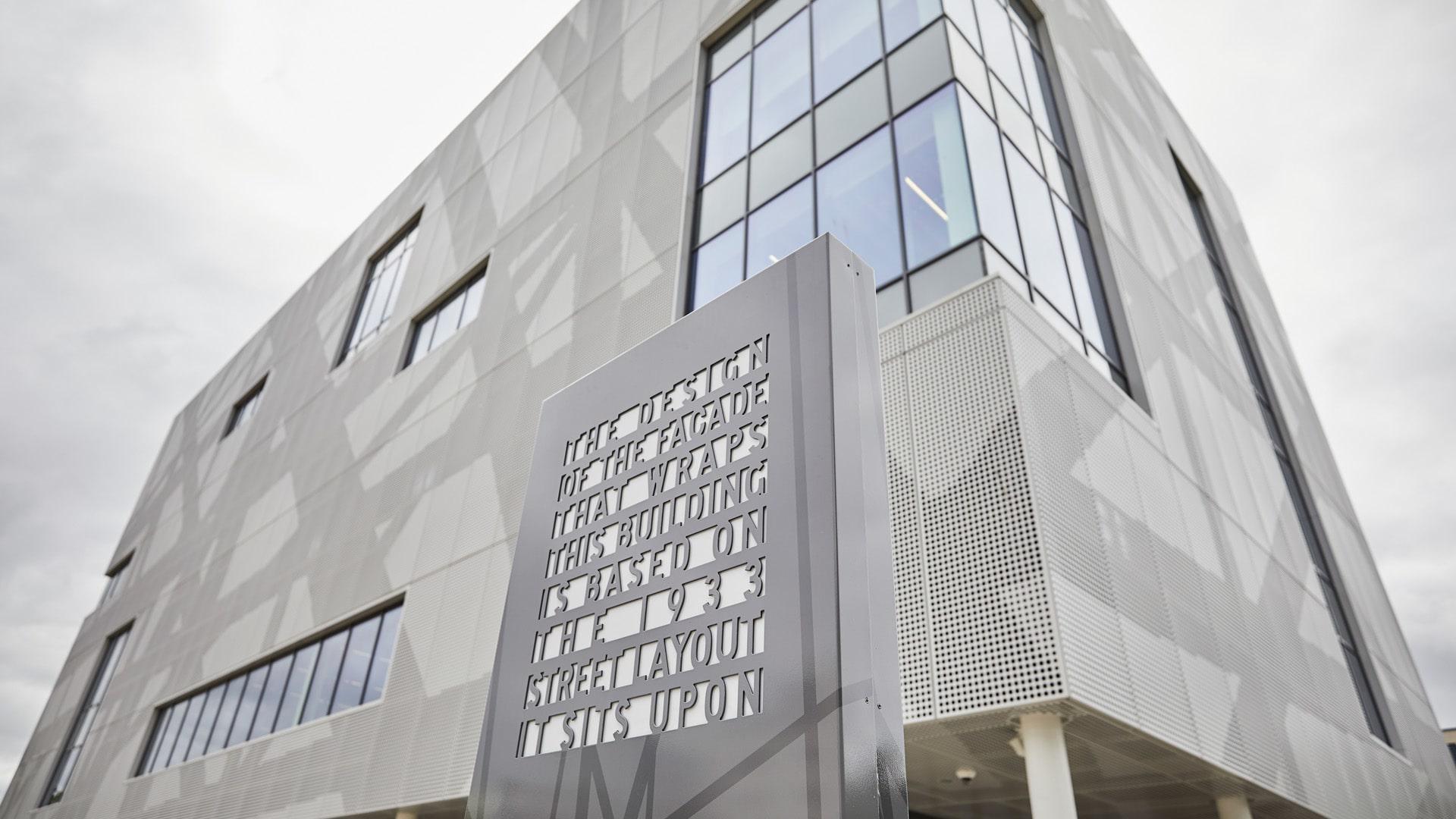
Our vibrant campus brings state-of-the-art facilities to enhance your learning and elevate your student experience. Our award-winning teaching building, The Spark is centred around students and offers a stimulating study environment with flexible learning spaces. Away from studying, why not try out the gyms, fitness studios and sports halls in our £28 million Sports Complex, or watch a blockbuster film at our student-run cinema with Dolby Atmos audio.
This module introduces and explores how the police operate in England and Wales and the sometimes complicated relationship between society and their police. You will develop an understanding of the historical development of the police, and how British society has shaped this, and formulate an evidence-based appreciation of the organisation’s efficiency and effectiveness.
This module will introduce you to fundamental and historical approaches in psychology, including psychodynamic, behaviourism, cognitive and biological (both evolutionary and physiological) approaches. This will give you a grounding in how psychology has developed and the ability to describe trends in psychological history.
This module is an introduction to social psychology, developmental psychology, individual differences and qualitative research methods. To prepare towards work in the second year, students will be introduced to the history of social psychology and the history of personality psychology.
This module will develop your understanding of how the brain supports perception, memory, thinking, emotion, and behaviour, and how dysfunction in these systems reveals the cognitive processes we rely on in everyday life. By the end of the module, you will be able to discuss key biological and cognitive concepts, evaluate research evidence, solve applied problems creatively, and communicate your own research with clarity and attention to detail.
This module deepens students’ insight into perception, memory, attention, executive function and decision-making, with a particular emphasis on the research methods used to investigate these processes.
This module aims to provide an engaging exploration to the study of social psychology, and individual differences and studying advanced qualitative research methods to investigate social influence and diversity.
The aim of this module is to develop your psychological literacy, the ability to apply what you know from studying developmental psychology in the first year to understanding how positive psychology can improve wellbeing.
Please note: Not all optional modules are guaranteed to run each year.
This module aims to develop an understanding of the key concepts of punishment, resistance and desistance with specific reference to comparative criminal justice responses (Britain, Scandinavia and South-East Asia) to offending and research on desistance from crime following the introduction of the 2012 Transforming Rehabilitation Programme in England and Wales.
This module provides an analytical understanding of true crime as a cultural, sociological, and digital phenomenon. You will examine and interpret the ethical complexities of representing trauma and the impact of "citizen detective" culture on the criminal justice system.
This module seeks to highlight how the discipline of psychology has wielded power and influence, and how this has led to controversies within the discipline and real-world impact beyond the academic pursuit of the discipline.
This module allows students to independently conduct a piece of psychological research, in an area of their choosing. Students will develop in-depth knowledge of this area by reviewing psychological literature, deciding on a research question to be investigated/hypothesis to be tested, and will then design a study to answer this question.
This module will progress the psychological theory studied in years one and two, and develop how to apply social psychology and individual differences to the workplace incorporating evidence-based practice.
Please note: Not all optional modules are guaranteed to run each year.
This module critically examines the relationship between crime, gender and sexuality within contemporary society and the criminal justice system. You will learn to apply theory and methods to analyse and solve real-world issues in gender and sexuality within criminal justice and related fields.
This module explores the nature and impact of terrorism and other forms of political violence in the modern world, including a critical examination of extremism and radicalisation. You’ll examine how terrorism is defined, why these definitions are often disputed, and what motivates individuals and groups to use violence for political ends.
Contact international admissions
Email: Call:As part of this course, you will study one module at a time, giving you the chance to build a deeper understanding and see the results of your hard work more quickly. With regular assessments and feedback, rather than exams all at once, you’ll also benefit from improved focus, and a more manageable workload.
Learn more about block teaching
The student achievement team are on hand to help you succeed during your studies at Solent. They aim to contact you at key times during your time here with personalised information, advice and guidance, by email or phone.
The disability advice team provides information, advice and guidance for disabled students.
All students can access Succeed@Solent, Solent's online guide to getting better grades. It offers extensive, practical information and advice on topics such as academic writing, research and presentations.
Criminology and psychology-related skills are key within the criminal justice sector and related fields. Crime, justice and the underlying behavioural and cultural factors are a critical part of society, and the industry offers a variety of employment opportunities that are interesting, stimulating, socially responsible, rewarding and professional.
The course provides specialist and broadly valuable skills that the criminal justice sector and wider employers, such as victim care and probation teams, are looking for, including presentation, analytical and critical thinking, writing skills and research.
Guest speakers provide opportunities for students in related fields, as do the professional networks of teaching staff, thanks to the course team’s close working relationship with local and national related employers.

Starting salary (in training): £22,294
Once you've completed your training (which can take 15 or 21 months, depending on your qualifications) your salary will rise to £30,208, plus allowances. You'll also receive a range of Civil Service benefits.
Youth support worker: £19,308 to £28,787
Qualified professional youth workers can earn between £25,313 to £42,718. Salaries for local authority youth service managers vary according to the size of the authority and responsibility of the post, but can be in excess of £40,000.
Starting salary: £28,551
Starting salaries can rise to £46,044 at the top of the scale - achievable after seven years. The range of salaries for sergeants is £49,077 to £51,948.
The stated salaries are published on prospects.ac.uk. Income figures are intended as a guide only.
The Solent Careers team is committed to getting students into great careers.
While you are studying, the team can help you with finding work experience or placements, link you with a mentor, check your CV, or offer one-to-one guidance.
We also have graduate job opportunities just for Solent graduates.

Top 25%
of UK unis for sustained employment
Longitudinal Educational Outcomes, 2025
Every student at Solent University will also have the option to study an additional Certificate in Practical Artificial Intelligence qualification alongside their course. Free of charge, the course ensures you'll be prepared for a fantastic and varied career after graduation.

Thinking about studying further than an undergraduate degree? Alumni can get 20% off their postgraduate study.
Embark on your journey to becoming a solicitor with full SQE 1 and 2 preparation.
Find out more
Looking for a career change to social worker? You’ll work with some of the most marginalised groups in society, helping them to overcome barriers in order to lead a fulfilled life.
Find out moreThe tuition fees for the 2027/28 academic year are:
For further information, please visit our tuition fees page.
While most course costs are covered by your tuition fees, some essential resources and optional extras may need to be paid for separately. These additional costs are listed below. For advice on budgeting and managing your money, please contact student.funding@solent.ac.uk.
The 2026/27 additional costs are not yet available. For guidance, previous additional costs have been:
Compulsory costs
Optional costs
The course offers optional trips to all students to the USA and Strasbourg. The USA trip is around £1,400 to £1,500; the Strasbourg trip is around £500.
There will also be occasional trips to courts, police training, etc where students must pay for their own transport and subsistence. Study trips occur throughout the year, and although optional, prove very popular.
Solent University offers a range of bursaries and scholarships that provide financial assistance or waive fees for tuition or accommodation. Each bursary or scholarship has specific eligibility criteria. Check out our bursaries and scholarships pages to find out more.
Cost of living support
At Solent, we understand that the cost of living crisis may be of some concern. To help, we've put together some detailed information to show what support is available and how to make your money go further.
Graduation costs
There is no charge to attend graduation, but you will be required to pay for the rental of your academic gown (approximately £45 per graduate, depending on your award). You may also wish to purchase official photography packages, which range in price from £15 to £200+. Graduation is not compulsory, so if you prefer to have your award sent to you, there is no cost. Extra guest tickets will go on sale after results publication and will be sold on a first-come-first-served basis. The cost per ticket is currently £20. Please note, we do not guarantee there will be any extra tickets available to purchase.
Contact international admissions
Email: Call:Please select an option below:
As a general guide, we look for qualifications that are equivalent to the British high school A-levels.
If you are applying from outside the UK, find information about entry requirements, visas and agents for your country here.
For further information about EU qualifications, please see our course entry requirements document.
For international students who do not meet the direct entry requirements for this undergraduate degree, our trusted partner, QA Higher Education offers the following pathway programme designed to develop your academic and English language skills:
As a general guide, we look for qualifications that are equivalent to the British high school A-levels.
If you are applying from outside the UK, find information about entry requirements, visas and agents for your country here.
For further information about international qualifications, please see our course entry requirements document.
For international students who do not meet the direct entry requirements for this undergraduate degree, our trusted partner, QA Higher Education offers the following pathway programme designed to develop your academic and English language skills:
All international applicants need to be aware that the English language requirements to attend Solent University, and the English language requirements to obtain a visa from the Home Office, may be different. This means that if you meet the Solent University language requirement to gain a place on the course, you may still have to meet additional requirements to be granted with a visa by the Home Office.
We strongly advise all applicants to visit the Home Office website which outlines all the requirements for a successful visa application
Full-time
Any student applying for the first year of a full-time/sandwich undergraduate course must apply through UCAS (University and Colleges Admissions Service). This includes mature, overseas and EU students.
Nearly all schools and colleges offer their students the facility of applying electronically through the UCAS website using 'Apply'; it may also be used by those applying independently in the UK and overseas. This facility and all course information can be found on the UCAS website: www.ucas.com.
Your application should reach UCAS by 14 January if you hope to enter a course the following autumn. Early application is advised for the most popular subject areas. Late applications may be made until the end of June. The UCAS Code for the University is S30, code name SOLNT.
Find out what happens after you apply
Contextual offers
Solent endeavours to offer learning opportunities to students from all backgrounds. When we receive and review an application, we take into consideration the context and personal circumstances of applicants when making a decision, which means our advertised entry tariff could be reduced.
Find out more about Solent's contextual offers
Top-up route:
We welcome applications from students currently studying a Foundation Degree, DipHE, HNC, HND or modules of an undergraduate degree course at another university, who wish to enter directly into Years 2 or 3 of one of our undergraduate degree courses. Please contact our admissions team for more information: contact us
Applicants who do not have English as their first language will be required to demonstrate an approved level of proficiency in the use of the English language. The agreed minimum requirements for this course are:
TOEFL IBT tests taken prior to 21 January 2026
TOEFL IBT tests taken from 21 January 2026
Qualifications are checked before enrolment, and international students must bring their original certificates or certified copies when coming to study at the University.
Pre-Sessional English programme
The University also offers a pre-sessional English programme for international students who wish to improve their level of English before starting a degree course.
Contact international admissions
Email: Call: