
“I highly recommend product management, especially if you enjoy analysing and problem-solving.”



Bring your game ideas to life with this industry-focused degree and develop your skills in design, programming and game development through practical projects and our unique studio modules.
Contact international admissions
Email: Call:This degree teaches you what it takes to become a games developer and create Indie, AA or AAA games. You’ll work on creative, practical projects, building unique prototypes and fully playable games with the pipelines and software professionals actually use. You'll also develop your understanding of best practice in game development and what it's like to work in the games industry.
You’ll explore how to create compelling games that engage and excite players. You’ll build the problem-solving and logic skills you need as a games programmer, and learn the fundamental theories and practices required to succeed as a games designer. Finally, you’ll learn and experience the full game development pipeline, from concept to playable product, in our bespoke studio modules.
You’ll build professional connections and friendships, putting you in a strong position to start your career in this growing industry after graduation. As well as learning game development skills, we'll help you develop a portfolio of work you can use when applying for jobs or seeking contract work.
The course is delivered by an academic team with extensive experience of the games industry and excellent links to it. These contacts bring you a range of guest lectures throughout your studies, plus valuable critiques and guidance. Recent speakers have included representatives from Stainless Games, Unity and Aardvark Swift.
Special events are a valuable part of the student experience. You can attend conferences, Game Jams, portfolio reviews, and even take occasional trips to industry venues.
Whether you want to be a programmer, designer, Indie develop, or to work as a specialist within a well-known development studio, our degree will help you develop the skills, knowledge and confidence you need to succeed.

Our creative degrees allow our students to develop a critical eye for design with a knowledge of different design approaches and problem solving techniques. Take a look at some of the great work they produce.
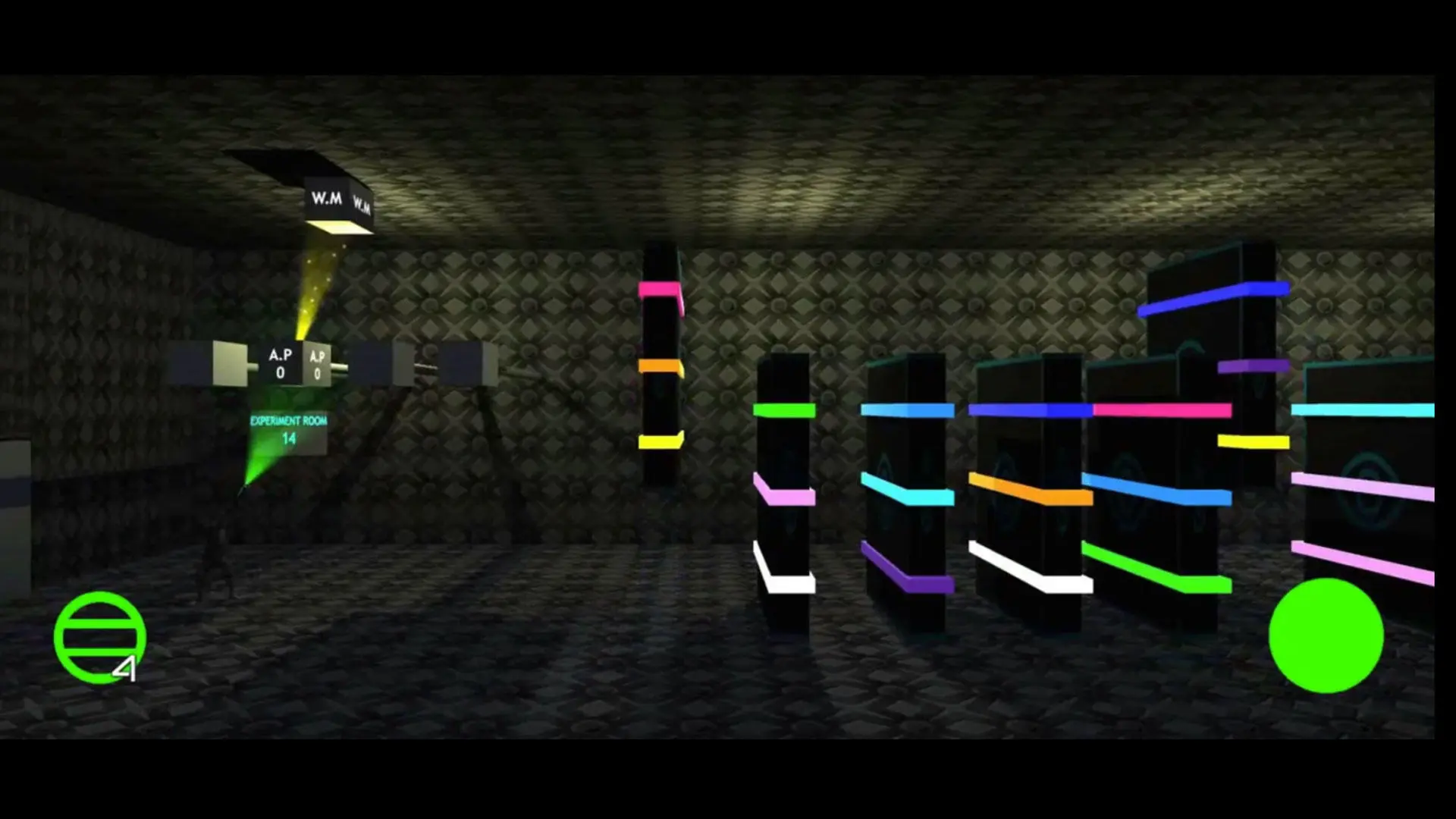
This course is ideal for those who are either interested in programming within a game context or are fascinated by the creative aspect, narrative and gameplay design of computer games. The course contains many areas of game programming and design and allows for fluidity in individuals’ options for what they want to focus on.
This course will prepare you for a career as a computer game programmer or computer game designer.
For those more interested in programming, jobs could include: gameplay programmers, AI programmers, user interface programmers, physics programmers, graphics programmers, animation programmers, network programmers, Engine/Tools programmers, Unity/Unreal Engine developers.
Many programming skills are also transferrable in industries outside games: software engineers, information systems professionals, web developers, computer scientists, mobile developers, XR/AR/VR developers.
For those with more of a design focus, possible jobs include: level designers, user experience designers, games user researchers (GUR experts), UI designers, narrative designers, game writers, gameplay designers.
Regardless of the course experience, students who favour either discipline can enjoy potential future careers as: indie game developers, producers, technical trainers, teaching professionals/academics, researchers.
Hear from Solent alumni about where their careers have taken them and how studying at Solent prepared them for their future.
“I highly recommend product management, especially if you enjoy analysing and problem-solving.”
The University cannot guarantee any particular members of staff will teach specific aspects of the course in the future, but will endeavour to ensure the teaching team maintains their balance of experience and qualifications.
All computer games students benefit from access to our dedicated gaming labs, enabling you to learn the tools and techniques of professional game developers. These labs offer all the specialist software you’ll need, including: Unreal, Unity, Visual Studio, 3D studio max, ZBrush and Substance, and more. You’ll also have access to console development kits, a motion capture studio, a mobile devices lab and a range of consumer gaming/VR hardware.
Our vibrant campus brings state-of-the-art facilities to enhance your learning and elevate your student experience. Our award-winning teaching building, The Spark is centred around students and offers a stimulating study environment with flexible learning spaces. Away from studying, why not try out the gyms, fitness studios and sports halls in our £28 million Sports Complex, or watch a blockbuster film at our student-run cinema with Dolby Atmos audio.
Broaden your horizons by adding an international dimension to your CV – essential to achieving success in today’s fast-changing, global environment.
Studying, working or volunteering in another country could be the experience of a lifetime. Enhance your degree by developing important global skills such as knowledge of other countries, language skills, intercultural awareness, adaptability and confidence.
For more information, please email international.mobility@solent.ac.uk.

In this module you will be introduced to the key areas of videogame development and how videogames are made. You'll begin to learn and understand the key skills associated with game development, alongside industry-standard software and industry-standard practices, preparing you for the course, and providing you with knowledge and understanding of real-world practices.
This module introduces you to the key skills associated with programming for videogames, using various software tools including industry standard game engines. The module will prepare you for the coding aspect of the course while introducing you to real-world coding best practices and techniques
In this module you will learn the key fundamental skills, practices and theories associated with game design, preparing you for the design aspect of the course while teaching you real-world skills associated with game design disciplines.
This module lets you apply standard coding and design skills to build your own video game, while mastering the professional workflows used across the industry. You’ll learn how to navigate production pipelines, create essential development documentation, hit key milestones and collaborate across disciplines while working within a simulated studio environment.
During this module you'll explore more advanced areas of videogame development, including how individual systems and mechanics are designed, programmed, prototyped and tested and will be taught to analyse strengths and weaknesses in games systems and mechanics and their implementations. You'll also further develop your understanding of the key skills associated with game programming and design, alongside industry-standard software and practices.
In this module, you'll work in multi-discipline team(s) within a simulated studio environment on a videogame project following industry-standard development and project pipelines. The key difference between the Studio 1 module and this module is the expectation that the skills, knowledge and team-work applied will be to a higher standard and will produce a product of greater polish and sophistication.
You'll work in multi-discipline team(s) within a simulated studio environment on a videogame project following industry-standard development and project pipelines. The key difference between Studio 2 and Studio 3 is that only designers and programmers will be working within the studio. The focus will therefore be on designing, developing and producing unique videogame experiences that are less reliant on game art for visual representation and player engagement.
Please note: Not all optional modules are guaranteed to run each year.
This module covers the inner workings of game engines and their underlying structure - the concepts involved are valuable to every game programmer for even the smallest projects. Architectural decisions have a huge impact on the versatility of an engine and are often behind its success or failure. You will gain an understanding of how games and other modern software is architected using various patterns and solutions to common problems.
In this module you will explore advanced practices and theories associated with level design and world building, both fundamentally important elements in creating engaging and enjoyable virtual spaces for the player to explore and play within. You'll learn key level design and narrative skills and tools that you can incorporate into your own games to enhance environmental storytelling and create engaging play spaces.
Building on previous Game Studio modules, you'll again collaborate in multidisciplinary teams to build a sophisticated videogame. You’ll also enjoy greater independence, shaping the genre, style and content of your project. Alongside applying advanced coding, art and design skills, you’ll learn how real studios operate, working to professional pipelines, producing key documentation, planning effectively and hitting key milestones.
In this module you will conduct research into various game development theories and methodologies to identify the ones relevant to your final year major project (FMP) and then write a research-based pitch report on their FMP. You'll also prepare the pre-production documentation for their project and produce detailed planning documentation for the production phase of the project.
In this module you will execute the production phase of your FMP, implementing appropriate industry-standard game production and post-production methodologies, as well as design and/or programming skills to produce a polished product. You'll track your project's progress using professional tools and use them to manage the successful production life cycle. The end result is to produce a quality piece of portfolio work that highlights your discipline and skills to enhance employability.
Please note: Not all optional modules are guaranteed to run each year.
In this module you will learn rendering and graphical aspects of game engine development, covering core 3D rendering topics and concepts relevant to displaying game data on the screen. Understanding how such graphics elements are developed is an important skill set for expanding on previously taught concepts of engine architecture and working towards creating a proprietary game engine.
In this module, you will advance your videogame design skills and design creativity by exploring and developing unique, creative and experimental videogame ideas, concepts, systems and mechanics. You'll also be encouraged to explore alternative technologies, such as virtual reality and mixed reality.
Contact international admissions
Email: Call:As part of this course, you will study one module at a time, giving you the chance to build a deeper understanding and see the results of your hard work more quickly. With regular assessments and feedback, rather than exams all at once, you’ll also benefit from improved focus, and a more manageable workload.
Learn more about block teaching
The student achievement team are on hand to help you succeed during your studies at Solent. They aim to contact you at key times during your time here with personalised information, advice and guidance, by email or phone.
The disability advice team provides information, advice and guidance for disabled students.
All students can access Succeed@Solent, Solent's online guide to getting better grades. It offers extensive, practical information and advice on topics such as academic writing, research and presentations.
Games are a huge part of the entertainment industry in the UK. Valued at £6bn overall in 2026, with 2,000 games businesses covering all stages of development (UK Interactive Entertainment), the UK has seen major success with franchises such as Grand Theft Auto, Forza Horizon and Tomb Raider, through to games such as Alien Isolation, Sea of Thieves, Star Wars Galactic Racer, Hellblade and Silent Hill Townfall.
At Solent, our teaching team has wide-ranging experience in the games industry and will support and encourage you to build your own contacts. Our industry advisory board keeps the skills you learn current and relevant, while the team's close industry links bring in a range of fantastic guest lectures. Recent speakers have included representatives from Rockstar, Epic, Codemasters, Climax, Aardvark Swift and Stainless Games, among many others.





Starting salary: £19,000 to £25,000
Once you have a few years' experience, you may earn a salary of £35,000 to £50,000. Salaries can vary, depending on your specialist area.
Starting salary: £19,000 to £25,000
For graduate junior UX designers, depending on experience and location. Experienced UX designers can earn between £30,000 and £50,000. Daily rates for freelance UX designers can vary, depending on how experienced you are, the sector you're working in, and complexity of the project.
The stated salaries are published on prospects.ac.uk. Income figures are intended as a guide only.
Hear from Solent alumni about where their careers have taken them and how studying at Solent prepared them for their future.
“I highly recommend product management, especially if you enjoy analysing and problem-solving.”
The Solent Careers team is committed to getting students into great careers.
While you are studying, the team can help you with finding work experience or placements, link you with a mentor, check your CV, or offer one-to-one guidance.
We also have graduate job opportunities just for Solent graduates.

Top 25%
of UK unis for sustained employment
Longitudinal Educational Outcomes, 2025
Every student at Solent University will also have the option to study an additional Certificate in Practical Artificial Intelligence qualification alongside their course. Free of charge, the course ensures you'll be prepared for a fantastic and varied career after graduation.

Thinking about studying further than an undergraduate degree? Alumni can get 20% off their postgraduate study.

Do you have an eye for design? Would you like to help influence the future of visual communications? Our MA Visual Communication degree is ideal for creatives keen to refine their practice, working as part of an interdisciplinary group of students.
Find out moreThe tuition fees for the 2027/28 academic year are not yet available. For guidance, the 2026/27 fees were:
For further information, please visit our tuition fees page.
While most course costs are covered by your tuition fees, some essential resources and optional extras may need to be paid for separately. For advice on budgeting and managing your money, please contact student.funding@solent.ac.uk.
Solent University offers a range of bursaries and scholarships that provide financial assistance or waive fees for tuition or accommodation. Each bursary or scholarship has specific eligibility criteria. Check out our bursaries and scholarships pages to find out more.
Cost of living support
At Solent, we understand that the cost of living crisis may be of some concern. To help, we've put together some detailed information to show what support is available and how to make your money go further.
Graduation costs
There is no charge to attend graduation, but you will be required to pay for the rental of your academic gown (approximately £45 per graduate, depending on your award). You may also wish to purchase official photography packages, which range in price from £15 to £200+. Graduation is not compulsory, so if you prefer to have your award sent to you, there is no cost. Extra guest tickets will go on sale after results publication and will be sold on a first-come-first-served basis. The cost per ticket is currently £20. Please note, we do not guarantee there will be any extra tickets available to purchase.
Contact international admissions
Email: Call:Please select an option below:
As a general guide, we look for qualifications that are equivalent to the British high school A-levels.
If you are applying from outside the UK, find information about entry requirements, visas and agents for your country here.
For further information about EU qualifications, please see our course entry requirements document.
As a general guide, we look for qualifications that are equivalent to the British high school A-levels.
If you are applying from outside the UK, find information about entry requirements, visas and agents for your country here.
For further information about international qualifications, please see our course entry requirements document.
All international applicants need to be aware that the English language requirements to attend Solent University, and the English language requirements to obtain a visa from the Home Office, may be different. This means that if you meet the Solent University language requirement to gain a place on the course, you may still have to meet additional requirements to be granted with a visa by the Home Office.
We strongly advise all applicants to visit the Home Office website which outlines all the requirements for a successful visa application.
Full-time
Any student applying for the first year of a full-time/sandwich undergraduate course must apply through UCAS (University and Colleges Admissions Service). This includes mature, overseas and EU students.
Nearly all schools and colleges offer their students the facility of applying electronically through the UCAS website using 'Apply'; it may also be used by those applying independently in the UK and overseas. This facility and all course information can be found on the UCAS website: www.ucas.com.
Your application should reach UCAS by 14 January if you hope to enter a course the following autumn. Early application is advised for the most popular subject areas. Late applications may be made until the end of June. The UCAS Code for the University is S30, code name SOLNT.
Find out what happens after you apply
Contextual offers
Solent endeavours to offer learning opportunities to students from all backgrounds. When we receive and review an application, we take into consideration the context and personal circumstances of applicants when making a decision, which means our advertised entry tariff could be reduced.
Find out more about Solent's contextual offers
Top-up route:
We welcome applications from students currently studying a Foundation Degree, DipHE, HNC, HND or modules of an undergraduate degree course at another university, who wish to enter directly into Years 2 or 3 of one of our undergraduate degree courses. Please contact our admissions team for more information: contact us
Applicants who do not have English as their first language will be required to demonstrate an approved level of proficiency in the use of the English language. The agreed minimum requirements for this course are:
TOEFL IBT tests taken prior to 21 January 2026
TOEFL IBT tests taken from 21 January 2026
Qualifications are checked before enrolment, and international students must bring their original certificates or certified copies when coming to study at the University.
Pre-Sessional English programme
The University also offers a pre-sessional English programme for international students who wish to improve their level of English before starting a degree course.
Contact international admissions
Email: Call: