“If you want to learn about a variety of key elements of electronic music production, this course is for you”



Got a passion for digital music production? Learn from professional producers and composers at Solent and develop a solid foundation for success in the music industry.
Contact international admissions
Email: Call:The BA (Hons) Digital Music degree is a unique, industry-focused course that enables you to develop your skills, musical creativity and confidence, building a solid foundation for success within the music and creative industries.
This degree focuses on digital music production/composition, audio engineering and entrepreneurship, and caters for a wide range of different contemporary musical styles, including various dance music genres, including; Drum & Bass, House, Hip-Hop, Grime, EDM and Techno music. The course also aims to encourage you to widen your skill-set to include Foley artistry and music/sound design for film, games and other creative mediums.
You will also be supported to expand your knowledge and proficiencies necessary to succeed within the competitive world of commercial music and sound, bridging the gap between the aspiring music producer and professional digital artist. Students are also aided in establishing, branding, releasing/distributing and promoting their own original music.
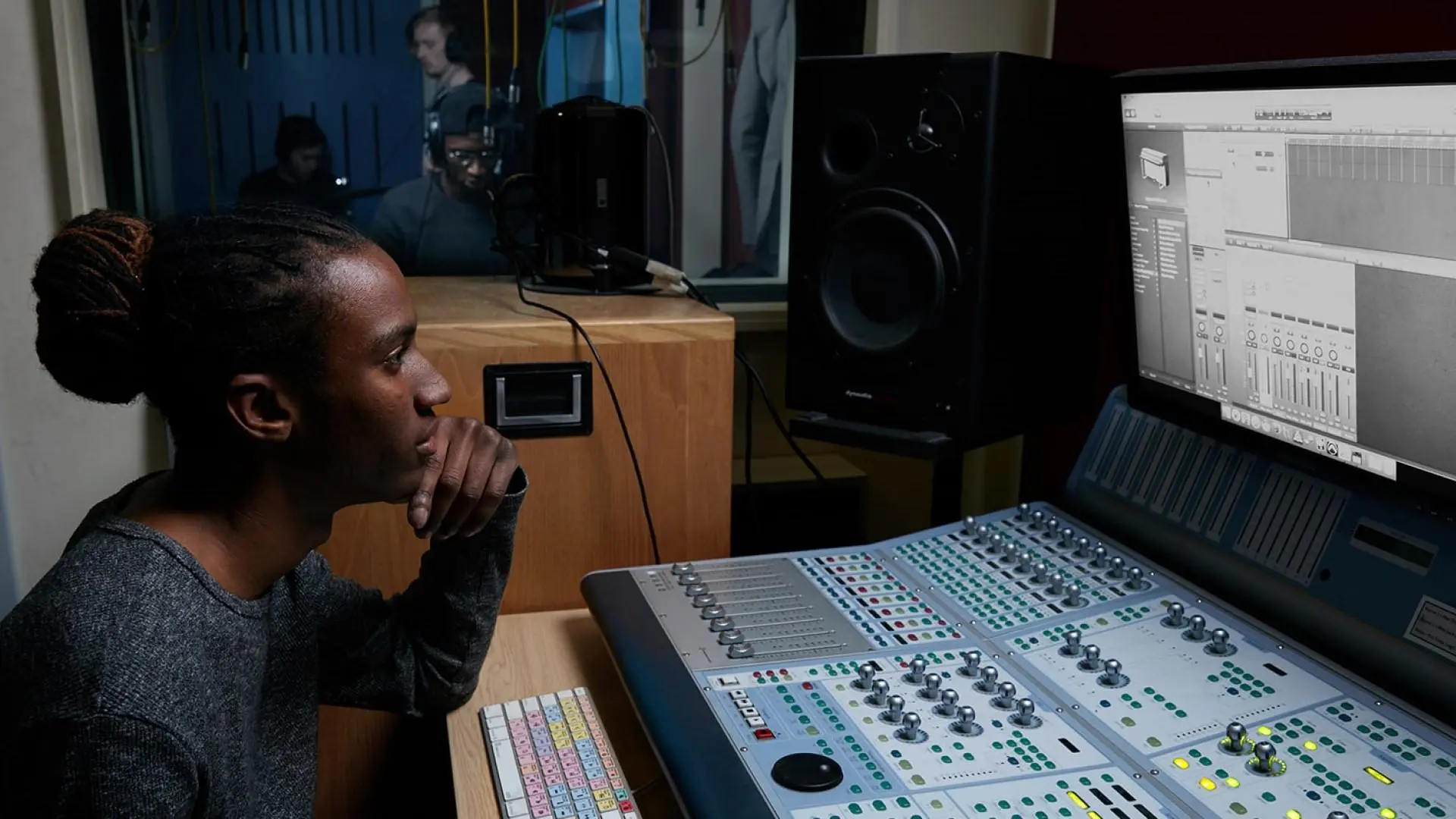
Throughout your studies you will have the opportunity to use a variety of contemporary, industry-standard software and plugins, including; Logic Pro X, Ableton Live Suite, Pro Tools and Native Instruments’ Komplete. You will also enjoy access to our professional recording studios, acoustically treated workstations, DJ equipment/facilities, music labs, instrumental practice rooms and dubbing suites.

Member of:

Academic partner:

This degree is ideally suited to students who have a genuine desire to progress and succeed within the music industry, as either a producer/composer, or digital creative within the wider creative sectors including film, games, TV, etc.
BA (Hons) Digital Music students go on to enjoy a range of careers and professions. Thanks to the diversity of the course, graduates can apply for a variety of roles within the music and creative industries such as becoming a releasing artist/producer, studio-based third-party production, sound engineering, music/sound creation for film, games and online media, DJing and live performance.
Past graduates have gone on to become releasing producers in their own right, as well as mastering engineers, sound editors, label owners, composers for film and sound designers for games. You will also be well placed for other music-related roles, including post-production sound, sound/music editing, Foley artistry, sound design, ADR recording/editing, sound effects editing and film and TV composition.
Hear from Solent alumni about where their careers have taken them and how studying at Solent prepared them for their future.
Read more stories“If you want to learn about a variety of key elements of electronic music production, this course is for you”
The University cannot guarantee any particular members of staff will teach specific aspects of the course in the future, but will endeavour to ensure the teaching team maintains their balance of experience and qualifications.
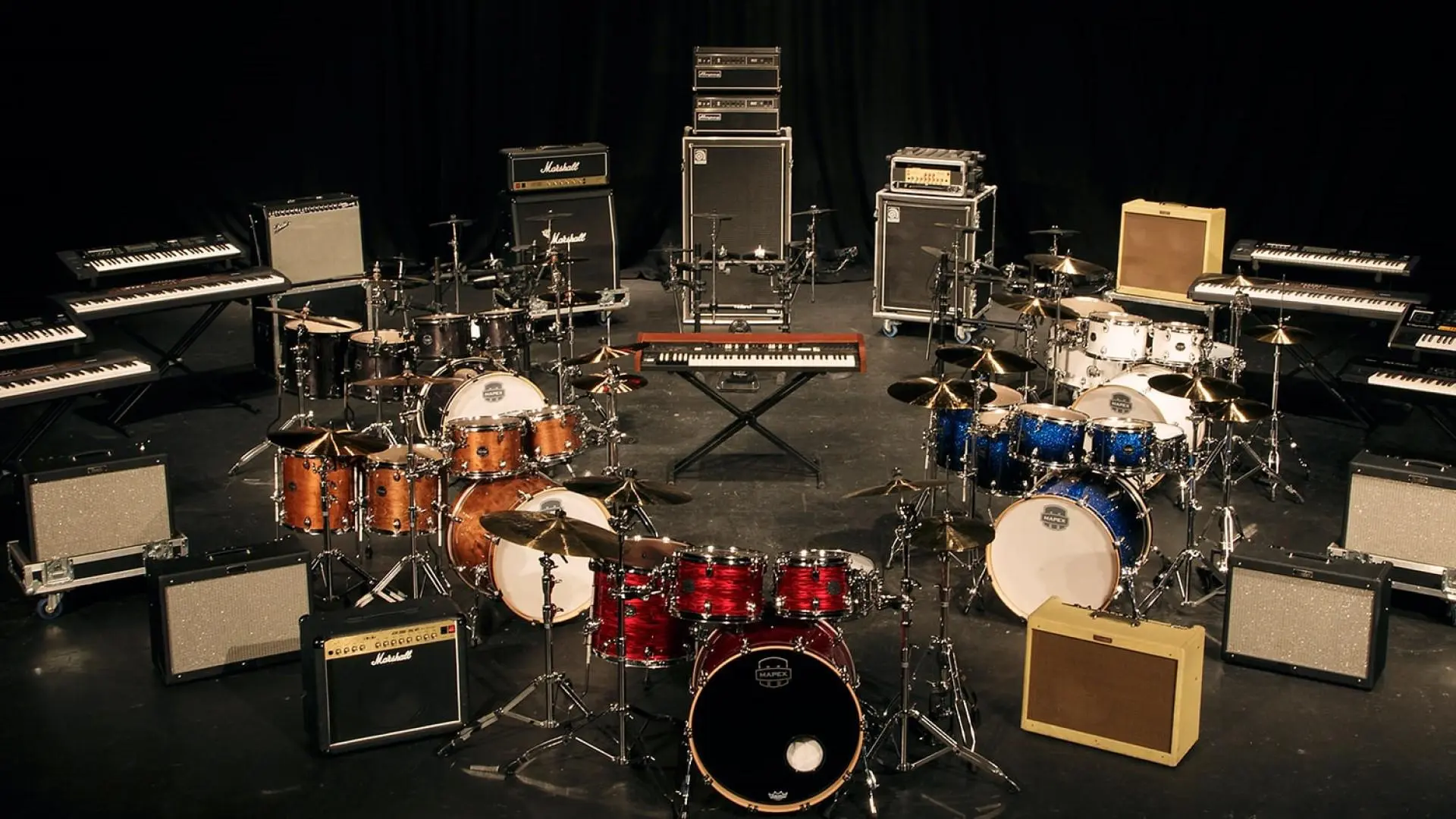
During the course you will have the chance to use a variety of industry-standard software and hardware devices, and will learn and develop your skills using the following facilities: cutting-edge music studios (running Pro Tools and Logic Pro X), student-friendly music laboratories (including a dedicated digital music lab with Logic Pro X, Ableton Live Suite and Native Instruments’ Komplete), dubbing Suites for TV and film, mixdown workstations/booths, DJing live zone, and rehearsal/practice rooms.
The University’s media loans hatch also enables you to borrow equipment for university work, or other private projects.
Broaden your horizons by adding an international dimension to your CV – essential to achieving success in today’s fast-changing, global environment.
Studying, working or volunteering in another country could be the experience of a lifetime. Enhance your degree by developing important global skills such as knowledge of other countries, language skills, intercultural awareness, adaptability and confidence.
For more information, please email international.mobility@solent.ac.uk.

Through this module students will learn about the DAW (Digital Audio Workstation) with an emphasis on creative audio techniques and practices, and consider/employ fundamental compositional ideas/theories, basic MIDI-related functions and mixing rudiments into their work.
This module aims to equip students with the skills and knowledge to manipulate/control the timbral qualities of a sound by considering the principles of audio synthesis and sound design within a DAW and/or using hardware synthesisers. It will also address music composition and related MIDI/DAW functions, so as to be able to deploy appropriate synthesis elements/new patch-creation within a musical context.
This module aims to develop students’ skills in creatively reinterpreting existing musical material through contemporary remix practices. It encourages ethical use of audio, integration of original and recorded elements, and professional production standards, while supporting the development of a personal creative identity.
Mixing is one of the most important and least understood aspects of the production process, with a mix really ‘making or breaking’ a track. The mix will ultimately determine how a piece of produced music translates in any given environment, how the various elements of a track interact, and how the listener perceives the result. Students will ultimately aim to produce balanced stereo mixes within this module; in keeping with industry standards.
In this module, students will study the basics of creating original music, recording Foley and developing sound FX/sound design for film and/or related media. Topics covered will include traditional music practices, and how these can be combined with contemporary music production techniques to produce appropriate music that will support audiovisual media.
This module aims to help bridge the gap between the aspiring music producer and professional digital artist. Students will consider the breadth of the music/creative industries, various music legalities, different income streams available to the contemporary digital artist/business, as well as developing important transferable skills appropriate to commercial and industry-related employment and promotion.
This module aims to develop students’ skills, confidence, and professional awareness in performing original music live using digital technologies. Students will cultivate creative decision-making, technical competence with DAWs and MIDI controllers, and the ability to plan and deliver effective live performances.
Please note: Not all optional modules are guaranteed to run each year.
This module aims to develop students’ practical and creative skills in DJing while fostering an understanding of its cultural and industry context. Students will cultivate technical competence, creative decision-making, and professional awareness in live performance settings. The module also encourages critical reflection on musical choices, performance practice, and the wider role of DJ culture in contemporary music.
Within this module you will explore the way that sound is recorded, produced, manipulated and encoded within a video game. You will study some of the key systems and technologies currently in use for production and encoding of game audio and music, as well as examining the driving factors which are pushing these technologies forward.
This module provides an opportunity to experience audio mastering practices, and introduces spatial audio in alignment with industry developments, topics such as Dolby Atmos are explored in our specialist studios.
Within this module, students are given the opportunity to underline the professional nature and direction of their creative work through the development of an individually-negotiated programme of study. Co-Lab is a synthesis of the students' practical, theoretical and music/aural skills, culminating in the production of a specific body of work, carried out in collaboration.
Within this module, students will develop their own professional brand and launch their music, product or service worldwide via online mediums, bridging the gap between the aspiring music producer and professional digital artist; students already being ‘visible’ within the music and/or creative industries prior to completing their studies.
In readiness for their desired future career within the music/creative industry, students are to produce an industry-focussed, music/sound-related artefact or portfolio, showcasing their key musical/production strengths, skills and proficiencies - ready to share with prospective employers upon graduation.
Contact international admissions
Email: Call:As part of this course, you will study one module at a time, giving you the chance to build a deeper understanding and see the results of your hard work more quickly. With regular assessments and feedback, rather than exams all at once, you’ll also benefit from improved focus, and a more manageable workload.
Learn more about block teaching
The student achievement team are on hand to help you succeed during your studies at Solent. They aim to contact you at key times during your time here with personalised information, advice and guidance, by email or phone.
The disability advice team provides information, advice and guidance for disabled students.
All students can access Succeed@Solent, Solent's online guide to getting better grades. It offers extensive, practical information and advice on topics such as academic writing, research and presentations.
The music industry contributed £6.7 billion to the UK economy during 2022 in terms of gross value-added (GVA). Exports topped £4 billion, and employment stood at 210,000. (UK Music 2023).
You could be working as an electronic music producer, or DJ either to release music across of multimedia channels, or performing on stage at music festivals or music venues across the globe.
There are also a huge opportunities to work as a sound engineer for a vast variety of genres, to perfect the sound of artists in the studio.
And with the UK computer games industry being the largest in Europe, generating £2bn in global sales each year, there is a growing role for music producers to create soundtracks and sound effects for games.

Starting salary: £25,000 approx
More experienced sound engineers can expect to earn between £25,000 and £50,000. Engineers working with very successful artists may command higher salaries.
Per hour: £25 to £55
Most music producers work on an hourly basis, with fees starting at around £25 to £55 per hour. Experienced music producers can charge up to £200 per hour, depending on their previous work and level of skill. If you're a music producer on live events, salaries may be more fixed. The BBC, for example, employs producers on its music programmes and live events. An entry level salary for this kind of role ranges from approximately £18,000 to £25,000.
Average salary: £23,000
As an entry-level sound designer, you can earn in the region of £18,000. The average yearly salary for a designer with more than five years' experience is £23,000. Experienced designers can expect to earn between £30,000 and £41,000.
The stated salaries are published on prospects.ac.uk.
Hear from Solent alumni about where their careers have taken them and how studying at Solent prepared them for their future.
Read more stories“If you want to learn about a variety of key elements of electronic music production, this course is for you”
The Solent Careers team is committed to getting students into great careers.
While you are studying, the team can help you with finding work experience or placements, link you with a mentor, check your CV, or offer one-to-one guidance.
We also have graduate job opportunities just for Solent graduates.

Top 25%
of UK unis for sustained employment
Longitudinal Educational Outcomes, 2025
Every student at Solent University will also have the option to study an additional Certificate in Practical Artificial Intelligence qualification alongside their course. Free of charge, the course ensures you'll be prepared for a fantastic and varied career after graduation.

Thinking about studying further than an undergraduate degree? Alumni can get 20% off their postgraduate study.

Build your creative post-production skills to make your mark in the film and television industry. Solent’s MA Post Production in Film and Television will see you working with...
Find out moreThe tuition fees for the 2027/28 academic year are not yet available. For guidance, the 2026/27 fees were:
For further information, please visit our tuition fees page.
While most course costs are covered by your tuition fees, some essential resources and optional extras may need to be paid for separately. For advice on budgeting and managing your money, please contact student.funding@solent.ac.uk.
The additional costs for this academic year are not yet available. For guidance, previous additional costs have been:
Optional costs:
There may be opportunities for optional trips, ranging from UK study trips (approx. £275) to a USA study trip (approximately £1,100).
Studio headphones (for recommended quality approx. £130) recommended brand: Audio-Technica/Beyerdynamic.
Solent University offers a range of bursaries and scholarships that provide financial assistance or waive fees for tuition or accommodation. Each bursary or scholarship has specific eligibility criteria. Check out our bursaries and scholarships pages to find out more.
Cost of living support
At Solent, we understand that the cost of living crisis may be of some concern. To help, we've put together some detailed information to show what support is available and how to make your money go further.
Graduation costs
There is no charge to attend graduation, but you will be required to pay for the rental of your academic gown (approximately £45 per graduate, depending on your award). You may also wish to purchase official photography packages, which range in price from £15 to £200+. Graduation is not compulsory, so if you prefer to have your award sent to you, there is no cost. Extra guest tickets will go on sale after results publication and will be sold on a first-come-first-served basis. The cost per ticket is currently £20. Please note, we do not guarantee there will be any extra tickets available to purchase.
Contact international admissions
Email: Call:Please select an option below:
As a general guide, we look for qualifications that are equivalent to the British high school A-levels.
If you are applying from outside the UK, find information about entry requirements, visas and agents for your country here.
For further information about EU qualifications, please see our course entry requirements document.
All international applicants need to be aware that the English language requirements to attend Solent University, and the English language requirements to obtain a visa from the Home Office, may be different. This means that if you meet the Solent University language requirement to gain a place on the course, you may still have to meet additional requirements to be granted with a visa by the Home Office.
We strongly advise all applicants to visit the Home Office website which outlines all the requirements for a successful visa application.
Full-time
Any student applying for the first year of a full-time/sandwich undergraduate course must apply through UCAS (University and Colleges Admissions Service). This includes mature, overseas and EU students.
Nearly all schools and colleges offer their students the facility of applying electronically through the UCAS website using 'Apply'; it may also be used by those applying independently in the UK and overseas. This facility and all course information can be found on the UCAS website: www.ucas.com.
Your application should reach UCAS by 14 January if you hope to enter a course the following autumn. Early application is advised for the most popular subject areas. Late applications may be made until the end of June. The UCAS Code for the University is S30, code name SOLNT.
Find out what happens after you apply
Contextual offers
Solent endeavours to offer learning opportunities to students from all backgrounds. When we receive and review an application, we take into consideration the context and personal circumstances of applicants when making a decision, which means our advertised entry tariff could be reduced.
Find out more about Solent's contextual offers
Top-up route:
We welcome applications from students currently studying a Foundation Degree, DipHE, HNC, HND or modules of an undergraduate degree course at another university, who wish to enter directly into Years 2 or 3 of one of our undergraduate degree courses. Please contact our admissions team for more information: contact us
Applicants who do not have English as their first language will be required to demonstrate an approved level of proficiency in the use of the English language. The agreed minimum requirements for this course are:
TOEFL IBT tests taken prior to 21 January 2026
TOEFL IBT tests taken from 21 January 2026
Qualifications are checked before enrolment, and international students must bring their original certificates or certified copies when coming to study at the University.
Pre-Sessional English programme
The University also offers a pre-sessional English programme for international students who wish to improve their level of English before starting a degree course.
Contact international admissions
Email: Call: