
BA (Hons)Education
Apply on UCAS
Why study an education degree at Solent University
Prepare for a career in education by exploring what it means to be an educator, while gaining the practical skills needed to work in diverse educational settings.
- Top0%of UK unis for teaching quality, out of 130 institutions (Times Good Uni Guide 2026)
- 0thin the UK for First/2:1 degrees, out of 130 institutions (The Times Good Uni Guide 2026)
- £0minvested in our campus estate and facilities
- By engaging with real-world case studies, collaborative projects, and authentic learning experiences, learners will cultivate key employability skills, such as critical thinking, resilience, adaptability, and ethical awareness.
- We are well established within the Southampton community, working closely with schools and other educational organisations. Practical experiences are embedded across all three years of study.
- The course prepares graduates to become change-makers in education, with the confidence to lead innovation and inclusion.
- This course is primarily coursework-driven, with assessments designed to build real-world experience and develop the skills employers value.
Any questions?
Contact international admissions
Email: Call:Course overview
Our BA (Hons) Education degree has been specifically developed to prepare you for a rewarding career in the education sector. You will explore contemporary learning and teaching practices and develop a clear understanding of how people learn within today’s diverse and changing society.
You will gain insight into the challenges and innovations shaping education locally, nationally, and globally. By drawing on psychology, sociology, policy, and educational practice, you will develop a strong understanding of how people learn and develop, helping you shape the future of education.
Throughout your studies, you will be immersed in practice-led learning and gain first-hand experience in real educational settings. You will apply theory across a wide variety of learning environments, building confidence and practical skills alongside academic knowledge.
Strong partnerships with educational institutions and sector organisations allow you to engage with real-world challenges such as inclusive education, curriculum innovation, and digital learning. Practical experiences are embedded across all three years to ensure you graduate with the knowledge, skills, and behaviours needed to confidently respond to changing professional demands in education.
Who is this course for?
This course is ideal for students from a range of academic backgrounds who share a passion for education and its positive impact on young lives.
It prepares graduates for dynamic careers across schools and wider educational settings, including progression into Initial Teacher Training (ITT), enhanced Teaching Assistant roles, and other education-focused pathways. You will graduate with the knowledge, practical skills, and professional behaviours needed to succeed in a wide range of impactful roles in education and beyond.
What does this course lead to?
This education degree has been specifically developed to prepare graduates for a career in the education sector, whether graduates wish to pursue postgraduate study and become a qualified teacher, or enter the education profession directly as a teaching assistant, education leader, education administrator, or one of the many other education professionals working across schools. The degree’s versatility ensures you graduate with the skills and adaptability to make a meaningful impact across schools, organisations, and wider educational settings.
Meet the team
The course team and other university staff maintain close ties with industry practitioners. These connections also provide us with a steady programme of guest speakers.

The University cannot guarantee any particular members of staff will teach specific aspects of the course in the future, but will endeavour to ensure the teaching team maintains their balance of experience and qualifications.
Facilities
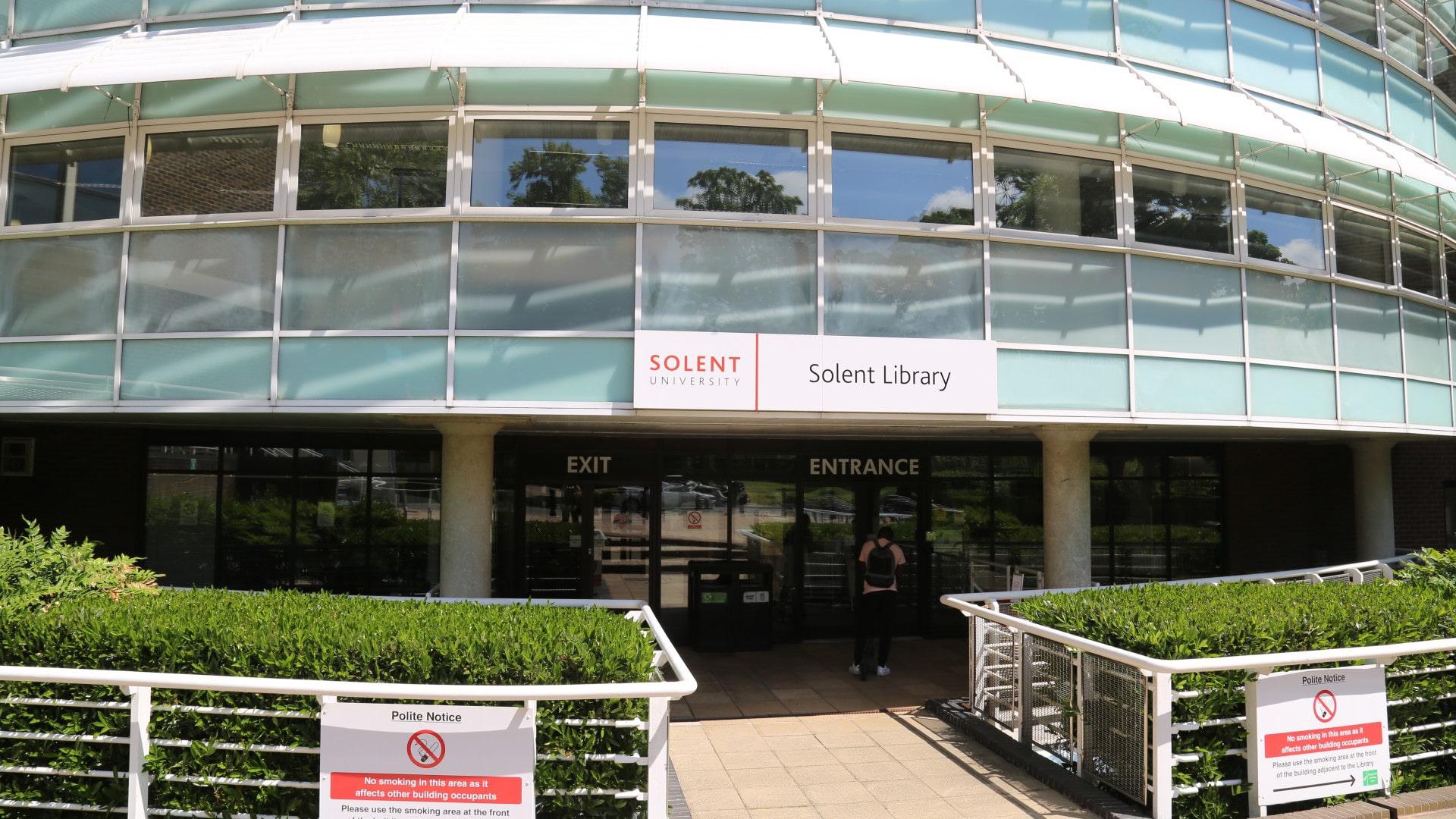
Our vibrant campus brings state-of-the-art facilities to enhance your learning and elevate your student experience. Our award-winning teaching building, The Spark is centred around students and offers a stimulating study environment with flexible learning spaces.
Away from studying, why not try out the gyms, fitness studios and sports halls in our £28 million Sports Complex, or watch a blockbuster film at our student-run cinema with Dolby Atmos audio.


International opportunities
Broaden your horizons by adding an international dimension to your CV – essential to achieving success in today’s fast-changing, global environment.
Studying, working or volunteering in another country could be the experience of a lifetime. Enhance your degree by developing important global skills such as knowledge of other countries, language skills, intercultural awareness, adaptability and confidence.
For more information, please email international.mobility@solent.ac.uk.

What you'll study
Core modules
Education Navigator: Who You Are And Who You Aspire To Be
This module serves as an introduction to the underpinning FOCUS-HE framework that will underpin the entire degree journey. It aims to empower learners to explore their personal identity, values, and aspirations within the context of education and lifelong learning.
Foundations Of Educational Thought
This module develops an understanding of the philosophical foundations that underpin educational theory and practice. Learners will critically engage with key philosophical traditions, exploring their historical and contemporary influence on schooling, curriculum, pedagogy, and educational organisation.
The Learning Mind
This module introduces learners to the fundamental principles of how people learn and the real-world challenges educators face in supporting diverse learners. The module explores key themes such as motivation, cognitive processes, memory, behaviour and the impact of social and cultural factors on learning.
The Social Blueprint
This module provides an introduction to macro-sociology and the key sociological perspectives employed in understanding education in contemporary societies. Learners will be introduced to functionalist, Marxist/Neo-Marxist, Feminist and Neoliberal frameworks in exploring how education is shaped by ideology, inequality, social policy and political ideology. Further, how these forces affect different social groups and diverse perspectives on who benefits from education in its contemporary manifestation are also considered.
Core modules
The Learning Architect
This module focuses on the principles and practices of designing effective learning experiences informed by educational research and pedagogical theory. It examines a range of research-based strategies and examples of successful institutional practice, enabling critical analysis and application in authentic teaching contexts.
Learning Unlocked
This module examines how innovative approaches can transform learning and overcome persistent educational challenges. The module focuses on themes such as learner engagement, accessibility, cognitive load and the role of digital technologies in modern learning environments. Learners will work through case studies, design challenges and live briefs that require them to diagnose learning problems and propose evidence-based solutions.
The Social Experience of Education
This module introduces micro-sociological theory to explore education as a lived, social experience. Drawing on interactionism, symbolic interactionism, phenomenology, labelling theory and critical intersectionality, learners will examine how individuals and groups experience, interpret and manoeuvre education according to class, gender, ethnicity and disability, constructing and performing identities in interaction with their school environment and social worlds.
Context and Character
This module explores how academic environments shape learning, study practices, and professional behaviours. A key element of the module is the role as a peer mentor, supporting fellow learners to develop effective study habits, academic skills, and professional approaches to learning. The module focuses on developing key skills such as communication, critical thinking, time management, academic integrity, and reflective practice.
Core modules
Education and You: Who you Are, What you Do, Why it Matters
This module empowers learners to critically appraise their educational journey, synthesizing academic, professional, and personal experiences to understand how their skills, knowledge, and praxis have evolved. It challenges learners to construct a reflective and reflexive manifesto for future practice, considering the impact of their accumulated expertise on lifelong learning and professional identity.
Mapping the Field
This module enables learners to develop a coherent and critical understanding of key theories, concepts, and discussions within the field of education. Learners will research and critically review academic literature to map a research area of their choice, evaluating the quality, relevance, and limitations of sources. Learners will translate their findings into a visually clear and academically rigorous poster, communicating ideas to both academic and professional audiences. The module will develop practice-led skills in oral presentation and scholarly dialogue, through a structured Q&A session.
Reflective and Reflexive Inquiry
This module engages learners in designing, justifying and defending an independent research proposal which looks to contribute new knowledge to a chosen academic and/or professional field of education. Through an in-depth interrogation of ontology, epistemology and methodology, learners will explore the philosophical, theoretical and ethical foundations of educational research. A wide range of qualitative, quantitative and mixed methods approaches are examined alongside reflexivity, researcher positionality and educational research ethics.
Critical Inquiry
This module allows learners to extend their knowledge of education by undertaking an independent critical enquiry into a focused area of contemporary practice, theory or policy. Learners will explore real-world educational challenges such as equity, inclusion, curriculum relevance, wellbeing, digital learning and professional accountability. The module will develop practice-led analytical skills, academic writing, critical judgement and decision making.
Any questions?
Contact international admissions
Email: Call:Block teaching at Solent
You will learn by:
You may be assessed at the end of each block by:
- Reports
- Case studies
- Portfolios
- Individual presentations
- Group presentations
- Poster presentations
- Case studies
- Blogs
As part of this course, you will study one module at a time, giving you the chance to build a deeper understanding and see the results of your hard work more quickly. With regular assessments and feedback, rather than exams all at once, you’ll also benefit from improved focus, and a more manageable workload.
Learn more about block teaching
Study support
The student achievement team are on hand to help you succeed during your studies at Solent. They aim to contact you at key times during your time here with personalised information, advice and guidance, by email or phone.
The disability advice team provides information, advice and guidance for disabled students.
All students can access Succeed@Solent, Solent's online guide to getting better grades. It offers extensive, practical information and advice on topics such as academic writing, research and presentations.
Why choose a career in education?
Solent's well established Southampton schools’ partnerships with school-based placements and practical experiences are embedded across all three years of study, giving you an interdisciplinary approach to understanding education alongside a placement in an educational setting.
Students will develop the knowledge and skills to successfully apply for teacher training upon graduation in PGCE or School direct approaches or other educational routes/careers.

You could earn:
Primary school teacher
Starting salary: £31,650
In the England, the main salary scale rises incrementally from £31,650 to £43,607 (2024/25 academic year). Enhanced pay scales apply for teachers working in or near London. After gaining experience and expertise, there are opportunities to move up into the role of leading practitioner in England and Wales.
Secondary school teacher
Starting salary: £31,650
In the England, the main salary scale rises incrementally from £31,650 to £43,607 (2024/25 academic year). Enhanced pay scales apply for teachers working in or near London. After gaining experience and expertise, there are opportunities to move up into the role of leading practitioner in England and Wales.
Private tutor
Per hour: £30 to £42
The average rate for a private tutor session is between £30 and £42 per hour. Your rate could increase to upwards of £50 per hour as you gain experience and build your reputation.
Education consultant
Starting salary: £20,000 to £30,000
Experienced education consultants can earn £30,000 to £50,000, and up to £60,000 in London.
The stated salaries are published on prospects.ac.uk.
Solent Careers
The Solent Careers team is committed to getting students into great careers.
While you are studying, the team can help you with finding work experience or placements, link you with a mentor, check your CV, or offer one-to-one guidance.
We also have graduate job opportunities just for Solent graduates.

Top 25%
of UK unis for sustained employment
Longitudinal Educational Outcomes, 2025
Certificate in Practical Artificial Intelligence
Every student at Solent University will also have the option to study an additional Certificate in Practical Artificial Intelligence qualification alongside their course. Free of charge, the course ensures you'll be prepared for a fantastic and varied career after graduation.

Tuition fees
The tuition fees for the 2027/28 academic year are not yet available. For guidance, the 2026/27 fees were:
- UK, ROI, EU (settled status) and Channel Island full-time fees: £9,790 per year
- International full-time fees: £19,081 per year
For further information, please visit our tuition fees page.
Extra course costs
While most course costs are covered by your tuition fees, some essential resources and optional extras may need to be paid for separately. For advice on budgeting and managing your money, please contact student.funding@solent.ac.uk.
The additional costs for this academic year are not yet available. For guidance, previous additional costs have been:
Compulsory costs
Students are also required to undertake DBS criminal records checks as part of their enrolment. This is a compulsory element of the course and is payable by the student at a cost of approximately £60. The DBS process is completed online and students will be sent further guidance and the online link in advance to starting the course.
Bursaries, scholarships and financial support
Solent University offers a range of bursaries and scholarships that provide financial assistance or waive fees for tuition or accommodation. Each bursary or scholarship has specific eligibility criteria. Check out our bursaries and scholarships pages to find out more.
Cost of living support
At Solent, we understand that the cost of living crisis may be of some concern. To help, we've put together some detailed information to show what support is available and how to make your money go further.
Graduation costs
There is no charge to attend graduation, but you will be required to pay for the rental of your academic gown (approximately £45 per graduate, depending on your award). You may also wish to purchase official photography packages, which range in price from £15 to £200+. Graduation is not compulsory, so if you prefer to have your award sent to you, there is no cost. Extra guest tickets will go on sale after results publication and will be sold on a first-come-first-served basis. The cost per ticket is currently £20. Please note, we do not guarantee there will be any extra tickets available to purchase.
Any questions?
Contact international admissions
Email: Call:Entry requirements
Please select an option below:
Key entry requirements
104-120 UCAS tariff points
- A minimum of two completed A-levels, a BTEC Extended Diploma at DMM or BTEC Diploma at D*D, a T-Level Merit, or equivalent qualification, or a combination of qualifications which comply with the minimum entry requirement of 104 UCAS points.
- All students will be required to undertake a criminal convictions check through the Disclosure and Barring Service.
- For those wishing to pursue a career in teacher training, GCSE English and Mathematics at grade 4 or above (previously grade C) are required. Grade 4 (C) or above for Science is also required if you wish to teach primary education.
- For further information about UK qualifications, please contact admissions.
Key entry requirements
As a general guide, we look for qualifications that are equivalent to the British high school A-levels.
If you are applying from outside the UK, find information about entry requirements, visas and agents for your country here.
For further information about EU qualifications, please see our course entry requirements document.
Key entry requirements
As a general guide, we look for qualifications that are equivalent to the British high school A-levels.
If you are applying from outside the UK, find information about entry requirements, visas and agents for your country here.
For further information about international qualifications, please see our course entry requirements document.
Note to all international students requiring a visa
All international applicants need to be aware that the English language requirements to attend Solent University, and the English language requirements to obtain a visa from the Home Office, may be different. This means that if you meet the Solent University language requirement to gain a place on the course, you may still have to meet additional requirements to be granted with a visa by the Home Office.
We strongly advise all applicants to visit the Home Office website which outlines all the requirements for a successful visa application.
How to apply
Full-time
Any student applying for the first year of a full-time/sandwich undergraduate course must apply through UCAS (University and Colleges Admissions Service). This includes mature, overseas and EU students.
Nearly all schools and colleges offer their students the facility of applying electronically through the UCAS website using 'Apply'; it may also be used by those applying independently in the UK and overseas. This facility and all course information can be found on the UCAS website: www.ucas.com.
Your application should reach UCAS by 14 January if you hope to enter a course the following autumn. Early application is advised for the most popular subject areas. Late applications may be made until the end of June. The UCAS Code for the University is S30, code name SOLNT.
Find out what happens after you apply
Contextual offers
Solent endeavours to offer learning opportunities to students from all backgrounds. When we receive and review an application, we take into consideration the context and personal circumstances of applicants when making a decision, which means our advertised entry tariff could be reduced.
Find out more about Solent's contextual offers
Language requirements
Applicants who do not have English as their first language will be required to demonstrate an approved level of proficiency in the use of the English language. The agreed minimum requirements for this course are:
- IELTS minimum 6.0 overall with a minimum of 5.5 in each individual component.
- Duolingo English Language Test - 115 overall with minimum of 95 in each component or equivalent.
TOEFL IBT tests taken prior to 21 January 2026
- Minimum overall score of 80 with a minimum of 20 in each individual component.
TOEFL IBT tests taken from 21 January 2026
- Minimum overall score of 4.5 with a minimum of 4 in each individual component.
Qualifications are checked before enrolment, and international students must bring their original certificates or certified copies when coming to study at the University.
Pre-Sessional English programme
The University also offers a pre-sessional English programme for international students who wish to improve their level of English before starting a degree course.
Any questions?
Contact international admissions
Email: Call:Make your application
- 3 years