












FdScNursing Associate
Apply through Clearing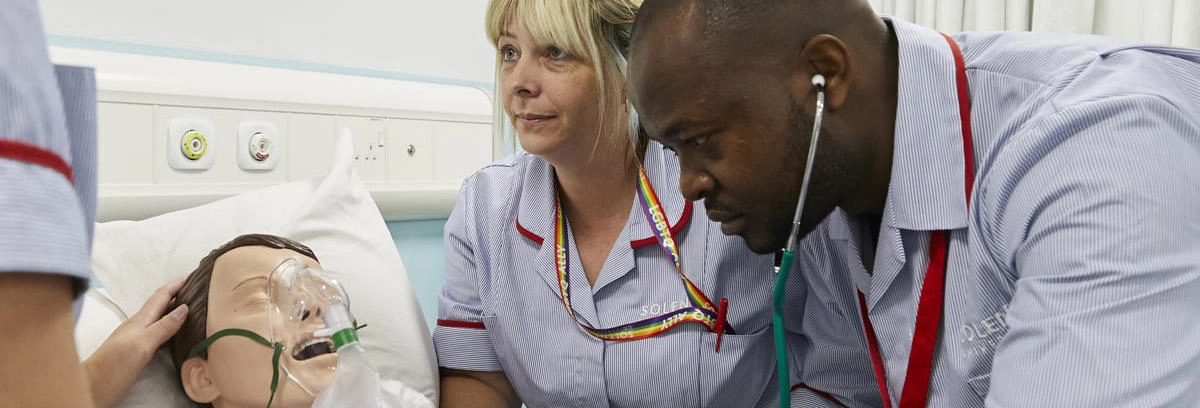
Available through clearing
- 2026
- 2027
UCAS code: HSA1
Institution code: S30
UCAS points: 48Flexible entry options available
Campus: Southampton City CentreView on Google Maps
Why study a nursing associate foundation degree at Solent University
Become a skilled nursing associate in an incredible profession, with fantastic career prospects in a range of different healthcare settings on our NMC-accredited course.
- Top0in the UK for student satisfaction in the subject of nursing and midwifery, out of 81 institutions (Complete University Guide 2027)
- Top0%for teaching quality, out of 131 institutions (Times Good University Guide, 2026)
- £0minvestment in our campus and industry-standard facilities
- Successful completion of this course allows registration to the NMC as a nursing associate.
- Take part in clinical placements in both years of study, in a variety of primary and secondary services, such as community and hospital teams, nursing homes, and specialist providers.
- All employed graduates who responded to the HESA Graduate Outcomes survey (from 2021 to 2024) were in high-skilled employment.
- 96% of employed graduates who responded to the HESA Graduate Outcomes survey (from 2021 to 2024) agreed that they are utilising what they learnt during their studies in their current work.
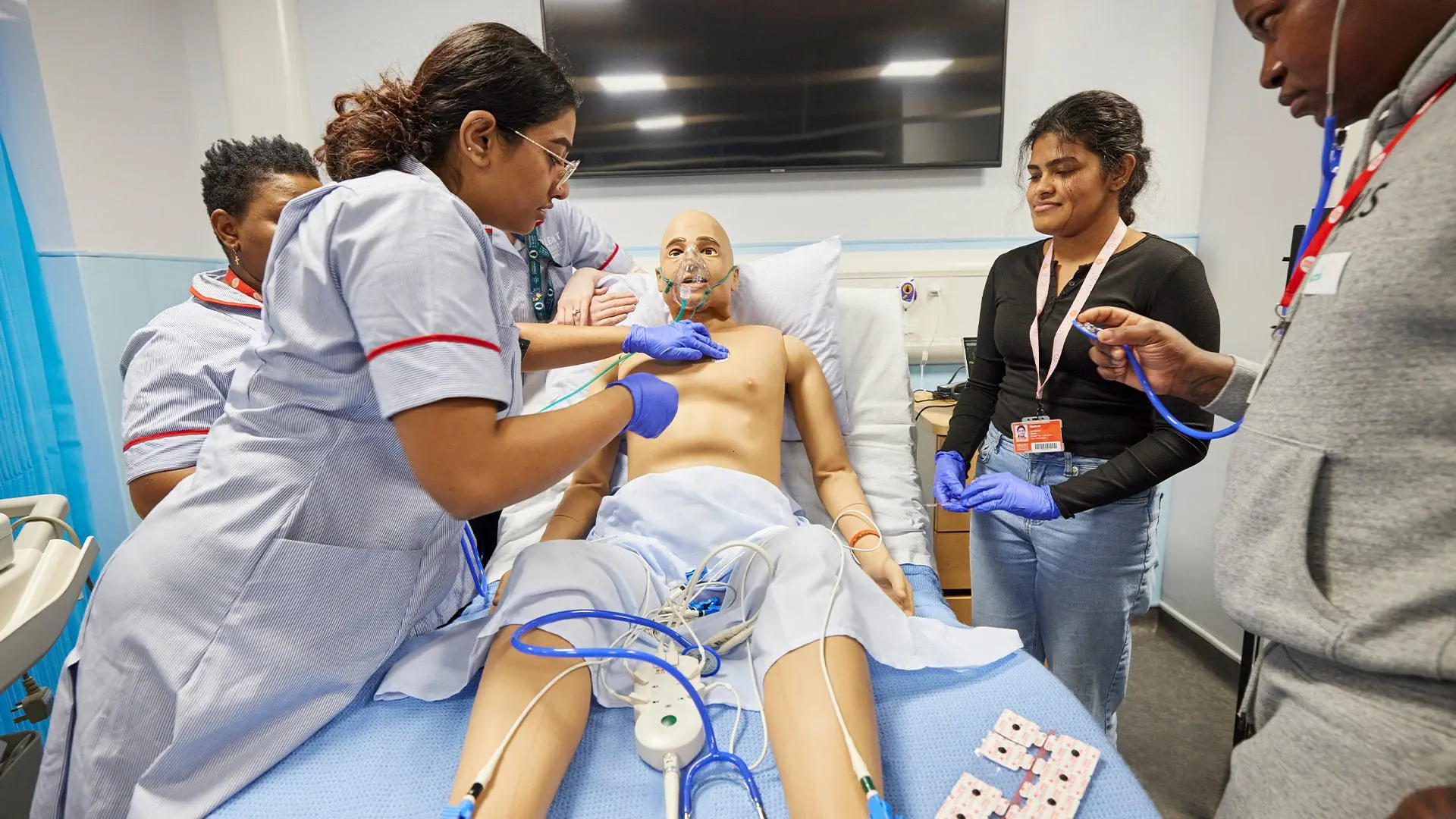
- Learn using specialist nursing facilities including a nursing simulation suite, nutrition laboratories and biomedical science laboratories.
- Our teaching team have excellent teaching and clinical experiences. They can help you to become a skilled nursing associate to make a positive difference to people lives.
Any questions?
Contact international admissions
Email: Call:Course overview
The FdSc Nursing Associate course is grounded in our experience of the value that nursing associates bring to patients, people who use services, and the multidisciplinary teams in which they work across all four fields of nursing practice.
This foundation degree programme will equip you with the knowledge, skills, and behaviours required for modern nursing associate practice in all four fields of adult, child, mental health, and learning disability. This includes fostering a broad global outlook on health, applied to the neighbourhoods and systems in which nursing associates practice. Awareness of global public health, environmental sustainability, and cyber security are key themes applied to work in clinical placements and through simulated practice learning. You'll be prepared to work in a healthcare environment where electronic health records, telehealth systems, digital medicines management platforms, and data security are already integral to the nursing associate role.
To support and demonstrate the development of our nursing associates in all areas of healthcare, such as digital competence, professional compassion and care, this foundation degree incorporates a range of authentic assessments across both theory and clinical placement settings. These assessments are designed to prepare you for modern professional nursing associate practice and include activities such as practical medicines management assessments, case presentations and debates as well as traditional academic assessments like exams, essays and reflections.
Solent nursing associates are confident in their role as professionals in their own right, with a unique and clearly defined scope of practice within nursing teams. We develop the foundations of evidence-based practice and lifelong learning in our students, enabling them to practise to the fullest extent of the nursing associate role and to succeed should they choose to progress in higher professional training.
Our nursing associates are aware of their responsibilities as registrants and uphold the NMC Code, demonstrating accountability in their practice and acting as positive ambassadors for the profession. We aim to develop both practical skills and underpinning theoretical knowledge through an equal balance of theory and practice-based learning, with simulated practice integrated proportionately throughout the programme. To ensure the needs of patients and people who use services remain central to nursing associate practice, this programme has been co-produced with people with lived experience of healthcare. People with lived experience and carers are also actively involved in teaching and in providing feedback to students throughout the course.
The curriculum is aligned with the Nursing & Midwifery Council Standards of Proficiency for Nursing Associates (2018) and the Standards for Student Supervision and Assessment (2023).
Accreditations
Accredited by:
Who is this course for?
This course is ideal for anyone who wishes to pursue a career to become a Registered Nursing Associate within the NHS, private, or community healthcare services. For more information about careers in the nursing family and to view the professional standards of practice and behaviour for nurses, midwives and nursing associates, please refer to the Code issued by the Nursing and Midwifery Council.
What does this course lead to?
On successful completion of your foundation degree, you will be invited to join the NMC register as a nursing associate, enabling you to start your health or social care career in the hands-on and rewarding role. Nursing associates work in a wide and growing range of health and social care settings as an integral part of the nursing team.
Meet the team
Your course is primarily delivered by Registered Nurses who bring with them a breadth of experience from across health and social care to ensure you are taught by those who are up to date with current methods and strategies underpinning the health and social care workforce.
The University cannot guarantee any particular members of staff will teach specific aspects of the course in the future, but will endeavour to ensure the teaching team maintains their balance of experience and qualifications.
Facilities
We have a dedicated clinical skills suite with a six bed ward, GP consulting room, nurse’s treatment room, waiting area/break out space, care home bedroom and working kitchen and bathroom. There is a wide range of clinical equipment including simulation manikins to facilitate a number of simulated scenarios.
Our vibrant campus brings state-of-the-art facilities to enhance your learning and elevate your student experience. Our award-winning teaching building, The Spark is centred around students and offers a stimulating study environment with flexible learning spaces. Away from studying, why not try out the gyms, fitness studios and sports halls in our £28 million Sports Complex, or watch a blockbuster film at our student-run cinema with Dolby Atmos audio.
What you'll study
Core modules
The Professional Identity of the Nursing Associate
This module provides the essential foundation skills for students entering the profession of nursing and healthcare, focusing on the development of professional identity, communication skills, and ethical practice. You will explore key nursing theories and develop the central communication skills required to build compassionate, respectful, and effective relationships with patients and service users from diverse backgrounds. You'll be introduced to fundamental academic skills and be provided with resources to support your academic development.
Essential Sciences for Healthcare Practice
In this module you be introduced to the essential scientific knowledge for safe practice as a nursing associate or assistant practitioner (health), covering anatomy and physiology of both adults and children and the biology underpinning health and illness. You will be introduced to key concepts around caring for people experiencing ill health, including individuals with learning disabilities and individuals experiencing mental illness.
Health and Wellbeing of Individuals and Communities
This module introduces you to health promotion, enabling you to build an early understanding of how health is shaped by biological, psychological, social, cultural, and environmental factors. Nursing associates and assistant practitioners (health) play a growing role in supporting people to improve and maintain their mental, physical and behavioural health and wellbeing.
Practice, Professionalism and Progression: Part One
This clinical practice module will prepare you for stepping into health and social care environments as a student nursing associate and achieving a solid foundation of fundamental care skills by the end of the year, known as part one. Whether you have years of experience as healthcare support worker or you are completely new to clinical practice, this module is designed to provide you with the essential foundations of nursing associate practice.
Core modules
Global Health for Inclusive Communities
In this module you will examine and assesses the complex dimension of global health delivery through an inclusive and culturally informed lens. Drawing on medical and psychological anthropology, it explores how health, illness, and care are perceived and experienced across diverse communities, and how these insights inform the development of equitable, person-centred healthcare practices worldwide
Applied Healthcare Sciences
In this module you will build on your knowledge from the Essential Sciences for Healthcare Practice and Professional Identity for the Nursing Associate modules in the previous year. You will develop your knowledge, skills and confidence in recognising, escalating and responding to clinical deterioration in a variety of healthcare settings.
Leadership, Supervision and Assessment
Leadership, supervision and assessment in practice are core skills in healthcare. On registration you will be required to support more junior staff and provide assurances of the quality of care in your clinical area. The support, trust and skills of your fellow inter-professional teams will be key in your success as a leader within your nursing associate role and your scope of practice. As a registered professional, you will be expected to support and supervise learners in practice - a key role in developing the future health care professional roles.
Practice, Professionalism and Progression: Part Two
This is the second and final clinical placement module you will complete as part of your nursing associate programme. This module builds on the theory and clinical skills you gained as a student nursing associate in your first year and focuses on enhancing your proficiency in providing and monitoring care for individuals and groups, building your knowledge of medicines management and preparing you for practice as a registered nursing associate. This is the year-long placement module and all hours are placement hours for NMC validation purposes.
Any questions?
Contact international admissions
Email: Call:How you will learn and be assessed
You will learn by:
You will be assessed by:
- Practical activities
- Reflective accounts
- Essays
- Case studies
- Practical exams
- Written exams
- Individual presentations
- Written assessments
As part of this course, you will study one module at a time, giving you the chance to build a deeper understanding and see the results of your hard work more quickly. With regular assessments and feedback, rather than exams all at once, you’ll also benefit from improved focus, and a more manageable workload.
Learn more about block teaching
Study support
The student achievement team are on hand to help you succeed during your studies at Solent. They aim to contact you at key times during your time here with personalised information, advice and guidance, by email or phone.
The disability advice team provides information, advice and guidance for disabled students.
All students can access Succeed@Solent, Solent's online guide to getting better grades. It offers extensive, practical information and advice on topics such as academic writing, research and presentations.

Why choose a career as a nursing associate?
Health and social care are a growing industries and nursing associates, along with other NMC-registered professionals, make up a key part of the nursing team.
While the NHS is a key provider of healthcare in the UK, nursing associates work in public, private, and voluntary and community sector health and social care organisations, making a real difference to the people they serve.

Solent Careers
The Solent Careers team is committed to getting students into great careers.
While you are studying, the team can help you with finding work experience or placements, link you with a mentor, check your CV, or offer one-to-one guidance.
We also have graduate job opportunities just for Solent graduates.

Top 25%
of UK unis for sustained employment
Longitudinal Educational Outcomes, 2025
Certificate in Practical Artificial Intelligence
Every student at Solent University will also have the option to study an additional Certificate in Practical Artificial Intelligence qualification alongside their course. Free of charge, the course ensures you'll be prepared for a fantastic and varied career after graduation.

Further study
Thinking about studying further than a foundation degree qualification? Take a look at the undergraduate courses you could progress on to.
Tuition fees
The tuition fees for the 2026/27 academic year are:
- UK, ROI, EU (settled status) and Channel Island full-time fees: £9,790 per year
- International full-time fees: £19,081 per year
For further information, please visit our tuition fees page.
Extra course costs
While most course costs are covered by your tuition fees, some essential resources and optional extras may need to be paid for separately.
The 2026/27 additional costs are not yet available. For guidance, previous additional costs have been:
- Two uniforms will be provided, but if you require additional uniforms this will cost in the region of £30
- The University will pay for an occupational health assessment, however you may need to pay for immunisations if they are not covered by your GP
- You will need a pair of suitable comfortable shoes while on clinical placement and studying in our simulation settings (estimated cost £40-£60)
- You will need to purchase some of your own clinical items, for instance a fob watch (estimated cost £5)
- You will need to be able to travel to study at our partner NHS trusts and to your placement - travel costs will be associated with this
For advice on budgeting and managing your money, please contact student.funding@solent.ac.uk.
Bursaries, scholarships and financial support
Solent University offers a range of bursaries and scholarships that provide financial assistance or waive fees for tuition or accommodation. Each bursary or scholarship has specific eligibility criteria. Check out our bursaries and scholarships pages to find out more.
Cost of living support
At Solent, we understand that the cost of living crisis may be of some concern. To help, we've put together some detailed information to show what support is available and how to make your money go further.
Graduation costs
There is no charge to attend graduation, but you will be required to pay for the rental of your academic gown (approximately £45 per graduate, depending on your award). You may also wish to purchase official photography packages, which range in price from £15 to £200+. Graduation is not compulsory, so if you prefer to have your award sent to you, there is no cost. Extra guest tickets will go on sale after results publication and will be sold on a first-come-first-served basis. The cost per ticket is currently £20. Please note, we do not guarantee there will be any extra tickets available to purchase.
Any questions?
Contact international admissions
Email: Call:Entry requirements
Please select an option below:
Key entry requirements
48 UCAS tariff points or equivalent
- Grade 4 or above in GCSE English language and mathematics (previously grade C).
- Interview including values based discussion/interview.
- Successful applicants may be able to transfer credits from another course or experiential learning. Recognition of prior learning must be capable of being mapped to the standards of proficiency for registered nurses and programme outcomes, up to a maximum of 50 percent of the programme. Applicants who hold registration with the NMC as a nurse may be able to transfer more than 50%.
- All students will be required to undertake a criminal convictions check through the Disclosure and Barring Service. This is organised by the University before enrolment.
- For further information about UK qualifications, please contact admissions.
Key entry requirements
As a general guide, we look for qualifications that are equivalent to the British high school A-levels.
If you are applying from outside the UK, find information about entry requirements, visas and agents for your country here.
For further information about EU qualifications, please see our course entry requirements document.
Key entry requirements
As a general guide, we look for qualifications that are equivalent to the British high school A-levels.
If you are applying from outside the UK, find information about entry requirements, visas and agents for your country here.
For further information about international qualifications, please see our course entry requirements document.
Note to all international students requiring a visa
All international applicants need to be aware that the English language requirements to attend Solent University, and the English language requirements to obtain a visa from the Home Office, may be different. This means that if you meet the Solent University language requirement to gain a place on the course, you may still have to meet additional requirements to be granted with a visa by the Home Office.
We strongly advise all applicants to visit the Home Office website which outlines all the requirements for a successful visa application.
How to apply
Full-time
Any student applying for the first year of a full-time/sandwich undergraduate course must apply through UCAS (University and Colleges Admissions Service). This includes mature, overseas and EU students.
Nearly all schools and colleges offer their students the facility of applying electronically through the UCAS website using 'Apply'; it may also be used by those applying independently in the UK and overseas. This facility and all course information can be found on the UCAS website: www.ucas.com.
Your application should reach UCAS by 31 January if you hope to enter a course the following autumn. Early application is advised for the most popular subject areas. Late applications may be made until the end of June. The UCAS Code for the University is S30, code name SOLNT.
Find out what happens after you apply
Language requirements
For applicants where English is not their first language, English language proficiency must be at a minimum of IELTS band 7.0 with a minimum component score of 7.0 in reading, listening and speaking, and 6.5 in writing. The Nursing and Midwifery Council (NMC) will also accept the OET examination certificate, for further information please refer to the NMC website.
Qualifications are checked before enrolment and international students must bring their original certificates or certified copies when coming to study at the University.
Pre-sessional English programme
The University also offers a Pre-sessional English language course for international students who wish to improve their level of English before starting a degree course.
UCAS points: 48
Any questions?
Contact international admissions
Email: Call:Make your application
- 2 years full-time