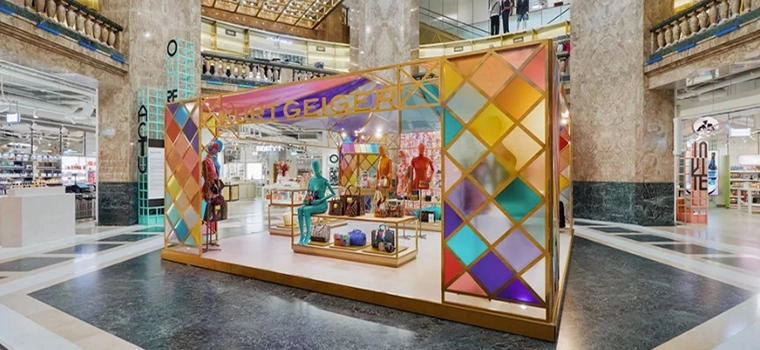
“Solent helped by providing first-class teaching, access to modern equipment and the latest technology.”


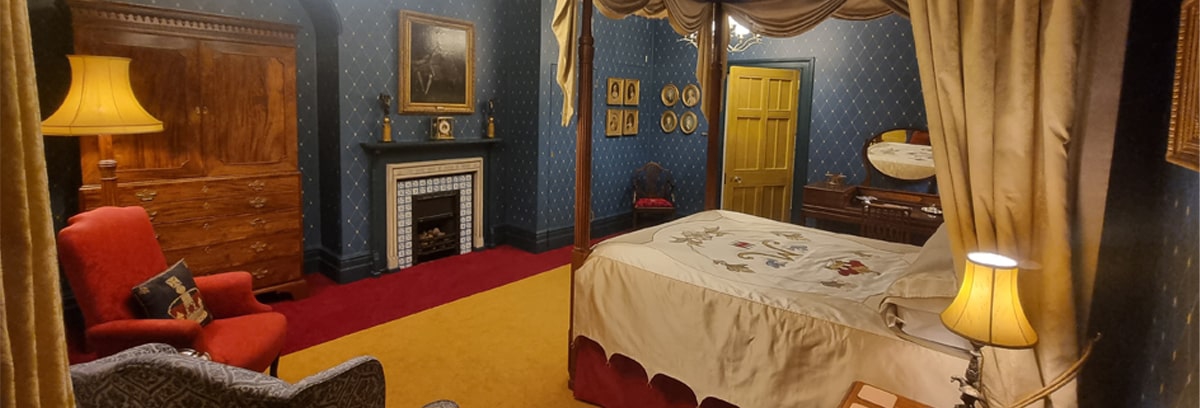
With award-winning graduates and a teaching team of industry professionals, our SBID-accredited degree will provide you with the design skills to turn your vision into reality.
Contact international admissions
Email: Call:If you are passionate about interior design with a love of colour, pattern, materials and style, and have a creative mind, this innovative and exciting course is for you. Built on the traditional aspects of an interior design course, this degree provides a unique opportunity to focus on the art of decorating interior rooms and spaces to convey design concepts which function within existing architecture.
With an extremely creative approach to design, you'll explore a wide range of design methodologies, allowing you to be come innovative practitioners and designers.
You will engage with the notion of design by recreating interiors through identity, quality, and style. Consideration to concept, lifestyle and trends will be explored with strong emphasis on achieving creative design solutions which focus on surface pattern, furniture, soft furnishings, lighting, colour and interior finishes that meet the client brief. You'll also be given the opportunity to design and produce your own bespoke textile designs, wall coverings and interior decorative accessories.
Using our strong and well-established links with industry, you will have regular opportunities to work on live projects, responding to the changing needs of the interior design industry. Projects are diverse and range from residential interiors and small commercial spaces, to stage set styling or surface design. A recent live brief interior design decoration students worked on was the project at the Palace House, Beaulieu where they pitched to transform two bedrooms and two bathrooms.
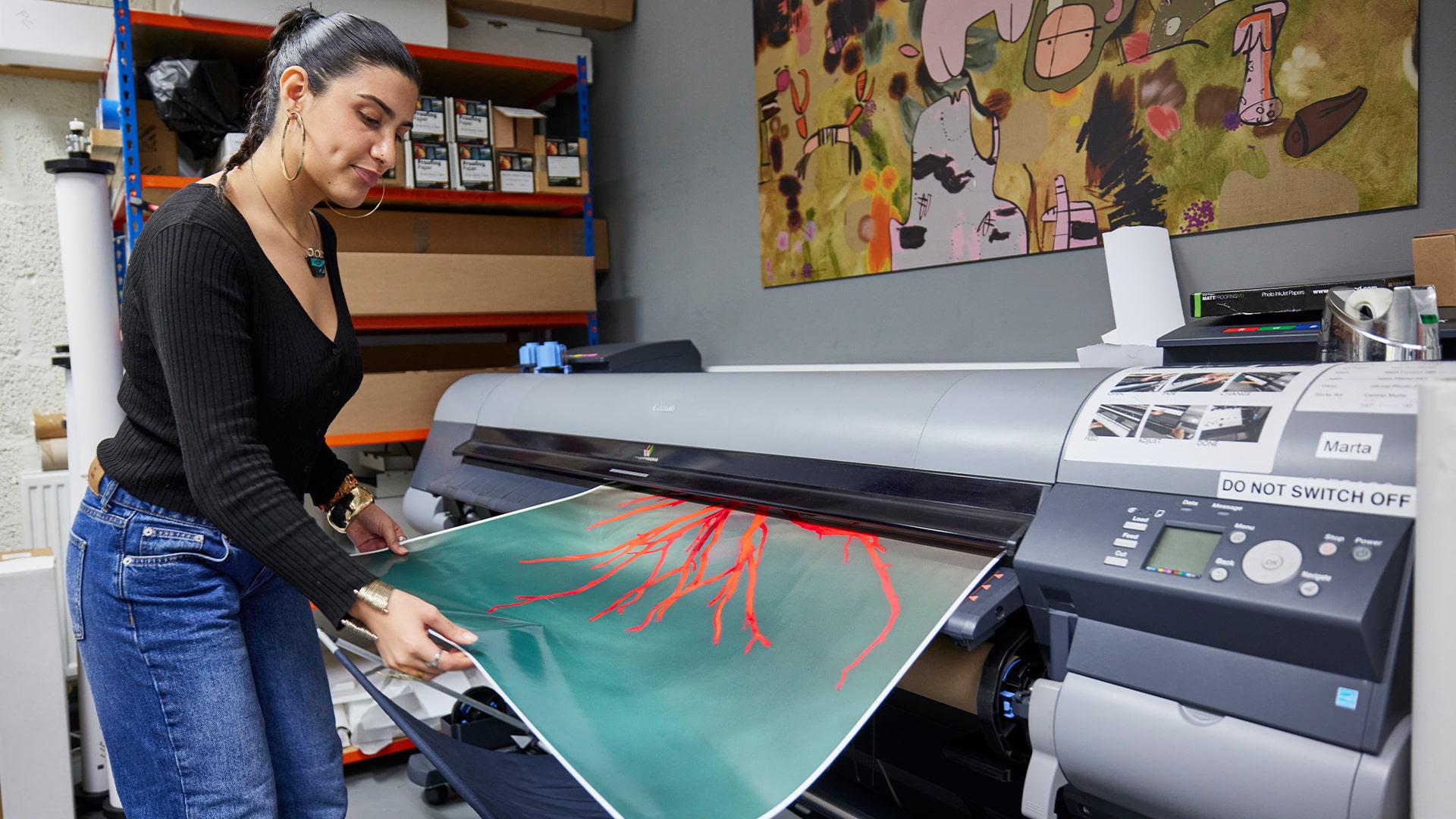
Students on the interior design decoration course enjoy free access to specialist equipment and facilities - these include a digital fabric printer, digital laser cutter and industry-standard photographic studios. You'll also have access to large format scanners, printing equipment, and Apple Mac computers loaded with Vectorworks, Google SketchUp, Adobe Creative Suite, and a range of other software packages.
The career opportunities from embarking on this degree are varied, exciting and diverse within the interior design industry. You will develop a strong spatial awareness together with an innovative approach to creative problem solving and concept development in the fields of interior design, surface design and styling.
If you’re looking to study our interior design decoration degree but don’t have the relevant qualifications or experience, the art and design foundation year will help you develop the core skills and knowledge to progress. Find out more about the art and design foundation year.
Accredited by:

Our creative degrees allow our students to develop a critical eye for design with a knowledge of different design approaches and problem solving techniques. Take a look at some of the great work they produce.
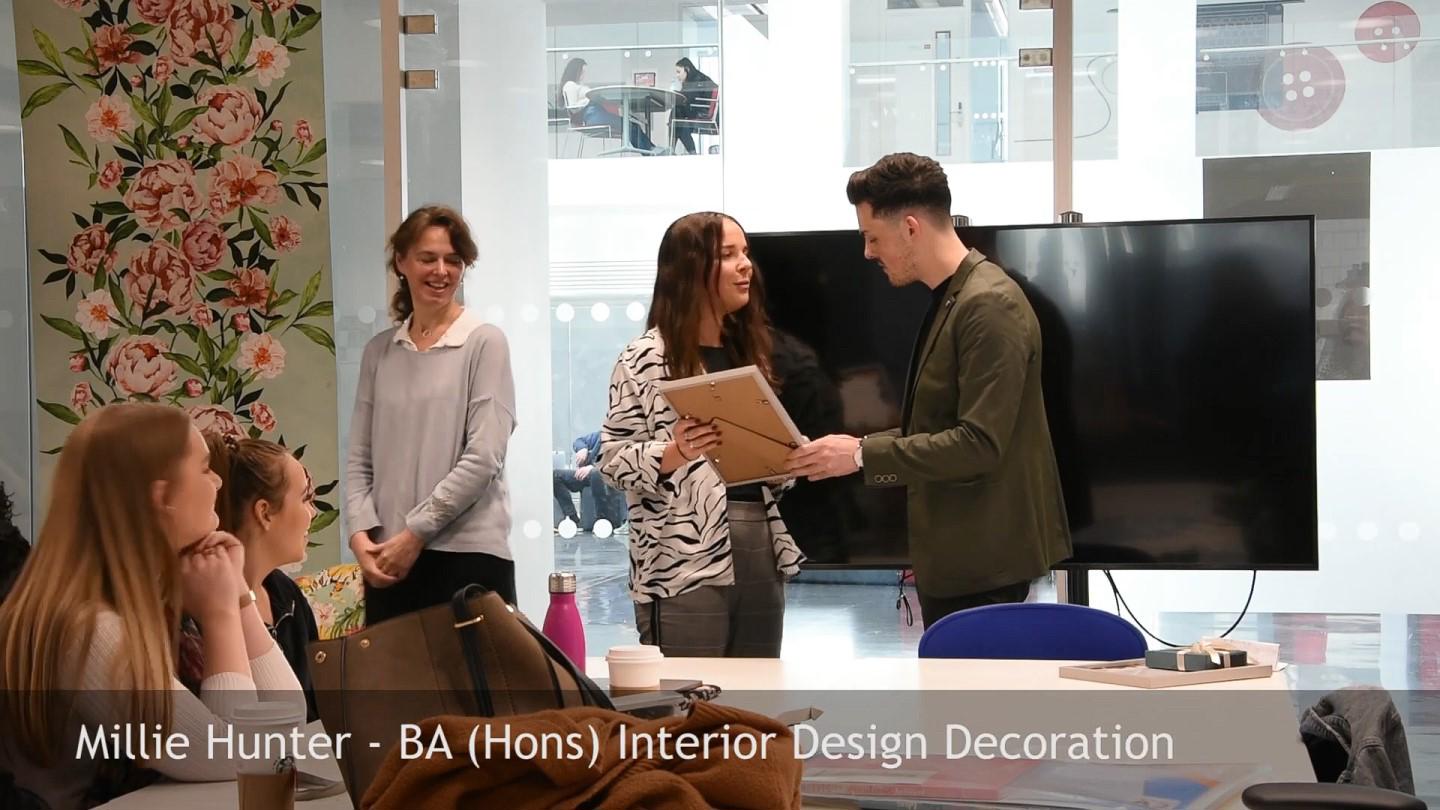
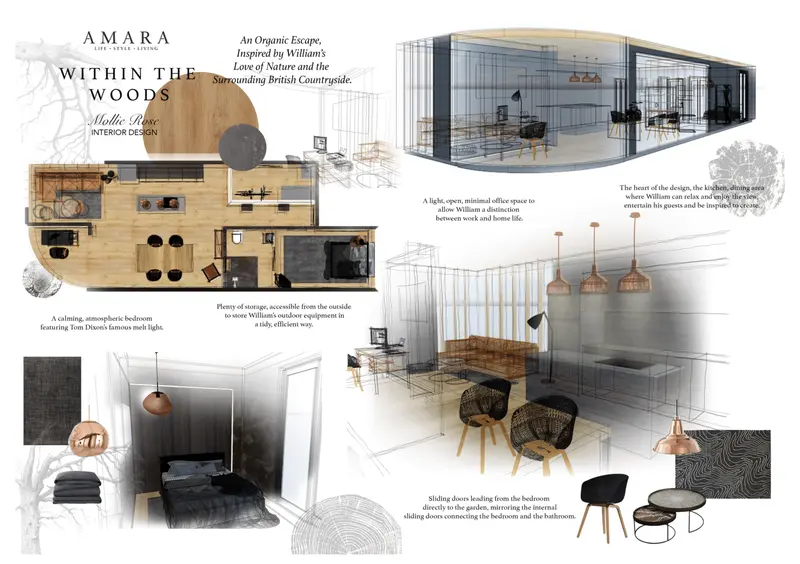
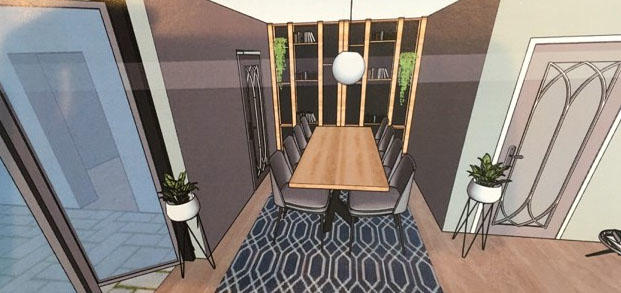
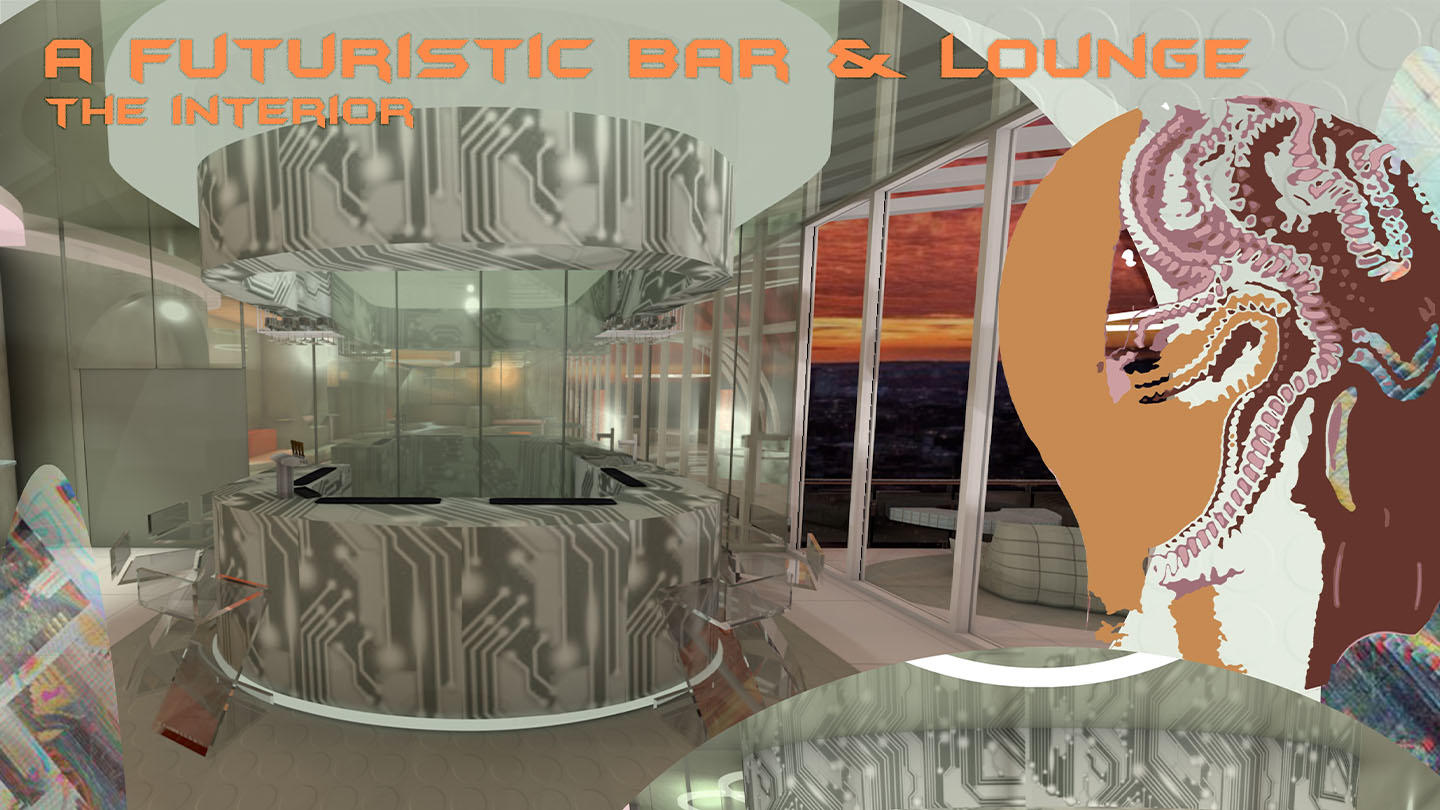
This course is ideally suited to students who are passionate about interior design with a love of colour, pattern, materials and style and a creative mind. Students who wish to immerse themselves in industry focused real world learning will explore an extremely creative approach to design, with a wide range of design methodologies allowing you to build a portfolio focused on their chosen career route.
Successful graduates have established design roles working for high profile companies such as Bulthaup, Claydon Reeves Yachts, Dulux, and Fortnum and Masons. Careers focus on interior design, visual merchandising, editorial styling, exhibition design and textile design.
Hear from Solent alumni about where their careers have taken them and how studying at Solent prepared them for their future.
Read more stories“Solent helped by providing first-class teaching, access to modern equipment and the latest technology.”
The University cannot guarantee any particular members of staff will teach specific aspects of the course in the future, but will endeavour to ensure the teaching team maintains their balance of experience and qualifications.
The course has specialist equipment for surface decoration, spatial design and interior styling. These include a digital fabric printer, digital laser cutter and industry-standard photographic studios.
There are also large format scanners, printing equipment, the latest PC and Mac computers, with subject specific software including Vectorworks, Google SketchUp, Adobe Creative Suite and a range of other software packages.
Broaden your horizons by adding an international dimension to your CV – essential to achieving success in today’s fast-changing, global environment.
Studying, working or volunteering in another country could be the experience of a lifetime. Enhance your degree by developing important global skills such as knowledge of other countries, language skills, intercultural awareness, adaptability and confidence.
For more information, please email international.mobility@solent.ac.uk.

This module provides the essential foundations of interior design by introducing core skills in conceptual sketching, technical drawing and the progression from 2D representation to 3D visual communication. Through a practice-led approach, you will explore design challenges and respond to the needs of clients, sites and spatial contexts. In the process, you will investigate how designers develop and refine design ideas through research, drawing, and material exploration, and apply these methods to develop and communicate your own design concepts.
Throughout this module you'll build on your existing knowledge of surface design by playing with pattern through drawing and mark making - crucial in textile design as it forms the foundation of the creative process, enabling designers to generate unique ideas, while developing a personal artistic voice. For inspiration, you'll research the work of contemporary designers, and historical and traditional furnishing designs. You'll also learn how to deconstruct surface designs and learn new design processes and applications used in surface decoration for the interiors industry.
This module introduces you to the core principles of interior styling, helping you build the theoretical understanding and practical skills to interpret and create interior design imagery with confidence. You’ll experiment with arranging materials, colour and objects to communicate clear intentions to a client, and you'll explore real-world practices such as creating concepts, crafting visual narratives and selecting materials and compositions. Through briefs, studio work and case studies, you'll develop skills in photography, lighting, styling, and creative technologies that reflect professional practice.
In this module you'll explore the processes of residential design, focusing on the analysis and application of information within the interior design industry, specifically focusing on home staging, decorative styling, surface design, and interior decoration to inspire innovative approaches to contemporary living.
This module introduces you to the creative and technical foundations of surface design within interior spaces, expanding your understanding of how surface designs shape atmosphere, function and identity. You'll explore applications such as flooring, carpets, window treatments, ceilings, and bespoke patterned elements to understand how design decisions extend far beyond the wall. Through experimentation, you'll investigate materials, textures, finishes and decorative approaches that respond to both aesthetic intentions and practical requirements.
This module engages with industry - either through site, client, location, or materials you will develop an understanding of the importance of these aspects in your design process and the real world needs and possible constraints of industry. Working with a given design project you will generate initial concepts and produce design ideas which can be refined and synthesised to present and promote to an identified audience.
The expertise of decoration within interior design is forever growing with new materials, technologies and innovation in both hard and soft materials. This module will expand your understanding of the impact of texture, surface pattern, and form within any given space. It exploits the aesthetic potential of surface pattern and printed textile design practice in its wider contexts and enables you to create innovative decoration in both 2D and 3D, using traditional processes combined with modern technology.
This module will introduce you to the role of the interior designer within stage set design and set dressing. You'll explore the role of a stage set designer through script analysis, storyboarding techniques, and the use of space, light, colour and form, and develop your understanding of film and stage terminology, including how to ‘read’ existing stage and film set designs and how to follow a stage/film script. You'll also develop your ability to create and communicate a specific mood, tell a story through design, and understand the technical and functional aspects of a space.
As an interior designer, clients will often require you to furnish or adorn of a space with fashionable or beautiful things. Understanding how to arrange materials, products, colour or pattern to successfully ‘sell’ to a client relies on understanding social-cultural use of images, current trends, and design theories. This module will build on the skills you learned in years one and two, but now with a more refined understanding of design processes acquired through previous modules.
This module concentrates on professional practice and is designed to include involvement in competitions or live projects where possible. It should be seen as an opportunity to work to professional standards and deadlines in preparation for the workplace. Evaluation and critical analysis of project briefs is an important part of the module, as are structuring, planning, client relations, and time management.
This module represents the culmination of your studies and the opportunity to undertake and evidence sustained research and development to inform a coherent, original and critically informed body of work in relation to interior design. This module will act as a platform on which you can exhibit your knowledge, skills, and intellectual maturity acquired during the course and help define your professional portfolio and identity.
This module runs in conjunction with Major Project - Research. It provides you with the opportunity to draw on your experience and knowledge accumulated throughout your degree in the realisation of a coherent, original and critically informed body of work in relation to interior design. There will be number of critiques throughout module where you'll be required to present and review your work. These critiques are key to the development of your work and will provide important feedback on your learning.
Contact international admissions
Email: Call:As part of this course, you will study one module at a time, giving you the chance to build a deeper understanding and see the results of your hard work more quickly. With regular assessments and feedback, rather than exams all at once, you’ll also benefit from improved focus, and a more manageable workload.
Learn more about block teaching
The student achievement team are on hand to help you succeed during your studies at Solent. They aim to contact you at key times during your time here with personalised information, advice and guidance, by email or phone.
The disability advice team provides information, advice and guidance for disabled students.
All students can access Succeed@Solent, Solent's online guide to getting better grades. It offers extensive, practical information and advice on topics such as academic writing, research and presentations.
The fashion and lifestyle industries can provide many opportunities for enthusiastic interior design decoration graduates. Suitable roles for graduates of Solent’s interior design and decoration degree include interior design stylist, consultant and visual merchandiser for homes or textile and surface designer. This could be working from within showrooms, retail companies, or even magazine and publishing industries for editorial features.
Starting salary: £18,000 to £23,000
Experienced interior designers can earn between £25,000 and £40,000.
Salaries for senior designers can reach £45,000+, while creative/design directors can earn up to - and sometimes more than - £75,000.
Starting salary: £20,000
A junior designer with one to two years' experience can expect to earn between £22,000 and £25,000. Designers with three to four years' experience can earn up to £28,000. Salaries for senior designers or design directors are around £30,000 to £40,000 plus.
The stated salaries are published on prospects.ac.uk.
Hear from Solent alumni about where their careers have taken them and how studying at Solent prepared them for their future.
Read more stories“Solent helped by providing first-class teaching, access to modern equipment and the latest technology.”
The Solent Careers team is committed to getting students into great careers.
While you are studying, the team can help you with finding work experience or placements, link you with a mentor, check your CV, or offer one-to-one guidance.
We also have graduate job opportunities just for Solent graduates.

Top 25%
of UK unis for sustained employment
Longitudinal Educational Outcomes, 2025
Every student at Solent University will also have the option to study an additional Certificate in Practical Artificial Intelligence qualification alongside their course. Free of charge, the course ensures you'll be prepared for a fantastic and varied career after graduation.

Thinking about studying further than an undergraduate degree? Alumni can get 20% off their postgraduate study.

Do you have an eye for design? Would you like to help influence the future of visual communications? Our MA Visual Communication degree is ideal for creatives keen to refine their practice, working as part of an interdisciplinary group of students.
Find out moreThe tuition fees for the 2026/27 academic year are:
For further information, please visit our tuition fees page.
The additional costs for this academic year are not yet available. For guidance, previous additional costs have been:
Compulsory costs
Optional costs
Solent University offers a range of bursaries and scholarships that provide financial assistance or waive fees for tuition or accommodation. Each bursary or scholarship has specific eligibility criteria. Check out our bursaries and scholarships pages to find out more.
Cost of living support
At Solent, we understand that the cost of living crisis may be of some concern. To help, we've put together some detailed information to show what support is available and how to make your money go further.
Graduation costs
There is no charge to attend graduation, but you will be required to pay for the rental of your academic gown (approximately £45 per graduate, depending on your award). You may also wish to purchase official photography packages, which range in price from £15 to £200+. Graduation is not compulsory, so if you prefer to have your award sent to you, there is no cost. Extra guest tickets will go on sale after results publication and will be sold on a first-come-first-served basis. The cost per ticket is currently £20. Please note, we do not guarantee there will be any extra tickets available to purchase.
Contact international admissions
Email: Call:Please select an option below:
As a general guide, we look for qualifications that are equivalent to the British high school A-levels.
Applicants from outside the UK will be required to attend a portfolio viewing.
If you are applying from outside the UK, find information about entry requirements, visas and agents for your country here.
For further information about EU qualifications, please see our course entry requirements document.
For international students who do not meet the direct entry requirements for this undergraduate degree, our trusted partner, QA Higher Education offers the following pathway programme designed to develop your academic and English language skills:
As a general guide, we look for qualifications that are equivalent to the British high school A-levels.
Applicants from outside the UK will be required to submit an electronic portfolio for consideration.
If you are applying from outside the UK, find information about entry requirements, visas and agents for your country here.
For further information about UK, EU and international qualifications, please see our course entry requirements document.
For international students who do not meet the direct entry requirements for this undergraduate degree, our trusted partner, QA Higher Education offers the following pathway programme designed to develop your academic and English language skills:
All international applicants need to be aware that the English language requirements to attend Solent University, and the English language requirements to obtain a visa from the Home Office, may be different. This means that if you meet the Solent University language requirement to gain a place on the course, you may still have to meet additional requirements to be granted with a visa by the Home Office.
We strongly advise all applicants to visit the Home Office website which outlines all the requirements for a successful visa application.
Full-time
Any student applying for the first year of a full-time/sandwich undergraduate course must apply through UCAS (University and Colleges Admissions Service). This includes mature, overseas and EU students.
Nearly all schools and colleges offer their students the facility of applying electronically through the UCAS website using 'Apply'; it may also be used by those applying independently in the UK and overseas. This facility and all course information can be found on the UCAS website: www.ucas.com.
Your application should reach UCAS by 14 January if you hope to enter a course the following autumn. Early application is advised for the most popular subject areas. Late applications may be made until the end of June. The UCAS Code for the University is S30, code name SOLNT.
Find out what happens after you apply
Contextual offers
Solent endeavours to offer learning opportunities to students from all backgrounds. When we receive and review an application, we take into consideration the context and personal circumstances of applicants when making a decision, which means our advertised entry tariff could be reduced.
Find out more about Solent's contextual offers
Top-up route:
We welcome applications from students currently studying a Foundation Degree, DipHE, HNC, HND or modules of an undergraduate degree course at another university, who wish to enter directly into Years 2 or 3 of one of our undergraduate degree courses. Please contact our admissions team for more information: contact us
Applicants who do not have English as their first language will be required to demonstrate an approved level of proficiency in the use of the English language. The agreed minimum requirements for this course are:
TOEFL IBT tests taken prior to 21 January 2026
TOEFL IBT tests taken from 21 January 2026
Qualifications are checked before enrolment, and international students must bring their original certificates or certified copies when coming to study at the University.
Pre-Sessional English programme
The University also offers a pre-sessional English programme for international students who wish to improve their level of English before starting a degree course.
Contact international admissions
Email: Call: