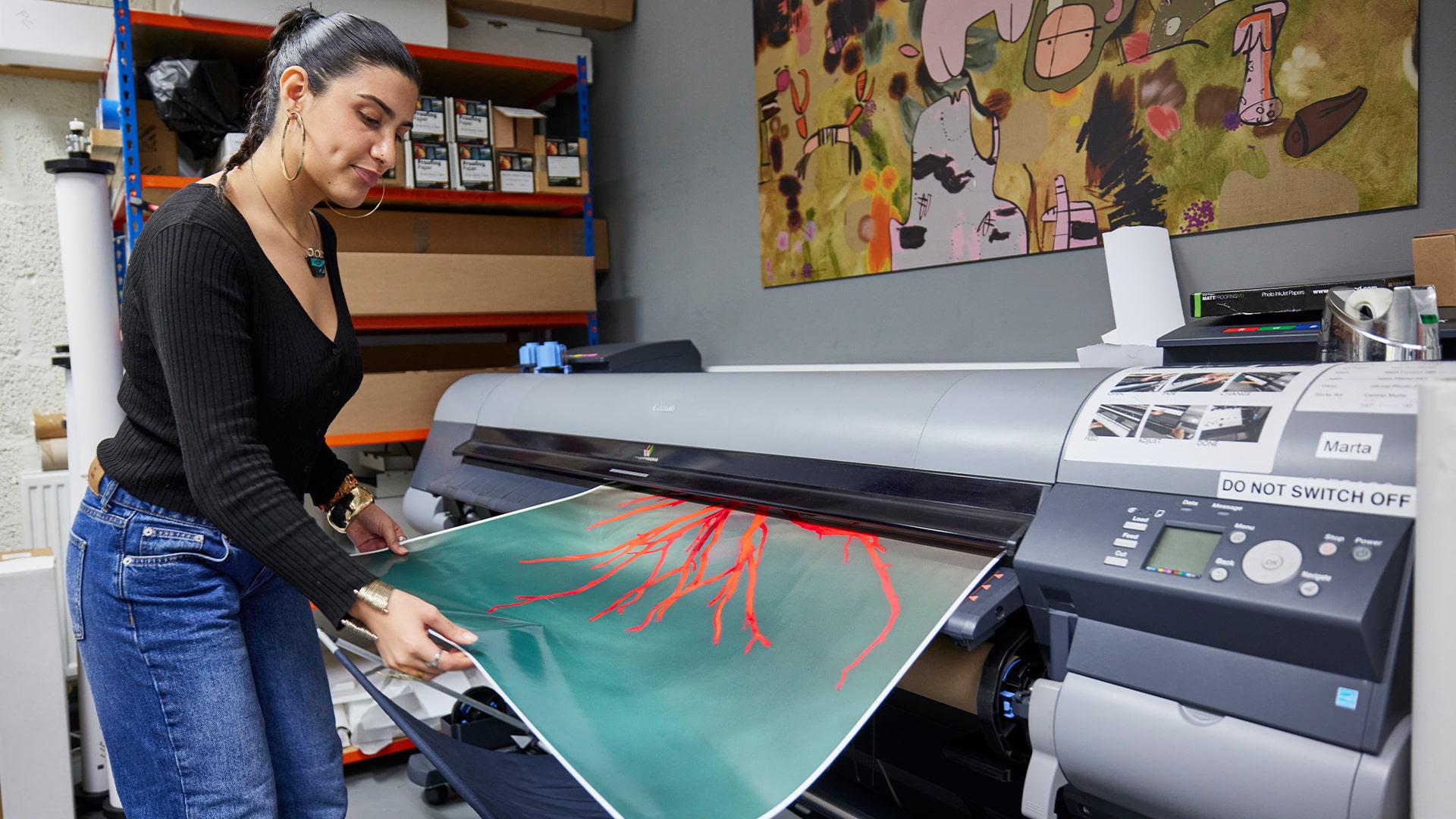
“I got to learn about each component that makes up a project from inception to completion”



Blend your artistic flair with technology and design, to create innovative and attractive indoor spaces for both domestic and commercial use on this SBID accredited degree.
Contact international admissions
Email: Call:This interior design course explores how people experience interior environments, blending spatial design, architectural thinking and responsible material and technological choices. Throughout your studies, you'll develop strong design, research and problem-solving skills to create meaningful, sustainable and innovative spaces.
Real-world learning sits at the core of the course. You'll work closely with industry partners, gaining hands-on experience through live projects, site engagement and professional input at every level. These authentic experiences help build confidence, networks and readiness for employment within the built-environment sector.
Throughout the course, you’ll develop the ability to understand, design and transform interior spaces across a range of contexts – including domestic, workplace, hospitality, retail, and community settings. You will explore adaptive reuse, materiality, environmental performance and user wellbeing, supported by both creative and technical design skills.
The course places strong emphasis on architectural approaches, guiding you through spatial strategy, functionality, building context, and user-centred design. You will also engage with key contemporary concerns such as sustainability, digital technologies, wellbeing, inclusive design and professional practice. By the time you graduate, you will be equipped to communicate your ideas through drawings, models, digital media and detailed design proposals that meet industry and regulatory standards.
If you’re looking to study our interior design architecture degree but don’t have the relevant qualifications or experience, the art and design foundation year will help you develop the core skills and knowledge to progress. Find out more about the art and design foundation year.
Accredited by:

Our creative degrees allow our students to develop a critical eye for design with a knowledge of different design approaches and problem solving techniques. Take a look at some of the great work they produce.
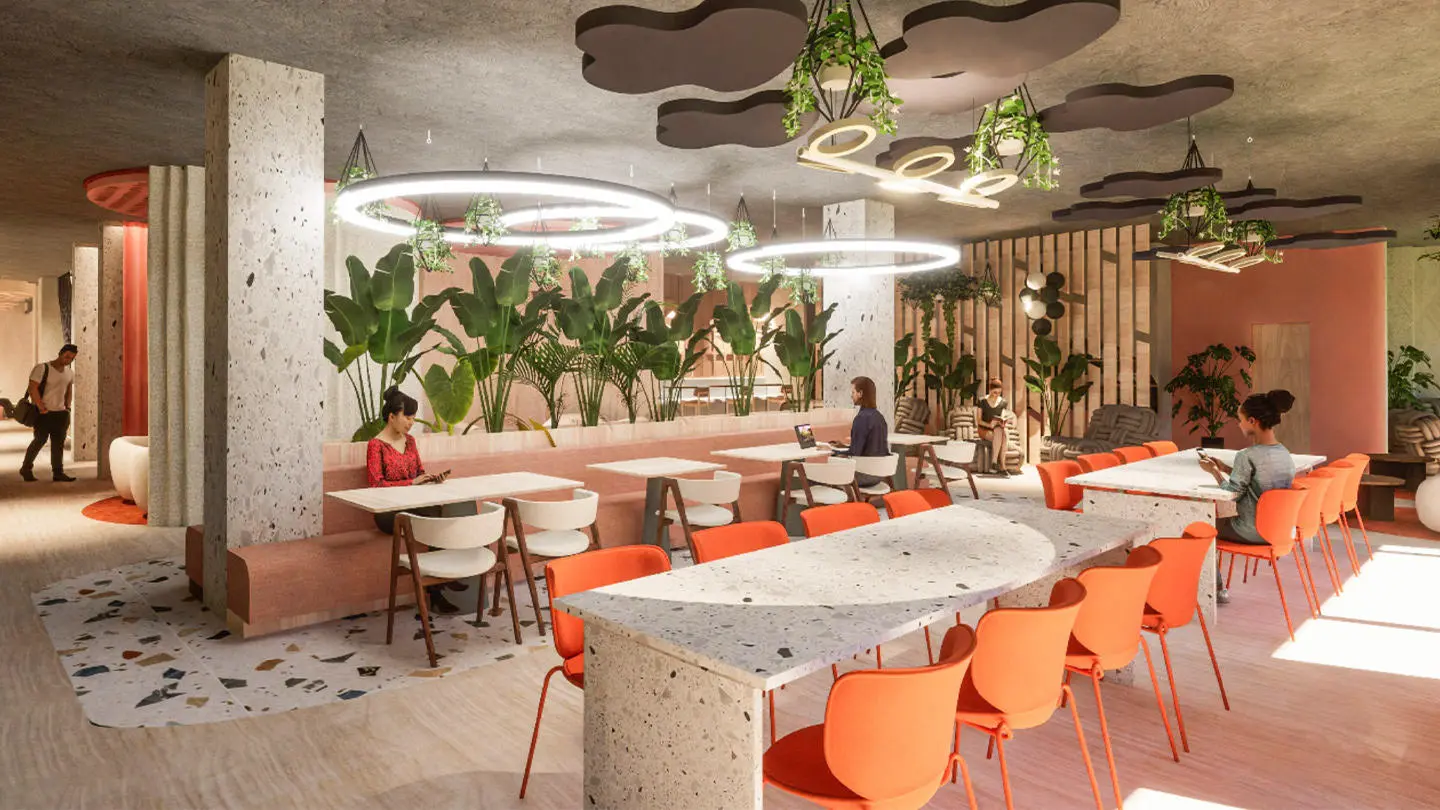
This course is ideal for creatively minded individuals who are passionate about how people experience interior environments and want to shape spaces that are sustainable, meaningful and innovative. It suits aspiring interior designers, spatial thinkers and problem-solvers who are motivated by architecture, materials, technology and user wellbeing.
Whether you are new to the field or looking to deepen existing design skills, this course is designed for those who want to work confidently within the built-environment sector and develop into informed, forward-thinking industry practitioners.
Recent graduates have found positions as interior designers in the commercial and domestic interior design sector in the UK and abroad, including John Lewis Interiors, IKEA, Jigsaw, BO Concept, BrightSpace Architects, and Porcelanosa. Other graduates have been successful in setting up their own interior design practices.
Students are also prepared to become freelance consultants upon graduation, which can increase employability. Some graduates have gone on to study for a postgraduate degree including Solent’s MSc Sustainable Building Design and MA Visual Communication.
Hear from Solent alumni about where their careers have taken them and how studying at Solent prepared them for their future.
Read more stories“I got to learn about each component that makes up a project from inception to completion”
You'll learn from a highly experienced team of interior and architectural design specialists, bringing expert industry knowledge and contemporary practice into every stage of the course.
The University cannot guarantee any particular members of staff will teach specific aspects of the course in the future, but will endeavour to ensure the teaching team maintains their balance of experience and qualifications.
Interior design students work in the architecture and interiors studio centre. This modern studio space has been developed to give students access to an environment which mirrors the feel and atmosphere of a working professional studio. Students from various different courses come together and collaborate on multidisciplinary projects, just as they would in the workplace.
Facilities and software available to students include AutoCAD, Revit, Vector Works, Adobe Illustrator and SketchUp Pro, as well as both 3D and large format scanners.
Broaden your horizons by adding an international dimension to your CV – essential to achieving success in today’s fast-changing, global environment.
Studying, working or volunteering in another country could be the experience of a lifetime. Enhance your degree by developing important global skills such as knowledge of other countries, language skills, intercultural awareness, adaptability and confidence.
For more information, please email international.mobility@solent.ac.uk.

This module provides the essential foundations of interior design by introducing core skills in conceptual sketching, technical drawing and the progression from 2D representation to 3D visual communication. Through a practice-led approach, you will explore design challenges and respond to the needs of clients, sites and spatial contexts. In the process, you will investigate how designers develop and refine design ideas through research, drawing, and material exploration, and apply these methods to develop and communicate your own design concepts.
Since the early 20th century, interiors have continually evolved in response to cultural, social and technological change. This module helps you understand how different architecture styles and design movements emerged, and how designers have shaped the spaces we live and work in today. You will explore key historical case studies to see how design ideas, approaches and aesthetics developed over time. The module also emphasises the importance of research, drawing and visual analysis.
This module introduces you to the interior design context through the study of an existing building. You'll learn how to conduct a thorough site analysis and survey to understand the building’s architectural systems and surrounding environment. Through hands-on measuring, mapping, drawing, observation and analysis, you will explore the physical and spatial characteristics of a small-scale building and its context.
This module introduces you to the interior design industry and professional practice. You'll learn the key principles and processes of interior design, from understanding clients’ needs and developing concepts, to applying responsive interior strategies, producing a resolved schematic design, and preparing specifications to professional standards. To put this into practice, you will respond to a design brief, using a ‘real-world’ scenario where possible, giving you the chance to engage with simulated industry practice.
This module introduces the importance of ergonomics and user-centred design in interior design practice. You will explore how evidence-based approaches shape interior solutions by understanding how different users interact with space, objects, and tasks. Through theory and hands-on learning, you will consider ergonomic factors, anthropometrics, task analysis, and user needs, including those of older adults, children, people with disabilities, and neurodivergent users, to develop a small-scale bespoke interior element.
This module engages with industry - either through site, client, location, or materials you will develop an understanding of the importance of these aspects in your design process and the real world needs and possible constraints of industry. Working with a given design project you will generate initial concepts and produce design ideas which can be refined and synthesised to present and promote to an identified audience.
This is an immersive, practice-led studio module that explores how everyday urban experiences can inspire interior architectural thinking. Using the city as a live case study, you'll investigate real spatial and social conditions through situated, context-based learning that emphasises how urban environments are continuously shaped by change. These on-site explorations generate reflective insights that inform your emerging design practice and support the development of interior concepts.
This module connects interior design studio learning with industry-facing professional practice. You'll explore how conceptual thinking in interiors is translated into functional, technical and operational requirements in real-world projects. You'll also be introduced to key aspects of professional practice, including RIBA Plan of Work and equivalent frameworks used by interior design/architecture bodies.
This module challenges you to imagine innovative and sustainable interior design solutions for hypothetical future projects set on real sites. Working with genuine environmental, social and spatial issues, you'll explore how interior architecture can contribute to ecological improvement and enhance physical and mental wellbeing. Through practice-led learning - including site-based investigations, speculative simulations, and professional visualisation and presentation - you will develop the knowledge and confidence required in contemporary design industries.
This module introduces the principles and practice of adaptive reuse within interior design and architecture, focusing on sustainable design approaches for heritage listed buildings. You'll addresse the role and contribution of an interior designer in improving environmental performance and quality of interior spaces. You'll also work in line with RIBA Sustainable Outcomes and progress your project primarily to RIBA Plan of Work Stage 3, with selected elements developed to Stage 4 for interior detailing.
This module represents the culmination of your studies and the opportunity to undertake and evidence sustained research and development to inform a coherent, original and critically informed body of work in relation to interior design. This module will act as a platform on which you can exhibit your knowledge, skills, and intellectual maturity acquired during the course and help define your professional portfolio and identity.
This module runs in conjunction with Major Project - Research. It provides you with the opportunity to draw on your experience and knowledge accumulated throughout your degree in the realisation of a coherent, original and critically informed body of work in relation to interior design. There will be number of critiques throughout module where you'll be required to present and review your work. These critiques are key to the development of your work and will provide important feedback on your learning.
Contact international admissions
Email: Call:As part of this course, you will study one module at a time, giving you the chance to build a deeper understanding and see the results of your hard work more quickly. With regular assessments and feedback, rather than exams all at once, you’ll also benefit from improved focus, and a more manageable workload.
Learn more about block teaching
The student achievement team are on hand to help you succeed during your studies at Solent. They aim to contact you at key times during your time here with personalised information, advice and guidance, by email or phone.
The disability advice team provides information, advice and guidance for disabled students.
All students can access Succeed@Solent, Solent's online guide to getting better grades. It offers extensive, practical information and advice on topics such as academic writing, research and presentations.
At a time when the UK’s construction industry is benefitting from unprecedented levels of overseas investment (with residential housing remaining the fastest growing area in the sector), there is an increasing demand for talented interior design practitioners who can identify, research and implement creative interior solutions.
Growing demand for designers skilled in sustainability, adaptive reuse, user wellbeing and emerging technologies creates strong employment potential for graduates. The course’s integration of architectural approaches, live projects and industry engagement positions it well to meet these needs.
The course team has an extensive network of employer contacts, including London-based design practices, and you’ll work closely with the industry as you study.
Junior designer: £19,000 to £23,000
Experienced (midweight) interior designers can earn between £25,000 and £40,000. Salaries for senior designers can range from £50,000 to £75,000.
The stated salaries are published on prospects.ac.uk. Income figures are intended as a guide only.
Hear from Solent alumni about where their careers have taken them and how studying at Solent prepared them for their future.
Read more stories“I got to learn about each component that makes up a project from inception to completion”
The Solent Careers team is committed to getting students into great careers.
While you are studying, the team can help you with finding work experience or placements, link you with a mentor, check your CV, or offer one-to-one guidance.
We also have graduate job opportunities just for Solent graduates.

Top 25%
of UK unis for sustained employment
Longitudinal Educational Outcomes, 2025
Every student at Solent University will also have the option to study an additional Certificate in Practical Artificial Intelligence qualification alongside their course. Free of charge, the course ensures you'll be prepared for a fantastic and varied career after graduation.

Thinking about studying further than an undergraduate degree? Alumni can get 20% off their postgraduate study.
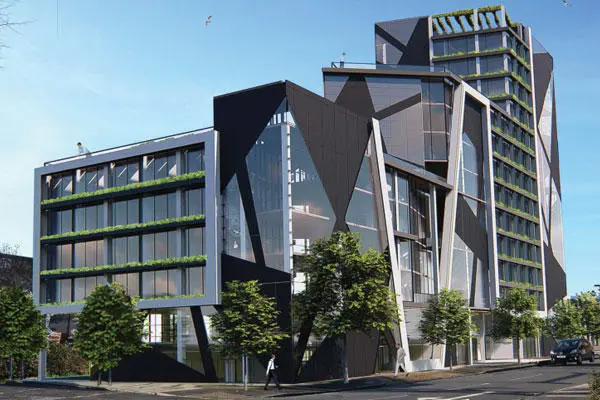
Develop your theory and practical skills to graduate from this course as a specialist designer with the education and vision required to help create a sustainable future for the construction industry.
Find out moreThe tuition fees for the 2027/28 academic year are not yet available. For guidance, the 2026/27 fees were:
For further information, please visit our tuition fees page.
While most course costs are covered by your tuition fees, some essential resources and optional extras may need to be paid for separately. These additional costs are listed below. For advice on budgeting and managing your money, please contact student.funding@solent.ac.uk.
The additional costs for this academic year are not yet available. For guidance, previous additional costs have been:
Compulsory costs
Optional costs
Solent University offers a range of bursaries and scholarships that provide financial assistance or waive fees for tuition or accommodation. Each bursary or scholarship has specific eligibility criteria. Check out our bursaries and scholarships pages to find out more.
Cost of living support
At Solent, we understand that the cost of living crisis may be of some concern. To help, we've put together some detailed information to show what support is available and how to make your money go further.
Graduation costs
There is no charge to attend graduation, but you will be required to pay for the rental of your academic gown (approximately £45 per graduate, depending on your award). You may also wish to purchase official photography packages, which range in price from £15 to £200+. Graduation is not compulsory, so if you prefer to have your award sent to you, there is no cost. Extra guest tickets will go on sale after results publication and will be sold on a first-come-first-served basis. The cost per ticket is currently £20. Please note, we do not guarantee there will be any extra tickets available to purchase.
Contact international admissions
Email: Call:Please select an option below:
As a general guide, we look for qualifications that are equivalent to the British high school A-levels.
Applicants from outside the UK will be required to submit an electronic portfolio for consideration.
If you are applying from outside the UK, find information about entry requirements, visas and agents for your country here.
For further information about EU qualifications, please see our course entry requirements document.
For international students who do not meet the direct entry requirements for this undergraduate degree, our trusted partner, QA Higher Education offers the following pathway programme designed to develop your academic and English language skills:
As a general guide, we look for qualifications that are equivalent to the British high school A-levels.
Applicants from outside the UK will be required to submit an electronic portfolio for consideration.
If you are applying from outside the UK, find information about entry requirements, visas and agents for your country here.
For further information about UK, EU and international qualifications, please see our course entry requirements document.
For international students who do not meet the direct entry requirements for this undergraduate degree, our trusted partner, QA Higher Education offers the following pathway programme designed to develop your academic and English language skills:
All international applicants need to be aware that the English language requirements to attend Solent University, and the English language requirements to obtain a visa from the Home Office, may be different. This means that if you meet the Solent University language requirement to gain a place on the course, you may still have to meet additional requirements to be granted with a visa by the Home Office.
We strongly advise all applicants to visit the Home Office website which outlines all the requirements for a successful visa application.
Full-time
Any student applying for the first year of a full-time/sandwich undergraduate course must apply through UCAS (University and Colleges Admissions Service). This includes mature, overseas and EU students.
Nearly all schools and colleges offer their students the facility of applying electronically through the UCAS website using 'Apply'; it may also be used by those applying independently in the UK and overseas. This facility and all course information can be found on the UCAS website: www.ucas.com.
Your application should reach UCAS by 14 January if you hope to enter a course the following autumn. Early application is advised for the most popular subject areas. Late applications may be made until the end of June. The UCAS Code for the University is S30, code name SOLNT.
Find out what happens after you apply
Contextual offers
Solent endeavours to offer learning opportunities to students from all backgrounds. When we receive and review an application, we take into consideration the context and personal circumstances of applicants when making a decision, which means our advertised entry tariff could be reduced.
Find out more about Solent's contextual offers
Top-up route:
We welcome applications from students currently studying a Foundation Degree, DipHE, HNC, HND or modules of an undergraduate degree course at another university, who wish to enter directly into Years 2 or 3 of one of our undergraduate degree courses. Please contact our admissions team for more information: contact us
Applicants who do not have English as their first language will be required to demonstrate an approved level of proficiency in the use of the English language. The agreed minimum requirements for this course are:
TOEFL IBT tests taken prior to 21 January 2026
TOEFL IBT tests taken from 21 January 2026
Qualifications are checked before enrolment, and international students must bring their original certificates or certified copies when coming to study at the University.
Pre-Sessional English programme
The University also offers a pre-sessional English programme for international students who wish to improve their level of English before starting a degree course.
Contact international admissions
Email: Call: