“The support on offer from the Solent staff (particularly the High Performance Academy team) was a big incentive.”



Explore global markets, financial systems, and banking strategies - gaining the analytical skills for fast-paced careers in economics, finance, and banking sectors.
Contact international admissions
Email: Call:The BSc (Hons) Economics, Finance and Banking degree provides a comprehensive understanding of how economies function, how financial markets operate, and the role of banking in global economic stability. This course is designed for students who aspire to careers in financial services, banking, investment, or economic policy.
Throughout this course you will explore core principles of microeconomics and macroeconomics, financial theory, and banking operations. Modules cover topics such as monetary policy, risk management, investment analysis, and international finance. The course also integrates quantitative methods and data analytics to equip you with the technical skills needed in today’s financial sector.
Our teaching combines academic theory with practical application, and you will have the opportunity to engage in case studies, simulations, and real-world projects to develop problem-solving and decision-making skills. Guest lectures from industry professionals and opportunities for internships provide valuable insights into the financial services industry.
Graduates of this programme are well-prepared for roles in banking, investment management, corporate finance, and economic consultancy. The analytical and critical thinking skills you gain will also open doors to careers in government, regulatory bodies, and international organisations.
If you’re looking to study our economics, finance and banking degree but don’t have the relevant qualifications or experience, the business and law foundation year will help you develop the core skills and knowledge to progress. Find out more about the business and law foundation year.
This course also offers the option of a placement year. A placement year allows you to put what you've learned in your first and second years into practice in the workplace, gaining valuable real-world work experience before you graduate. Our course and placements teams will help you find the perfect industry placement in your chosen field.
This course is ideal for students who are curious about how economies and financial systems shape the world and want to develop the analytical skills to influence them. It suits applicants with an interest in economics, mathematics, and business, and those aspiring to careers in banking, investment, or financial consultancy. If you enjoy problem-solving, interpreting data, and understanding global markets, this programme will give you the tools to thrive in a fast-paced financial environment.
Graduates of BSc (Hons) Economics, Finance and Banking are equipped for dynamic careers in global finance and economic leadership. You could become an investment analyst shaping portfolio strategies, a risk manager safeguarding institutions, or a corporate finance specialist driving business growth. Opportunities also span banking operations, fintech innovation, and economic consultancy, with roles in major banks, multinational corporations, and government agencies. Your analytical expertise and financial insight will position you to influence decisions that impact markets and economies worldwide.
Hear from Solent alumni about where their careers have taken them and how studying at Solent prepared them for their future.
Read more stories“The support on offer from the Solent staff (particularly the High Performance Academy team) was a big incentive.”
Teaching staff for the BSc (Hons) Economics, Finance and Banking degree have experience of working in accountancy and finance in practice or in industry as practitioners and/or are actively engaged with current research within accountancy, finance, banking and economics.
The University cannot guarantee any particular members of staff will teach specific aspects of the course in the future, but will endeavour to ensure the teaching team maintains their balance of experience and qualifications.
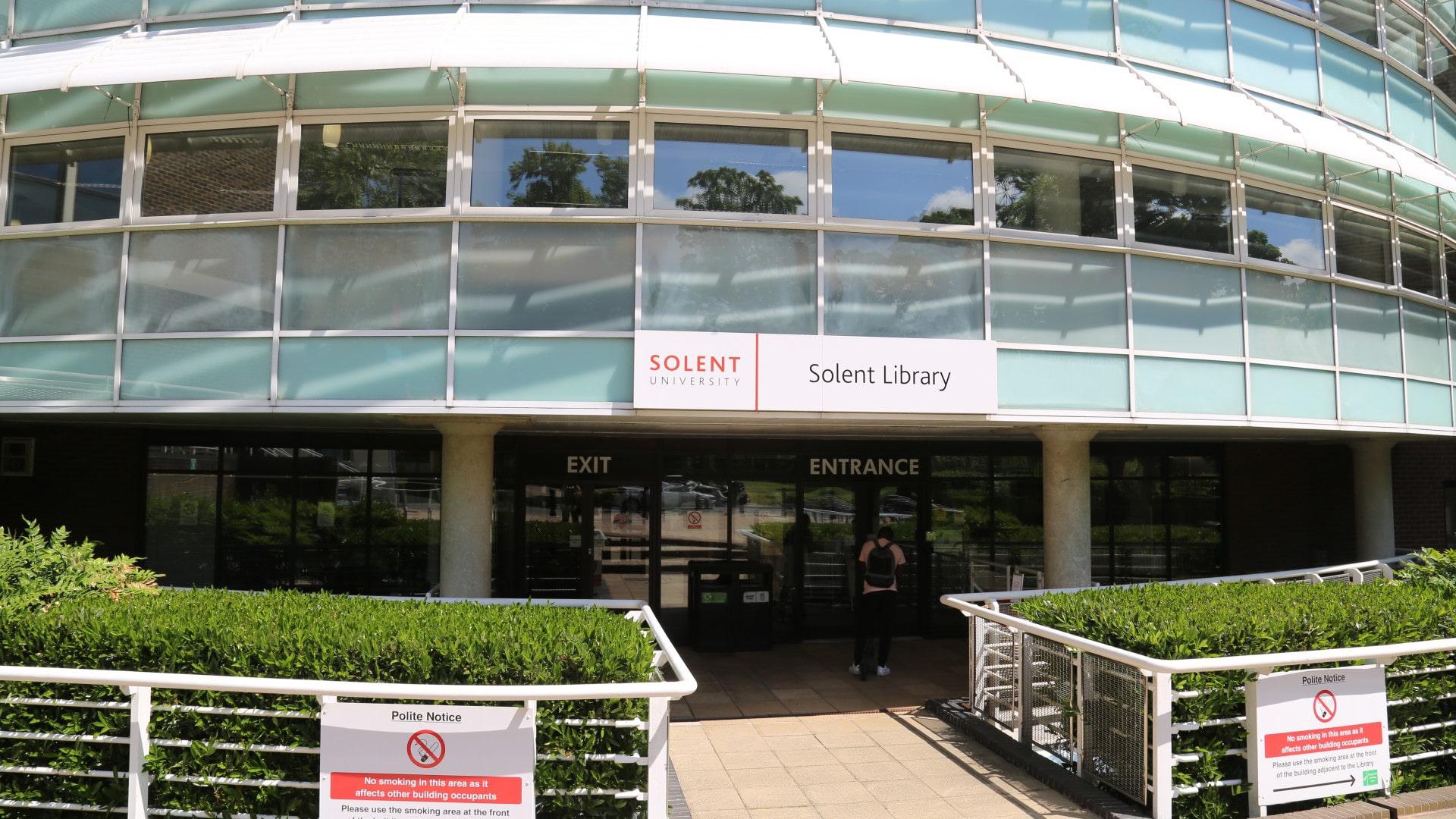
Our vibrant campus brings state-of-the-art facilities to enhance your learning and elevate your student experience. Our award-winning teaching building, The Spark is centred around students and offers a stimulating study environment with flexible learning spaces.
Students on this course will have the opportunity to study in the Bloomberg Finance Terminal Suite, a facility which provides real-time global market data, news, and analytics. This facility is embedded in key finance modules, to teach financial modelling, portfolio analysis, and scenario planning. You will also have access to computer labs equipped with industry standard software including: Excel, ERP packages (e.g., Sage, QuickBooks), data analysis software, and AI-enabled tools.
Broaden your horizons by adding an international dimension to your CV – essential to achieving success in today’s fast-changing, global environment.
Studying, working or volunteering in another country could be the experience of a lifetime. Enhance your degree by developing important global skills such as knowledge of other countries, language skills, intercultural awareness, adaptability and confidence.
For more information, please email international.mobility@solent.ac.uk.

In this module, you will learn the fundamental principles that govern how individuals, firms, and markets make decisions about the allocation of limited resources. You'll explore key concepts such as supply and demand, elasticity, consumer and producer behaviour, cost structures, and market dynamics. You'll also be introduced to different types of market structures and examine how these influence pricing, output, and business strategy. In addition, you'll learn about market failures, government intervention, and the economic rationale behind regulation and taxation.
To succeed as an accountant or financial professional, a solid understanding of corporate law is essential. This module will help you develop a professional grasp of the legal principles relevant to business and finance. You'll explore the key areas of business and corporate law, including the law of obligations, employment law, the formation and structure of business organisations, legal frameworks for company financing, corporate regulation and governance, and insolvency law.
This module will provide you with essential foundational knowledge and practical skills in financial accounting theory and practice. You'll be introduced to fundamental concepts and techniques for recording, processing, and reporting business transactions to external stakeholders, developing critical competencies in double-entry bookkeeping, ledger management, trial balance preparation, and financial statement construction.
In this module, you'll gain a foundational understanding of how management accounting supports decision-making, planning, and control within an organisation. You will explore how different types of cost are classified, recorded, and analysed to inform operational decisions and how budgeting supports organisational planning and resource allocation. You'll also learn how to apply core costing methods, and how to distinguish between marginal and absorption costing approaches.
This module aims to develop your ability to use economic theories and quantitative tools to analyse real-world issues. You will learn how to apply economic theory to real-world problems using data-driven methods, quantitative tools, and emerging artificial intelligence (AI) techniques. The module combines applied microeconomics and macroeconomics with hands-on training in econometrics and AI-powered data analysis, reflecting how modern economic and financial research is conducted in both academia and industry.
This module is designed to provide you with a thorough understanding of the modern banking sector’s operations, financial intermediation, risk management, and regulatory environment. It will prepare you to critically engage with the challenges faced by banks in a rapidly evolving global financial landscape, including the rise of fintech and sustainability concerns.
The module introduces you to the dynamic field of financial technology (FinTech) and artificial intelligence (AI), which is revolutionising the financial services industry. It covers the role of technology in transforming payments, lending, banking, investment, and financial infrastructure. This is all done in the context of financial markets and institutions on the global stage. You will learn about blockchain, artificial intelligence, digital currencies, and other technologies, exploring how they address existing challenges in finance.
Please note: Not all optional modules are guaranteed to run each year.
This module explores the intersection of financial crime, legal frameworks, and the role of forensic accountants in litigation support. You will examine various types of financial crime, understand relevant legislation, and learn how forensic accounting contributes to legal processes, including investigations, expert witness testimony, and case preparation.
This module introduces the fundamental principles of the UK tax system, equipping you with the knowledge and skills to compute taxes, navigate regulations, and advise on compliance. By exploring real-world tax scenarios and regulatory frameworks, you will understand how taxes impact individuals and businesses, fostering the ability to apply ethical and practical solutions in professional contexts.
This module provides you with a structured understanding of financial reporting principles and practices, focusing on the preparation, presentation, and interpretation of financial statements in accordance with International Financial Reporting Standards (IFRS). You will explore the conceptual framework of accounting, the regulatory environment, and the role of financial reporting in supporting transparency, accountability, and decision-making.
This module will equip you with a deep understanding of the economic forces and quantitative tools that influence financial decision-making in both corporate and policy contexts. It builds on foundational economic principles to explore how macroeconomic variables - such as interest rates, inflation, exchange rates, and economic growth - affect business strategy, investment decisions, and financial reporting. You will also be introduced to advanced econometric techniques for modelling economic relationships, interpreting empirical data, and evaluating the impact of economic policies.
This module is essential if you want to work in corporate finance, mergers and acquisitions, capital markets, or financial advisory roles. It gives you practical, career-focused insight into how investment banks help clients raise capital, structure complex transactions, and make high-level financial decisions. You will learn the tools, techniques, and strategic thinking used in real investment banking deals - skills that are highly valued by leading employers in the finance industry.
Please note: Not all optional modules are guaranteed to run each year.
In this module, you will develop a critical understanding of how financial markets operate and the role institutions play in supporting the global financial system. You will explore the structure and function of capital markets, focusing on equity and debt instruments, and examine how these markets influence corporate finance and investment decisions. You will also learn how financial instruments are issued, priced, and traded, and how market forces and investor behaviour impact valuation and performance.
This module explores the growing threat of cybercrime and the role of business analytics in detecting, preventing, and responding to digital threats. You will learn about cybercrime typologies, data-driven investigative techniques, and how analytics tools can be used to support forensic investigations and strategic decision-making.
Auditors play a critical role in fostering trust in financial reporting and corporate accountability. This module equips you with the professional tools and ethical foundation to plan, perform, and report on audits with integrity and sound judgement. You will engage with real-world case studies and apply core auditing principles - such as risk assessment, evidence gathering, and professional scepticism - aligned with industry standards. A key feature of this module is the integration of artificial intelligence (AI) as a transformative tool in modern auditing.
This module will introduce you to the function, principles, and techniques of financial management. In particular, it focuses on the relationship between companies seeking to raise finance, and the investors who provide that finance. You will apply your technical skills and knowledge to evaluate potential funding strategies for business.
Contact international admissions
Email: Call:Solent’s curriculum framework builds on our unique, creative and applied approach to teaching. The transformation of students’ lives is at the heart of our mission as a university, and our curriculum – informed by the latest theory – reflects this shared educational vision.
Find out more
The student achievement team are on hand to help you succeed during your studies at Solent. They aim to contact you at key times during your time here with personalised information, advice and guidance, by email or phone.
The disability advice team provides information, advice and guidance for disabled students.
All students can access Succeed@Solent, Solent's online guide to getting better grades. It offers extensive, practical information and advice on topics such as academic writing, research and presentations.
The finance and banking industry is at the heart of global economic growth, innovation, and stability. It offers diverse, high-impact careers where professionals influence markets, shape policy, and drive business success. With rapid advancements in fintech, data analytics, and sustainable finance, employers seek graduates who combine strong analytical skills with practical financial expertise. This course equips you with exactly that, deep knowledge of economics and banking, advanced quantitative and digital skills, and the ability to interpret complex data for strategic decisions. You’ll graduate ready to meet industry demands and thrive in roles that shape the future of global finance.





Up to: £40,000
Starting salaries for graduates can vary depending on the location, sector, size, and type of firm. During training, the average earning potential can be up to £65,000.
Up to: £40,000
Typical starting salaries for graduate trainee roles range from around £32,000 to £40,000 in London (plus bonuses). Salaries at the top investment banks will be higher.
Up to: £40,000
Starting salaries are between £28,000 and £40,000, though can be as high as £50,000 in the investment banking sector.
Qualified, mid-level finance managers with 5-10 years' experience usually earn an average of £60,000 to £75,000.
The stated salaries are published on prospects.ac.uk. Income figures are intended as a guide only.
Hear from Solent alumni about where their careers have taken them and how studying at Solent prepared them for their future.
Read more stories“The support on offer from the Solent staff (particularly the High Performance Academy team) was a big incentive.”
The Solent Careers team is committed to getting students into great careers.
While you are studying, the team can help you with finding work experience or placements, link you with a mentor, check your CV, or offer one-to-one guidance.
We also have graduate job opportunities just for Solent graduates.

Top 25%
of UK unis for sustained employment
Longitudinal Educational Outcomes, 2025
Every student at Solent University will also have the option to study an additional Certificate in Practical Artificial Intelligence qualification alongside their course. Free of charge, the course ensures you'll be prepared for a fantastic and varied career after graduation.

Thinking about studying further than an undergraduate degree? Alumni can get 20% off their postgraduate study.

Gain ACCA-embedded training in advanced accounting and finance skills, practical analysis techniques, and professional insights - preparing you for specialist roles and accelerating your route toward ACCA membership.
Find out more
Gain ACCA-embedded training in advanced accounting and finance skills, practical analysis techniques, and professional insights - preparing you for specialist roles and accelerating your route toward ACCA membership.
Find out more
Develop advanced skills in accounting, auditing and strategic management to prepare for senior roles through practical learning, professional insight and a strong pathway toward ACCA qualification.
Find out more
Gain a dual MSc and ACCA Chartered Certified qualification while developing advanced forensic accounting and auditing skills for careers in fraud investigation, assurance and financial crime prevention.
Find out moreThe tuition fees for the 2026/27 academic year are:
The increase in fees for UK, EU (settled status) and Channel Island students is in line with Government guidelines. For further information, please visit our tuition fees page.
While most course costs are covered by your tuition fees, some essential resources and optional extras may need to be paid for separately. These additional costs are listed below. For advice on budgeting and managing your money, please contact student.funding@solent.ac.uk.
The 2026/27 additional costs are not yet available. For guidance, previous additional costs have been:
Optional costs
Solent University offers a range of bursaries and scholarships that provide financial assistance or waive fees for tuition or accommodation. Each bursary or scholarship has specific eligibility criteria. Check out our bursaries and scholarships pages to find out more.
Cost of living support
At Solent, we understand that the cost of living crisis may be of some concern. To help, we've put together some detailed information to show what support is available and how to make your money go further.
Graduation costs
There is no charge to attend graduation, but you will be required to pay for the rental of your academic gown (approximately £45 per graduate, depending on your award). You may also wish to purchase official photography packages, which range in price from £15 to £200+. Graduation is not compulsory, so if you prefer to have your award sent to you, there is no cost. Extra guest tickets will go on sale after results publication and will be sold on a first-come-first-served basis. The cost per ticket is currently £20. Please note, we do not guarantee there will be any extra tickets available to purchase.
Contact international admissions
Email: Call:Please select an option below:
As a general guide, we look for qualifications that are equivalent to the British high school A-levels.
If you are applying from outside the UK, find information about entry requirements, visas and agents for your country here.
For further information about EU qualifications, please see our course entry requirements document.
For international students who do not meet the direct entry requirements for this undergraduate degree, our trusted partner, QA Higher Education offers the following pathway programme designed to develop your academic and English language skills:
As a general guide, we look for qualifications that are equivalent to the British high school A-levels.
If you are applying from outside the UK, find information about entry requirements, visas and agents for your country here.
For further information about international qualifications, please see our course entry requirements document.
For international students who do not meet the direct entry requirements for this undergraduate degree, our trusted partner, QA Higher Education offers the following pathway programme designed to develop your academic and English language skills:
All international applicants need to be aware that the English language requirements to attend Solent University, and the English language requirements to obtain a visa from the Home Office, may be different. This means that if you meet the Solent University language requirement to gain a place on the course, you may still have to meet additional requirements to be granted with a visa by the Home Office.
We strongly advise all applicants to visit the Home Office website which outlines all the requirements for a successful visa application.
Full-time
Any student applying for the first year of a full-time/sandwich undergraduate course must apply through UCAS (University and Colleges Admissions Service). This includes mature, overseas and EU students.
Nearly all schools and colleges offer their students the facility of applying electronically through the UCAS website using 'Apply'; it may also be used by those applying independently in the UK and overseas. This facility and all course information can be found on the UCAS website: www.ucas.com.
Your application should reach UCAS by 14 January if you hope to enter a course the following autumn. Early application is advised for the most popular subject areas. Late applications may be made until the end of June. The UCAS Code for the University is S30, code name SOLNT.
Find out what happens after you apply
Contextual offers
Solent endeavours to offer learning opportunities to students from all backgrounds. When we receive and review an application, we take into consideration the context and personal circumstances of applicants when making a decision, which means our advertised entry tariff could be reduced.
Find out more about Solent's contextual offers
Alternative entry on this course is available through the Business and Law Foundation Year.
Direct entry into year two or three may be considered for this course.
Holders of AAT Professional Diploma in Accounting or AAT Level 4 Diploma in Accounting are awarded direct entry to the second year on any named accounting programme.
Top-up route:
We welcome applications from students currently studying a Foundation Degree, DipHE, HNC, HND or modules of an undergraduate degree course at another university, who wish to enter directly into Years 2 or 3 of one of our undergraduate degree courses. Please contact our admissions team for more information: contact us
Applicants who do not have English as their first language will be required to demonstrate an approved level of proficiency in the use of the English language. The agreed minimum requirements for this course are:
TOEFL IBT tests taken prior to 21 January 2026
TOEFL IBT tests taken from 21 January 2026
Qualifications are checked before enrolment, and international students must bring their original certificates or certified copies when coming to study at the University.
Pre-Sessional English programme
The University also offers a pre-sessional English programme for international students who wish to improve their level of English before starting a degree course.
Contact international admissions
Email: Call: