Core modules
Naval Architecture Design
In this module you will study stability, considering initially the upright and small angle and large angle stability cases for both the transverse stability and also small angle longitudinal stability. You will explore the effects of suspended masses and also free surface effects on the initial GM.
Marine Design Skills
In this module you will complete a live brief to design a single chine vessel following the design path, which is standard practice in a design office scenario, based on the module content delivered throughout the block.
Mechanics and Materials
You will learn about the materials used in marine hull construction, and other components found on board vessels, such as timber, steel, aluminium, stainless steels, brasses and bronzes. You'll also learn about materials properties, the considerations needed when choosing them, and the production processes involved in the construction of boats.
Applied Technology Design
During this module you will study and understand how the various marine systems which are used on boats and larger vessels work. This will involve seeing practical demonstrations of some of the equipment used on marine vessels.
Core modules
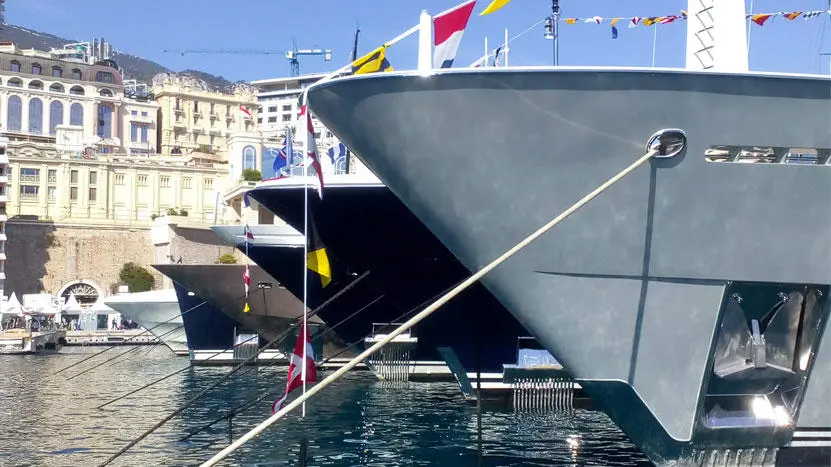
Ship Design Concepts
In this module, you'll develop an initial design of a type of vessel to an owner’s brief. You will follow the traditional design spiral which will bring you through successive developments of the design, ensuring outline compliance with some of the statutory rules and regulations for stability, tonnage, and load line compliance.
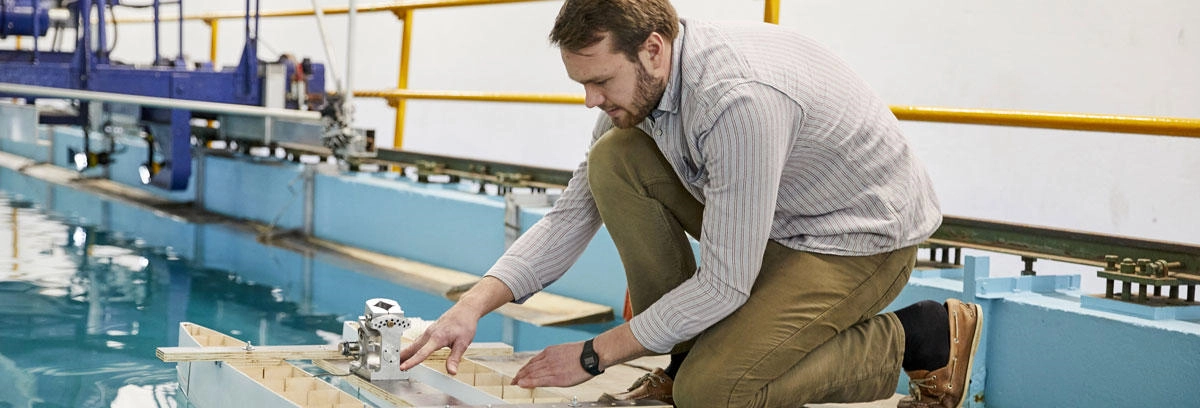
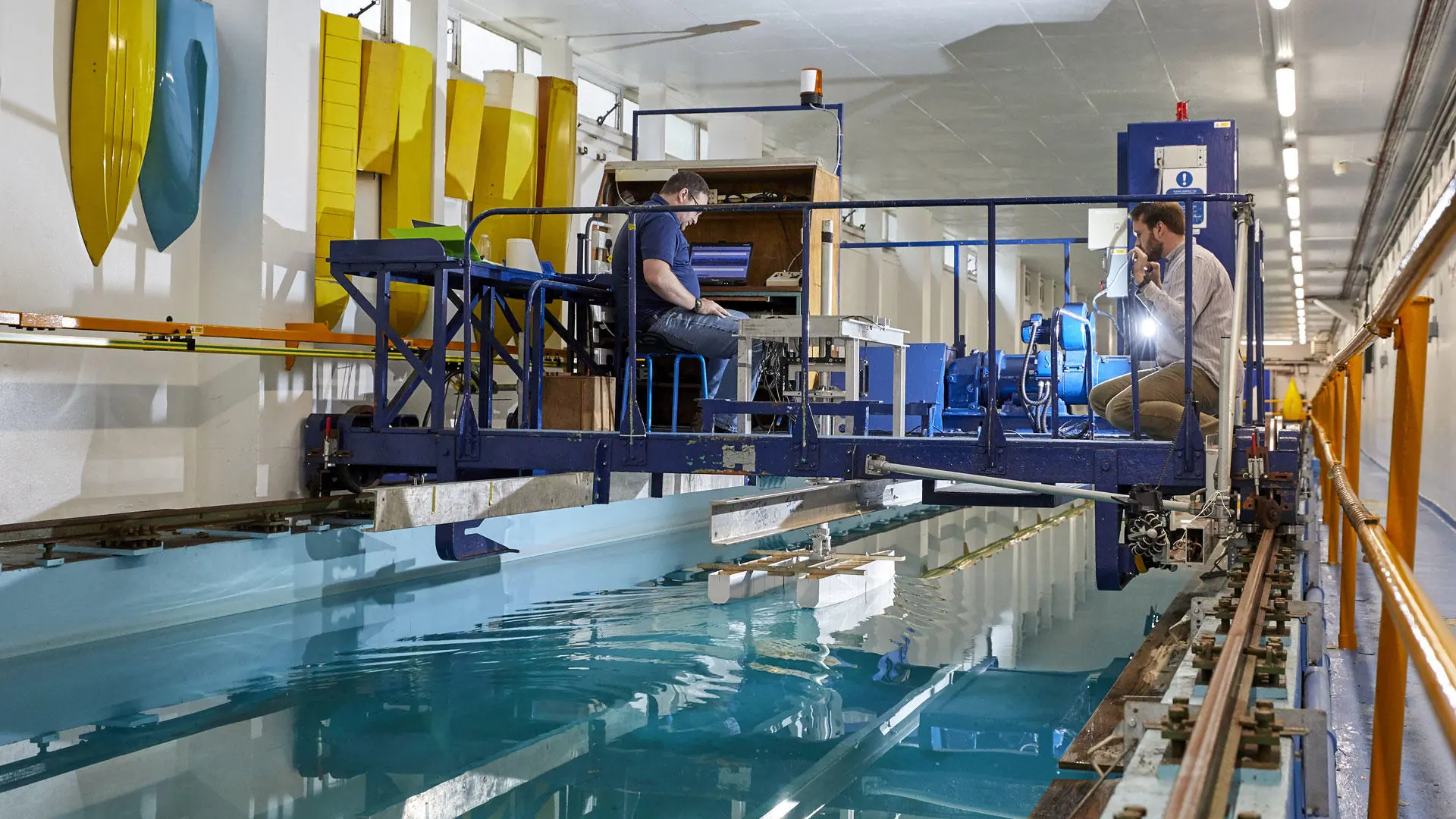
Sustainable Resistance and Propulsion
During this module you will learn the fundamental principles of hull resistance and propulsion for ships and small craft, with a strong emphasis on efficiency and sustainability.
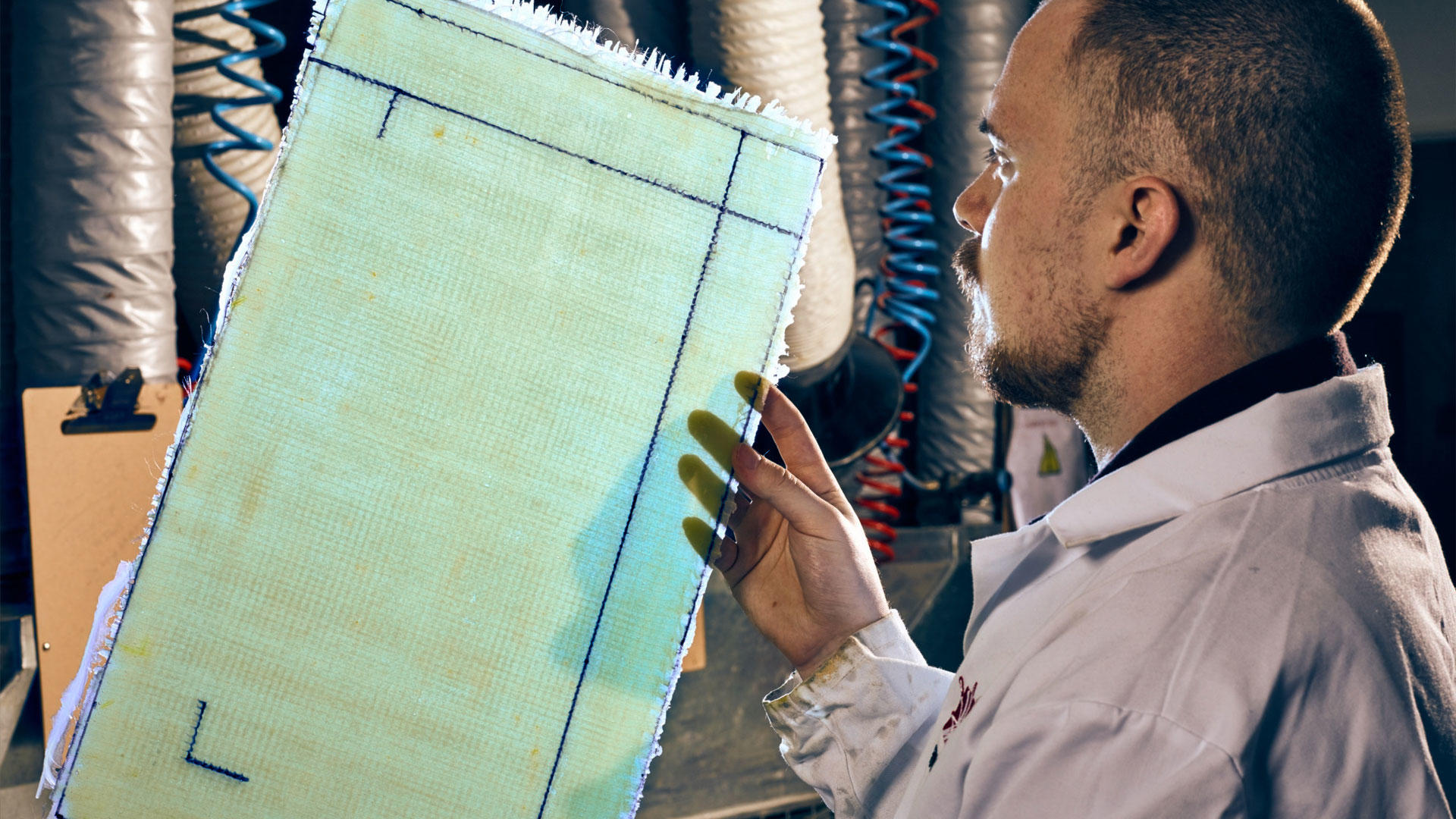
Composite Technology
You will explore how to manufacture cored and single skin fibre reinforced composite (FRC) structures specifically for use in marine production processes. This involves a theoretical knowledge reinforced by practical experience of how to manufacture a comprehensive range of sample panels in controlled environments.
Ship Design Development
Using commercially available software, you'll assess the stability of a specific ship against statutory intact and damage stability regulations and prepare a stability booklet for it. You will size and choose a drivetrain for the vessel and size, and position the tanks based on the different operational profiles of the ship. The structural design element will enable you to develop a structural midship section which satisfies hull global loading considerations and complies with ship classification rules.
Core modules
Hydrodynamic Design Technology
In this module, you'll learn the theory relating to both real and ideal fluid theory, covering laminar and turbulent flow, boundary layer theory, and also potential flow. You will produce a technical report based on a marine-related case study which has been simulated and assessed using a computational fluid dynamics package and benchmarked against theoretical or empirically derived calculations.
Structural Design Technology
This module will guide you through the use of classical structural design theories for isotropic materials conventionally used in the shipbuilding industry. You'll focus on resolution of typical structural problems, such as grillages and buckling of panel and assemblies due to global loads. You will also further develop the study of beam theory by expanding to the resolution of superstatic schemes and frames.
Ship Production Management
In this module, you will learn about modern production management theory, covering issues including resource allocation and techniques including critical path analysis, lean manufacturing, earned value analysis and the project office environment. You'll apply industry-standard production management theory and processes and will cover practical examples of production management within the shipbuilding industry.
Dissertation
This module enables you to undertake an independent project focused on the design, analysis, production, or operational performance of sailing yachts, motor vessels or commercial ships.