








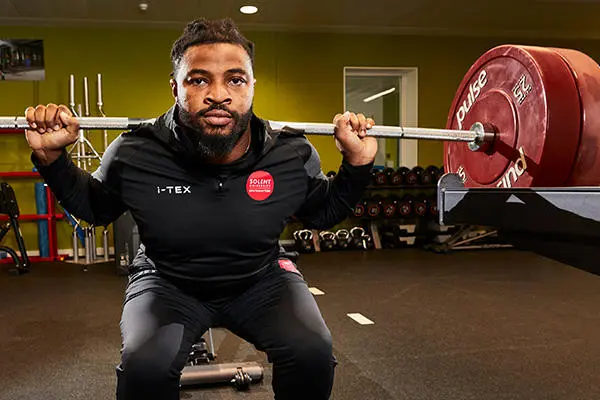
MSc Strength and Conditioning
Boost your employability and gain the knowledge and experience to graduate as an effective strength and conditioning coach.
Find out more
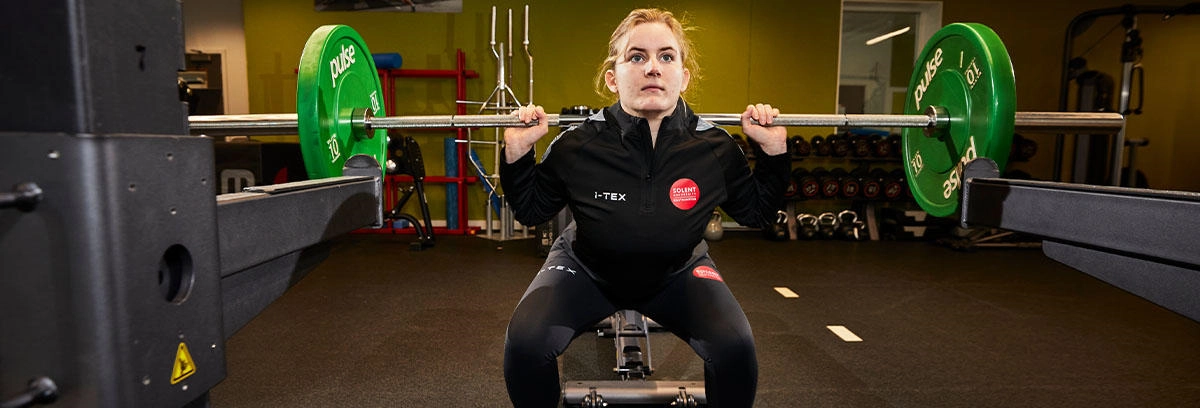
Prepare for a successful career in strength and conditioning using coaching, training, and applied sport science skills, to work with athletes, teams and clients from grassroots to elite sport.
Contact international admissions
Email: Call:Strength and conditioning (S&C) is an increasingly recognised and in-demand profession within sport, exercise, and health sectors. With the continued growth of elite and sub-elite sport, long-term athlete development programmes, and performance-focused physical preparation, there is a national and international demand for practitioners who can apply evidence-based training methods to improve athletic performance and reduce injury risk.
This innovative and highly practical strength and conditioning degree is designed to prepare you for a successful career by equipping you with a strong foundation in exercise science, alongside applied coaching, athletic assessment, and training programme design. You’ll gain the knowledge, skills, and experience needed to optimise athletic performance at all levels, from grassroots to elite sport, while developing as an adaptive, evidence-based practitioner ready to succeed in a rapidly evolving industry.
You will develop practical competencies in areas such as resistance training, speed and power development, and return-to-play planning. These are skills aligned to professional standards set by bodies such as UKSCA, IUSCA and CIMSPA. The course also places strong emphasis on employability through practical experience, reflective practice, and the development of communication and decision-making skills essential for careers in elite sport, education, uniformed and emergency services, or even health and rehabilitation settings. Learning is practice-led, with small-group sessions, workshops, and live demonstrations designed to mirror the demands of real-world environments.
Practical experience is at the heart of the course. You’ll have opportunities to work with athletes, teams, and clients across grassroots, academy, and professional settings through placements, internships, and applied projects. These experiences are supported by strong links with clubs, schools, and organisations, enabling you to gain real-world coaching experience and build valuable industry connections. From providing performance support for competitive athletes to assisting local schools and community sport programmes, you’ll graduate with an impressive CV and the confidence to succeed.
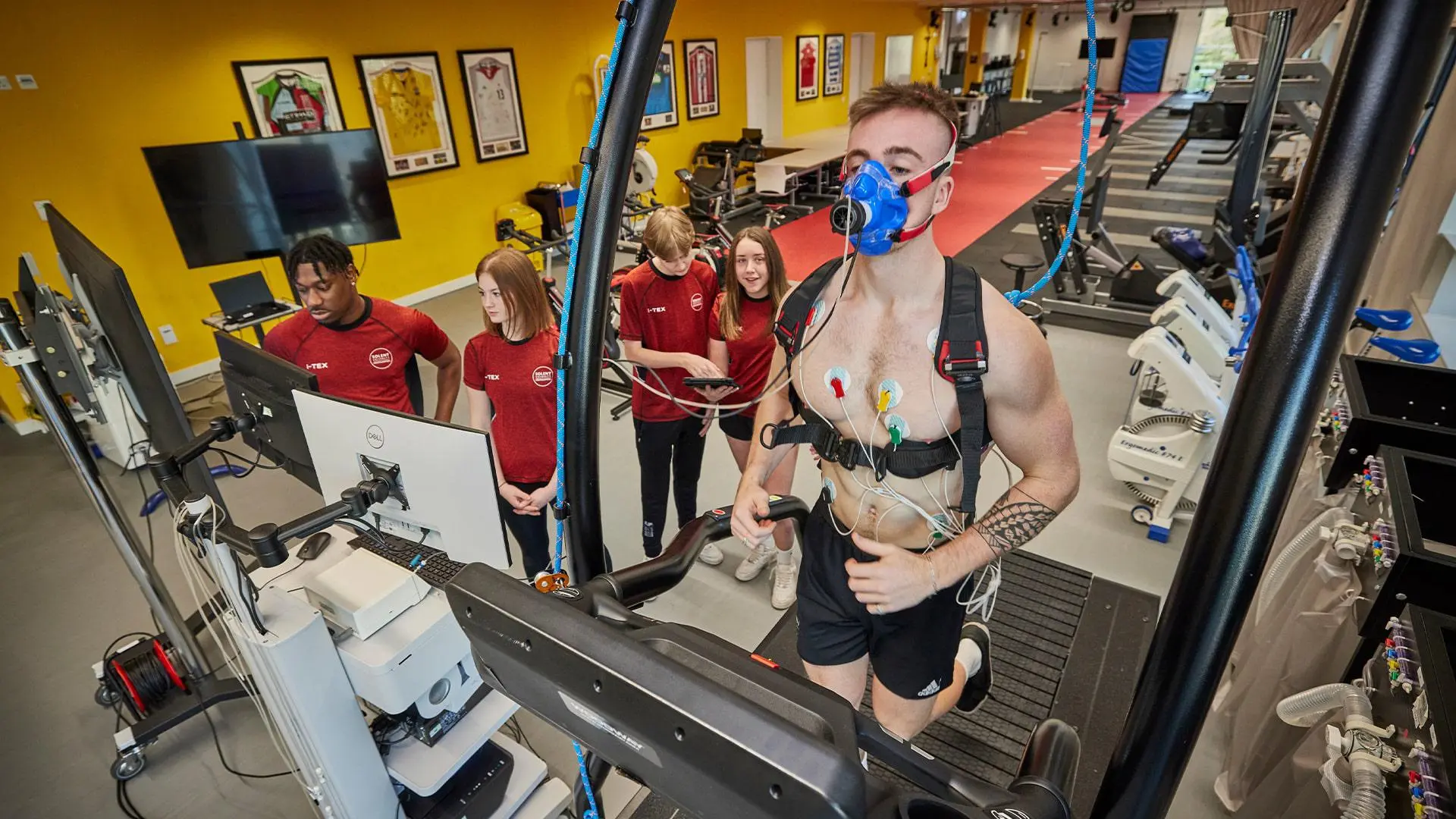
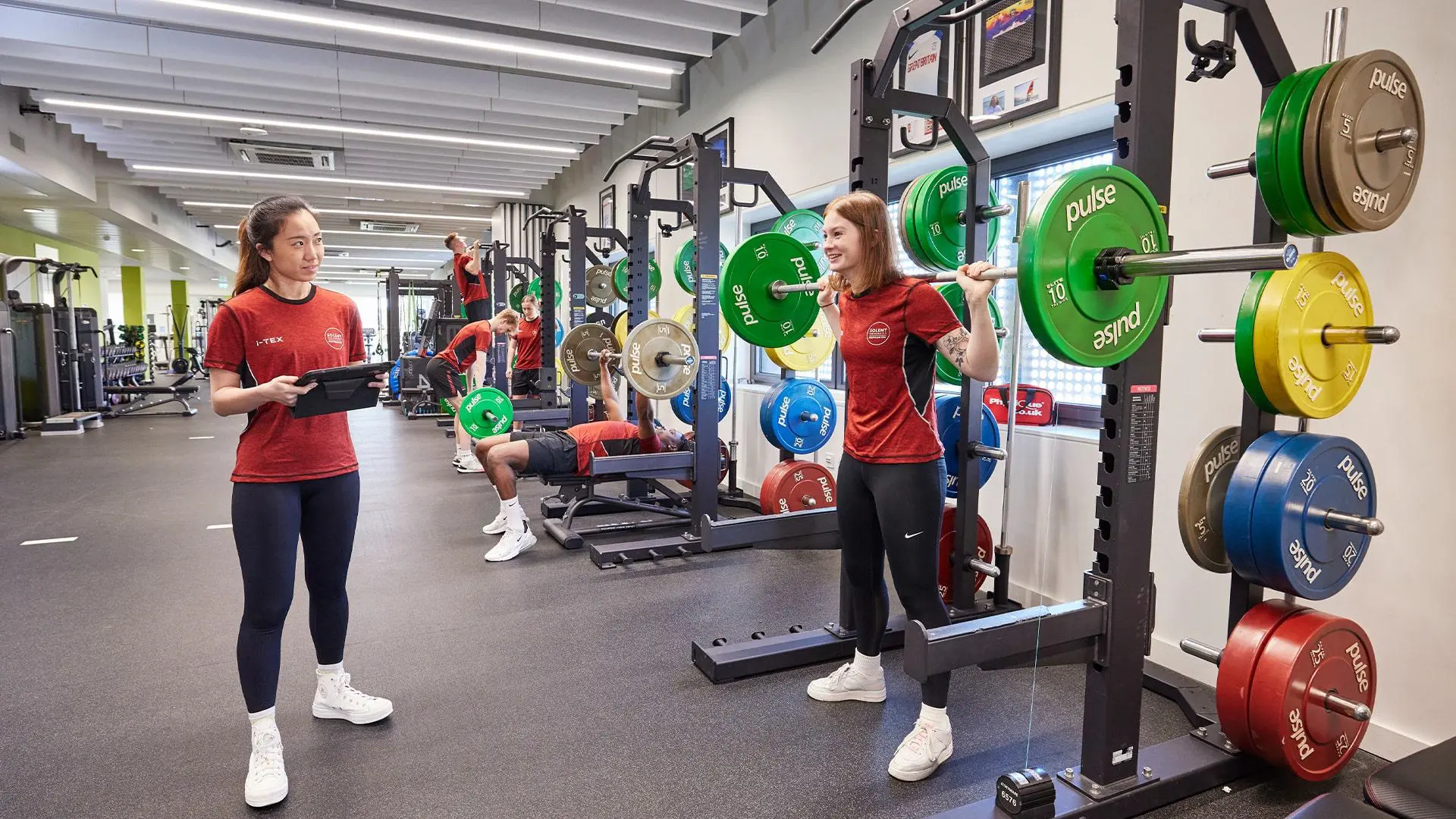
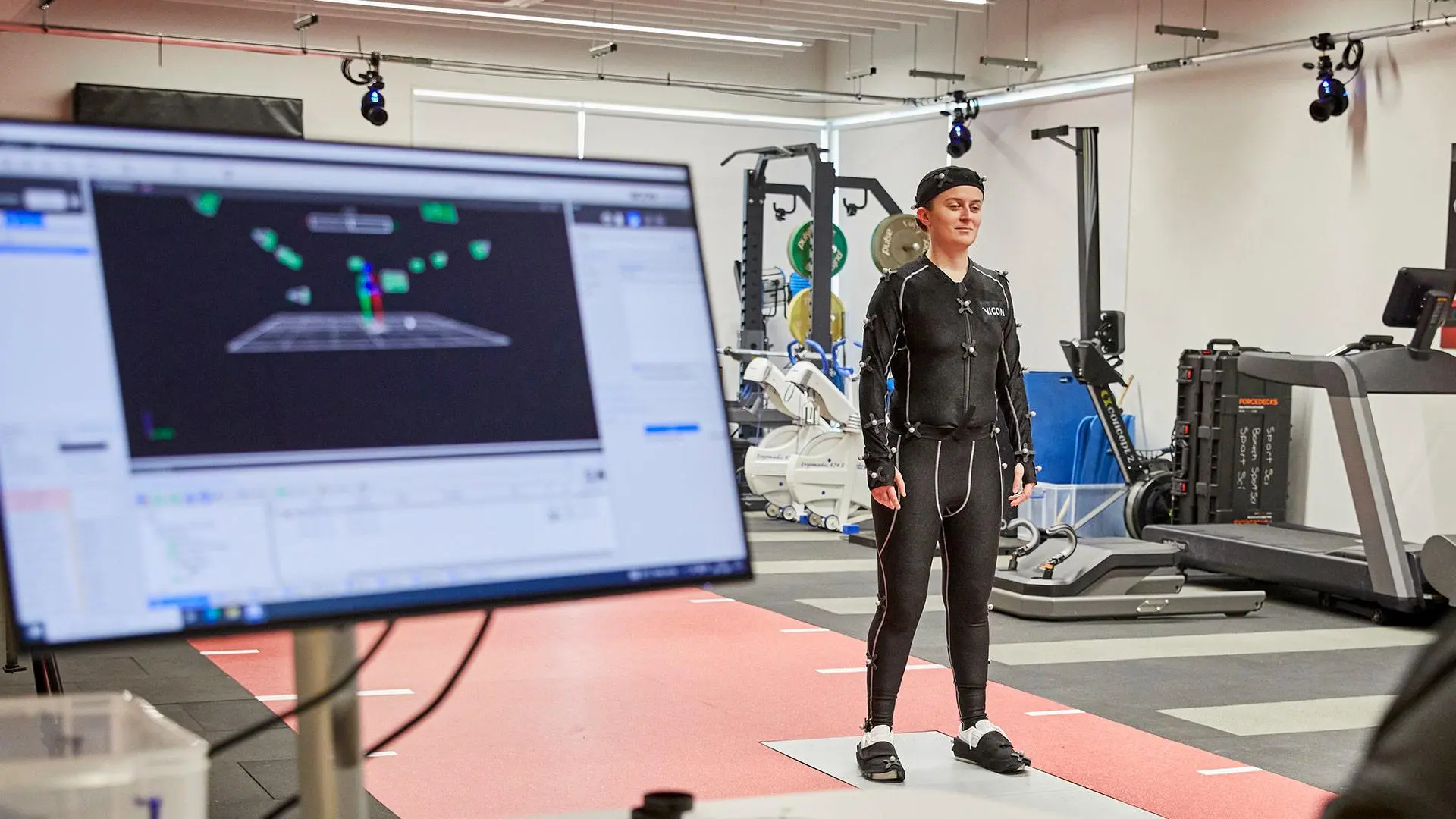
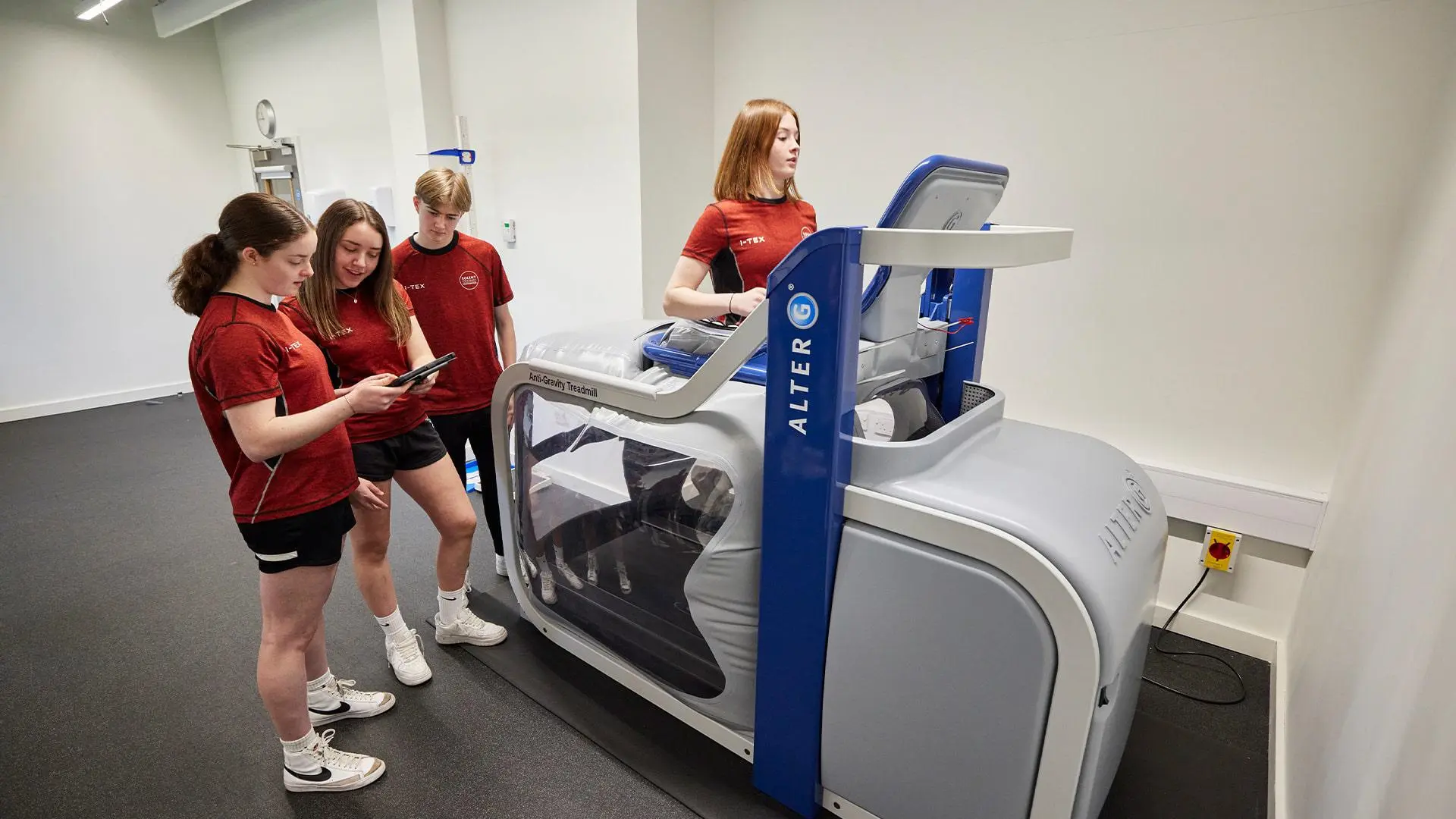
You’ll learn in Solent’s cutting-edge facilities, including our strength and conditioning-focused gym, a health-focused gym, CASES accredited physiology and biomechanics labs, performance and multi-use sports halls. You’ll gain experience using industry-standard technologies such as force plates, motion capture, GPS tracking, and velocity-based training systems — tools widely used in elite sport. Alongside your degree, you’ll also have the chance to gain additional professional qualifications and prepare for UK Strength and Conditioning Association (UKSCA) accreditation, enhancing your employability and helping you stand out in a competitive job market.
Taught by experienced coaches, accredited practitioners, and active researchers, the course team brings real-world expertise into the classroom. You’ll also have opportunities to contribute to applied research projects, such as injury prevention studies and youth performance enhancement initiatives, seeing the tangible impact of your work on athletes and communities. With a curriculum designed alongside industry partners and a focus on developing globally minded, adaptable professionals, this course prepares you for an exciting career in the UK or even coaching athletes on the international stage.
If you’re looking to study our strength and conditioning degree but don’t have the relevant qualifications or experience, the health, sport and social sciences foundation year will help you develop the core skills and knowledge to progress. Find out more about the health, sport and social sciences foundation year.
This course also offers the option of a placement year. A placement year allows you to put what you've learned in your first and second years into practice in the workplace, gaining valuable real-world work experience before you graduate. Our course and placements teams will help you find the perfect industry placement in your chosen field.
Recognised by:

Accredited by:

This course is perfect for students with a passion for sport, fitness, and performance. If you want a hands-on degree that develops your coaching, training, and applied sport science skills, this course will prepare you for a successful career in strength and conditioning
Following successful completion of the course - graduates are able to work as a strength and conditioning coach within amateur and professional sports clubs, schools, gymnasiums, health clubs and fitness centre, or working as a fitness professional with uniformed professions such as military, fire service and police.
Related jobs are also often advertised as athletic development coach in private schools, physical performance coach in sports such as rugby, and sport scientist or physical preparation coach, or physical development coach in football at academy or first team levels.
Graduates can also set up self-employment practice as personal trainers, youth fitness coaches and fitness consultants, or pursue employment in university settings, such as a lecturer in S&C, a demonstrator or a laboratory technician.
Graduates can also pursue further study with postgraduate courses such as MSc Strength and Conditioning, or sports therapy and rehabilitation, or undertake doctoral research by enrolling on a PhD.
Comprising experienced coaches, accredited practitioners, and active researchers, the course team brings real-world expertise into the classroom. The team bring a unique blend of academic excellence and research informed teaching with substantial industry experience to ensure you’re work ready, world ready and future ready.
The University cannot guarantee any particular members of staff will teach specific aspects of the course in the future, but will endeavour to ensure the teaching team maintains their balance of experience and qualifications.
As a strength and conditioning student, you’ll use our specialist fitness facilities to develop, deliver, and evaluate training programmes focused on improving strength, power, speed, stamina and overall athletic performance. Lessons will be taught in our strength and conditioning-focused gym, a health-focused gym, CASES accredited physiology and biomechanics labs, performance and multi-use sports halls. These spaces are designed to provide authentic, hands-on learning environments where students can apply theory directly into practice.
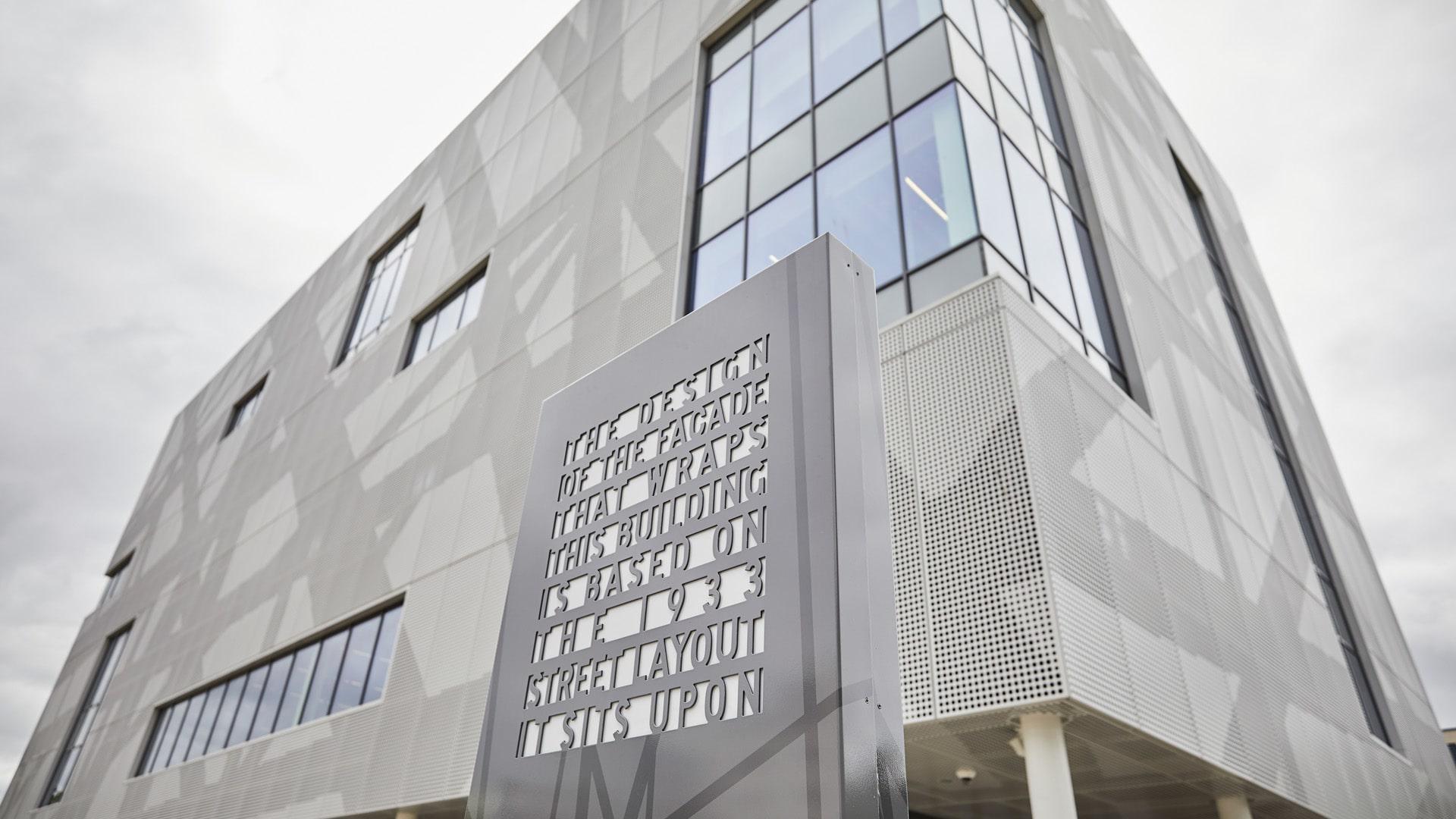
You’ll also gain experience using a wide range of cutting-edge technologies used in elite sport, including: force platforms for assessing power, force production, and asymmetries, 2D and 3D motion capture systems for analysing technique and movement patterns, velocity-based training systems to measure bar speed and optimise training loads and GPS athlete monitoring systems to track speed, workload, and on-field performance metrics. Our vibrant campus brings state-of-the-art facilities to enhance your learning and elevate your student experience. Our award-winning teaching building, The Spark is centred around students and offers a stimulating study environment with flexible learning spaces. Away from studying, why not try out the gyms, fitness studios and sports halls in our £28 million Sports Complex, or watch a blockbuster film at our student-run cinema with Dolby Atmos audio.
Broaden your horizons by adding an international dimension to your CV – essential to achieving success in today’s fast-changing, global environment.
Studying, working or volunteering in another country could be the experience of a lifetime. Enhance your degree by developing important global skills such as knowledge of other countries, language skills, intercultural awareness, adaptability and confidence.
For more information, please email international.mobility@solent.ac.uk.
In this module, you'll explore the roles and responsibilities of coaches, core coaching behaviours, and the principles of skill acquisition that underpin how individuals learn and refine movement. You'll take part in practical sessions todevelop your understanding of fundamental human movement patterns, with a focus on safe demonstration, error identification and basic cueing strategies.
This module introduces the scientific principles and practical methods underpinning effective strength and power training. Through a combination of theory and applied coaching you'll learn to test and interpret muscular capabilities, then design, implement, and evaluate strength and power programmes.
Within this module you'll develop the knowledge and coaching tools to deliver effective and purposeful conditioning interventions across a range of athletic populations and performance contexts. You’ll learn how to assess metabolic needs; manipulate variables such as intensity, volume, and rest intervals; and apply evidence-based methods to improve sport-specific conditioning.
This module introduces you to the underpinning principles and practical methods required to develop linear speed, change of direction ability, and reactive explosiveness in athletes. You'll practice a range of safe and progressive plyometric, sprinting, deceleration and multidirectional movements and engage in practical coaching and demonstration of the activities.
This module teaches the fundamentals of short, medium and long-term programming according to standard periodisation theory. You'll analyse and adapt exercises and session planning to suit your coaching environment and context and consider the needs of specialist populations and your use of skills to promote inclusion including strategic planning, instruction and demonstration, practice, observation and feedback, cognitive strategies, and reflective practice.
This module considers the specific health, fitness and training requirements of women and girls within a sporting environment. You'll develop understanding of the biological, anatomical, and physiological factors affecting female athlete performance and learn how to justify adaptations that support safe, effective, and inclusive coaching practice. You'll also design tailored training sessions, troubleshoot common issues, and integrate female health considerations into planning.
In this module, you'll analyse and adapt your methods and approach to S&C coaching to design and deliver sessions that maximise the sporting potential of young athletes. You'll examine the factors that impact young athletes’ development and consider various models of athlete development, talent identification, child protection policies, and effective coaching practice for athlete development in a variety of sporting activities.
In this module you'll develop confidence and competence in interpreting empirical evidence and performance data for applied decision-making in sport science and strength and conditioning. You'll be introduced to academic research principles, including research design, basic statistical testing, and approaches to evidence appraisal take part in practical workshops to collect, clean, analyse and visualise data using industry-relevant platforms.
This module will prepare you to become an independent research-based practitioner by assisting you to begin training your own athletes and prepare to follow ethical practice when undertaking your own independent research project. You will produce a sport-specific programme for competitive athletes that you will then begin to implement, providing the basis of a future case study.
In this module, you will analyse injury mechanisms, review case studies, and collaborate with multidisciplinary staff to plan safe reintegration pathways for athletes. You'll observe and appraise late-stage rehab strategies, design return-to-training progressions, and strategically plan return-to-play (RTP) frameworks.
This module prepares you for employment by critically examining what it means to be an expert coach, understanding the demands of the profession, and navigating key industry standards and accreditations. You'll engage in professional practice tasks, including completing placement hours, compiling case-study evidence, and practising elements of professional assessments.
In this module, you'll create an original project by conducting an independent study, collecting and analysing data, interpreting findings, and producing academic writing. You'll engage with supervisors, apply appropriate research methods, and prepare for an oral defence through discussion, critique, and presentation practice. You'll also manage timelines, adhere to ethical protocols, and synthesise evidence to produce a coherent research project.
Contact international admissions
Email: Call:Solent’s curriculum framework builds on our unique, creative and applied approach to teaching. The transformation of students’ lives is at the heart of our mission as a university, and our curriculum – informed by the latest theory – reflects this shared educational vision.
Find out more
The student achievement team are on hand to help you succeed during your studies at Solent. They aim to contact you at key times during your time here with personalised information, advice and guidance, by email or phone.
The disability advice team provides information, advice and guidance for disabled students.
All students can access Succeed@Solent, Solent's online guide to getting better grades. It offers extensive, practical information and advice on topics such as academic writing, research and presentations.
The strength and conditioning industry offers exciting opportunities to begin a career working with high performing athletes, professional sports clubs, and leading fitness organisations. This degree equips you with the practical skills, scientific knowledge, and industry experience and recognised qualifications that employers are looking for.
Suitable roles for graduates include:
Starting salary: £15,000 to £24,000
This is for those employed by a gym or similar - salaries could rise to £35,000 or more. Freelance instructors could earn between £20 and £60 per hour.
Senior coach: Average £32,500
Typical starting salaries for newly qualified sports coaches working for local authorities range from £18,000 to £28,000. Salaries for senior coaches employed by NGBs or professional sports clubs are usually over £32,500. Experienced coaches working at the highest national level have the potential to earn in excess of £90,000.
The stated salaries are published on prospects.ac.uk. Income figures are intended as a guide only.
The Solent Careers team is committed to getting students into great careers.
While you are studying, the team can help you with finding work experience or placements, link you with a mentor, check your CV, or offer one-to-one guidance.
We also have graduate job opportunities just for Solent graduates.

Top 25%
of UK unis for sustained employment
Longitudinal Educational Outcomes, 2025
Every student at Solent University will also have the option to study an additional Certificate in Practical Artificial Intelligence qualification alongside their course. Free of charge, the course ensures you'll be prepared for a fantastic and varied career after graduation.

Thinking about studying further than an undergraduate degree? Alumni can get 20% off their postgraduate study.
Boost your employability and gain the knowledge and experience to graduate as an effective strength and conditioning coach.
Find out more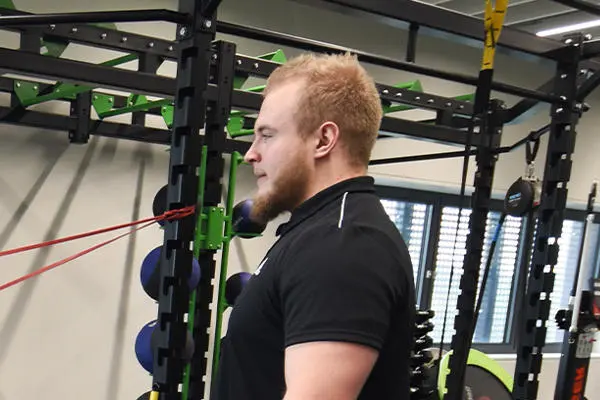
Explore the science behind physical health and exercise and the impact it has on individuals with clinical disease on this industry-led, practical course.
Find out more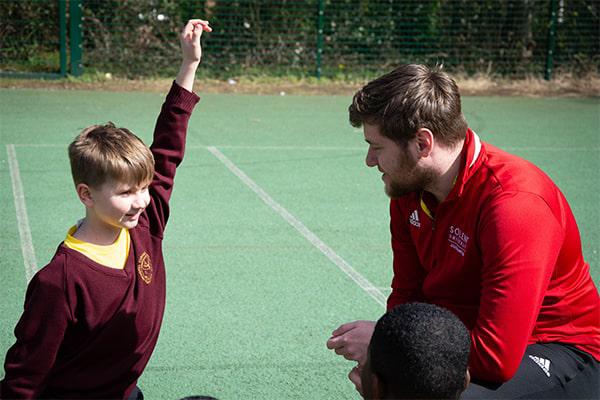
The MA Physical Education and School Sport programme will help you to develop the academic knowledge and practical skills that underpin a career in physical education and youth...
Find out more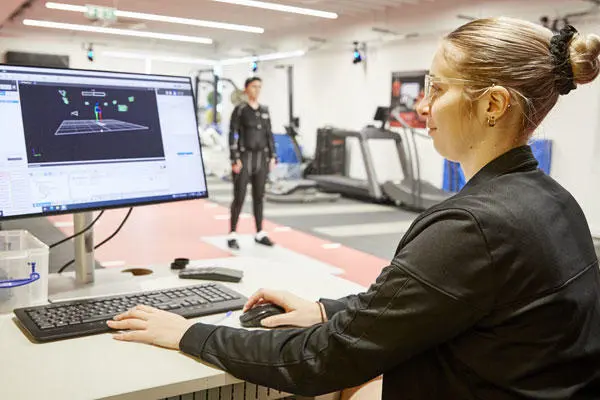
Learn to develop and apply your sport and exercise therapy, physiotherapy, or sports rehabilitation expertise to work with injured and non-injured athletes across all sports.
Find out moreThe tuition fees for the 2026/27 academic year are:
For further information, please visit our tuition fees page.
While most course costs are covered by your tuition fees, some essential resources and optional extras may need to be paid for separately. These additional costs are listed below. For advice on budgeting and managing your money, please contact student.funding@solent.ac.uk.
The 2026/27 other costs are:
Compulsory costs
Optional costs
Solent University offers a range of bursaries and scholarships that provide financial assistance or waive fees for tuition or accommodation. Each bursary or scholarship has specific eligibility criteria. Check out our bursaries and scholarships pages to find out more.
Cost of living support
At Solent, we understand that the cost of living crisis may be of some concern. To help, we've put together some detailed information to show what support is available and how to make your money go further.
Graduation costs
There is no charge to attend graduation, but you will be required to pay for the rental of your academic gown (approximately £45 per graduate, depending on your award). You may also wish to purchase official photography packages, which range in price from £15 to £200+. Graduation is not compulsory, so if you prefer to have your award sent to you, there is no cost. Extra guest tickets will go on sale after results publication and will be sold on a first-come-first-served basis. The cost per ticket is currently £20. Please note, we do not guarantee there will be any extra tickets available to purchase.
Contact international admissions
Email: Call:Please select an option below:
As a general guide, we look for qualifications that are equivalent to the British high school A-levels.
If you are applying from outside the UK, find information about entry requirements, visas and agents for your country here.
For further information about EU qualifications, please see our course entry requirements document.
As a general guide, we look for qualifications that are equivalent to the British high school A-levels.
If you are applying from outside the UK, find information about entry requirements, visas and agents for your country here.
For further information about international qualifications, please see our course entry requirements document.
All international applicants need to be aware that the English language requirements to attend Solent University, and the English language requirements to obtain a visa from the Home Office, may be different. This means that if you meet the Solent University language requirement to gain a place on the course, you may still have to meet additional requirements to be granted with a visa by the Home Office.
We strongly advise all applicants to visit the Home Office website which outlines all the requirements for a successful visa application.
Full-time
Any student applying for the first year of a full-time/sandwich undergraduate course must apply through UCAS (University and Colleges Admissions Service). This includes mature, overseas and EU students.
Nearly all schools and colleges offer their students the facility of applying electronically through the UCAS website using 'Apply'; it may also be used by those applying independently in the UK and overseas. This facility and all course information can be found on the UCAS website: www.ucas.com.
Your application should reach UCAS by 14 January if you hope to enter a course the following autumn. Early application is advised for the most popular subject areas. Late applications may be made until the end of June. The UCAS Code for the University is S30, code name SOLNT.
Find out what happens after you apply
Contextual offers
Solent endeavours to offer learning opportunities to students from all backgrounds. When we receive and review an application, we take into consideration the context and personal circumstances of applicants when making a decision, which means our advertised entry tariff could be reduced.
Find out more about Solent's contextual offers
Applicants who do not have English as their first language will be required to demonstrate an approved level of proficiency in the use of the English language. The agreed minimum requirements for this course are:
TOEFL IBT tests taken prior to 21 January 2026
TOEFL IBT tests taken from 21 January 2026
Qualifications are checked before enrolment, and international students must bring their original certificates or certified copies when coming to study at the University.
Pre-Sessional English programme
The University also offers a pre-sessional English programme for international students who wish to improve their level of English before starting a degree course.
Contact international admissions
Email: Call: