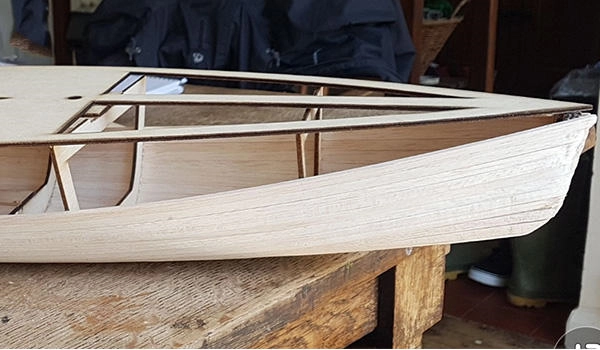
“The facilities are amazing, with FRP labs, and a CAD suite specifically for use by yacht design students”



Plot a course for your engineering skills - specialise in naval architecture for power- and sail-craft. Solent’s highly regarded degree is taught by experienced marine architects and designers.
Contact international admissions
Email: Call:Solent’s internationally-recognised yacht and powercraft design course focuses on small craft technology, Computer-Aided Design (CAD) and design practice, delivering essential engineering theory and design skills.
Previous students have benefitted from attending guest lectures by speakers from key industry organisations such as the Royal Institute of Naval Architects (RINA), Nigel Gee BMT, Babcock Engineering, Gurit, Sunseeker, Rob Humphries Design and Norbert Sedlacek (Open 60 skipper).
To help build their professional network, students are encouraged to attend local boat shows, including the Southampton Boat Show and Seawork International. Previous students have also been on yard visits, with recent trips including Sunseeker, Green Marine and Solent Refit.
This course is part of the South Coast Institute of Technology (IoT), a partnership of colleges, universities and industry-leading employers to create new career opportunities in the technology sector. IoT courses like this one are precisely tailored to the needs of employers in the maritime, engineering and digital industries – industries which are hungry for talented new engineers, technologists, technicians and creatives like you.
If you’re looking to study our yacht design and production degree but don’t have the relevant qualifications or experience, the STEM foundation year will help you develop the core skills and knowledge to progress. Find out more about the STEM foundation year.
Part of:

Our creative degrees allow our students to develop a critical eye for design with a knowledge of different design approaches and problem solving techniques. Take a look at some of the great work they produce.

This course is aimed at those who want to design smaller leisure craft such as sailing boats and powercraft.
Students learn the fundamentals of yacht design alongside the latest construction methods to gain a solid grounding for roles in yacht design, naval architecture or equipment design.
Course graduates have gone on to various industry roles, including naval architect or design engineer, at companies such as Laurent Giles Naval Architects, Sunseeker Yachts, Humphries Yacht Design, Monaco Marine, Viareggio Shipyards in Italy and Incat Crowther Design in the USA.
Hear from Solent alumni about where their careers have taken them and how studying at Solent prepared them for their future.
Read more stories“The facilities are amazing, with FRP labs, and a CAD suite specifically for use by yacht design students”
The course is delivered by a team of specialist naval architects, yacht designers, and production designers, supported by computer-aided design (CAD)/drawing office instructors and fibre-reinforced plastic (FRP) workshop instructors. All team members come from the yacht and small craft industry and maintain their close links through consultancy, design practice, and professional bodies.
The University cannot guarantee any particular members of staff will teach specific aspects of the course in the future, but will endeavour to ensure the teaching team maintains their balance of experience and qualifications.
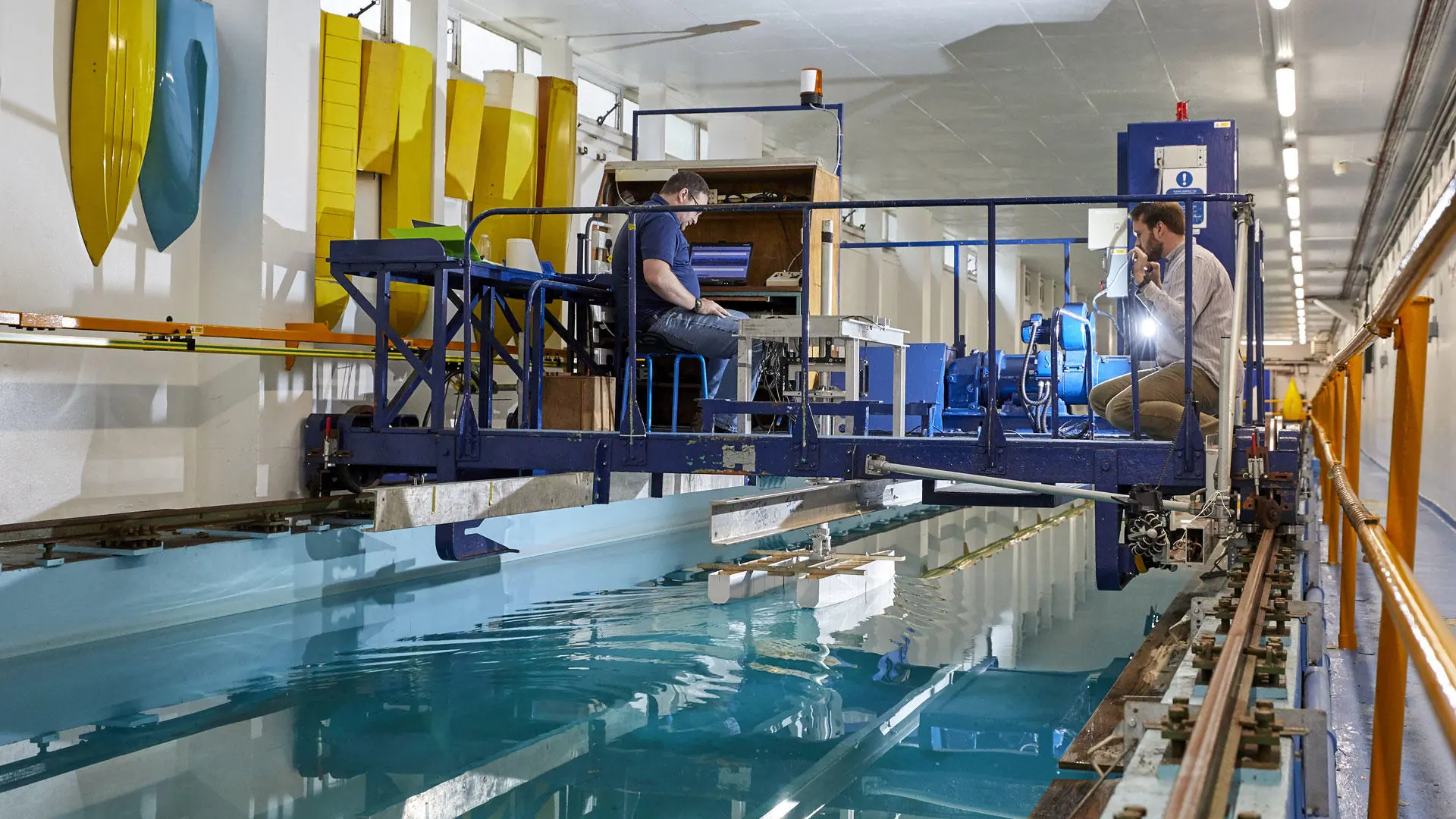
Students have full access to the University’s specialist facilities, including our composite construction workshop, yacht drawing office and modern CAD office, which is equipped with the latest commercial marine design and production software, as well as a fully-equipped specialist composite workshop a 60m towing tank and static four-metre stability tank.
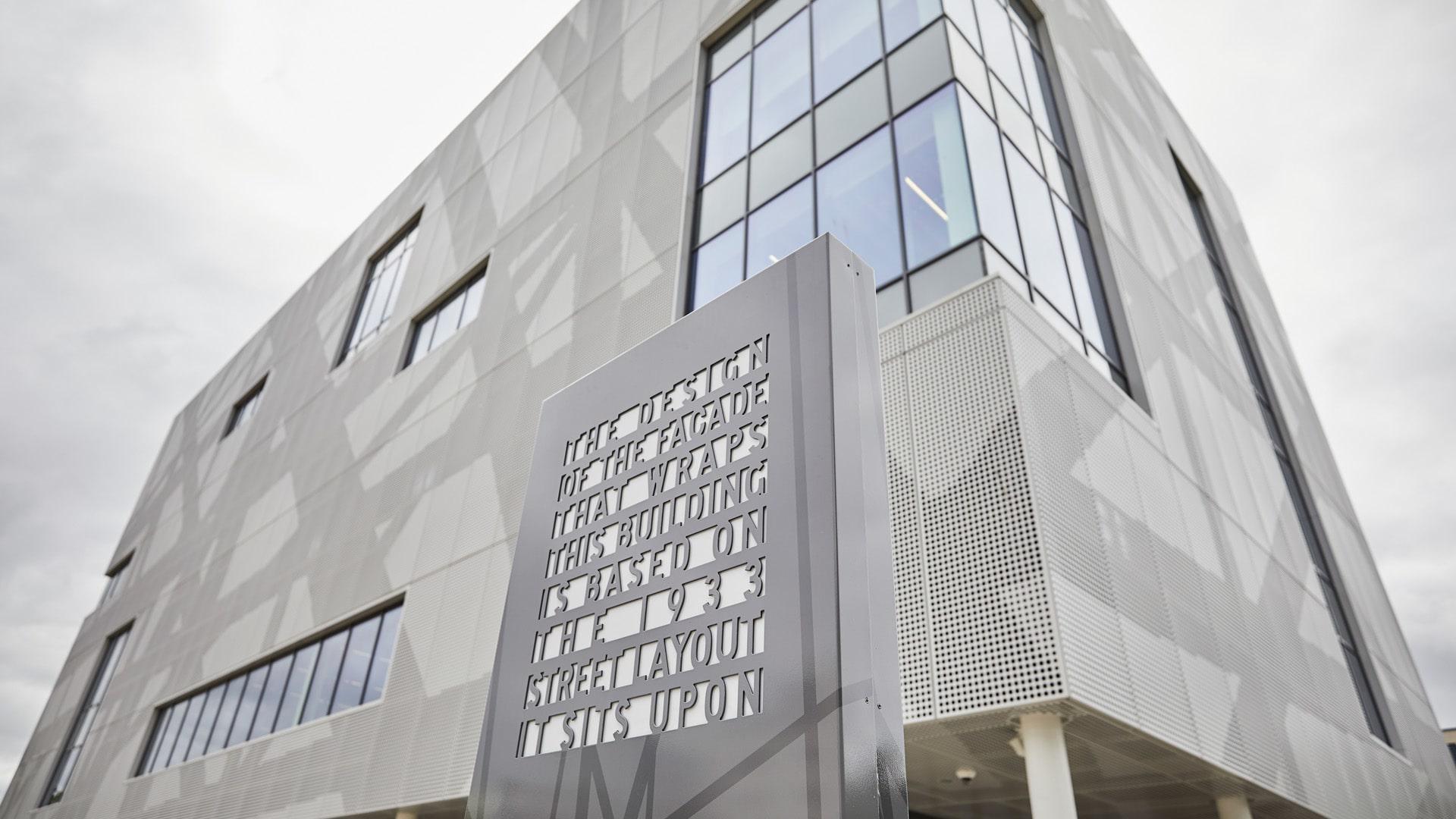
Our vibrant campus brings state-of-the-art facilities to enhance your learning and elevate your student experience. Our award-winning teaching building, The Spark is centred around students and offers a stimulating study environment with flexible learning spaces. Away from studying, why not try out the gyms, fitness studios and sports halls in our £28 million Sports Complex, or watch a blockbuster film at our student-run cinema with Dolby Atmos audio.
Broaden your horizons by adding an international dimension to your CV – essential to achieving success in today’s fast-changing, global environment.
Studying, working or volunteering in another country could be the experience of a lifetime. Enhance your degree by developing important global skills such as knowledge of other countries, language skills, intercultural awareness, adaptability and confidence.
For more information, please email international.mobility@solent.ac.uk.

This introductory module helps you develop both knowledge of and skills in applied technology, study skills and communication; as well as contribute to your personal preparation for higher education study. You'll also establish strong and supportive peer networks with other students on your degree programme.
This module is designed to help you to develop a range of transferable numerical skills that support successful study in STEM based subjects. You'll develop your computational skills to build confidence and competence in fundamental mathematical concepts and then extend these into mathematical principles appropriate to your chosen degree subject.
This module will allow you to develop the key skills and subject based knowledge required for the study of science and engineering based topic areas. You'll undertake applied and experimental laboratory activities, as well as study theoretical science and engineering related topics, including mechanical principles, properties of materials, physics principles, analogue and digital electronics, and basic principles of fluid dynamics.
This module will allow you to apply the skills you've developed in other modules in a 'mini dissertation' with a focus towards your chosen degree subject. Working in small groups, and depending on the chosen degree pathway, your project may include a practical design and build, a paper-based research and investigation, or a programme of structured laboratory and workshop exercises. However, there must be a problem to investigate, a research stage, and an argued design or scientific solution to the problem which can be analysed for effectiveness.
In this module you will study stability, considering initially the upright and small angle and large angle stability cases for both the transverse stability and also small angle longitudinal stability. You will explore the effects of suspended masses and also free surface effects on the initial GM.
During this module you will study and understand how the various marine systems which are used on boats and larger vessels work. This will involve seeing practical demonstrations of some of the equipment used on marine vessels.
In this module you will complete a live brief to design a single chine vessel following the design path, which is standard practice in a design office scenario, based on the module content delivered throughout the block.
You will learn about the materials used in marine hull construction, and other components found on board vessels, such as timber, steel, aluminium, stainless steels, brasses and bronzes. You'll also learn about materials properties, the considerations needed when choosing them, and the production processes involved in the construction of boats.
During this module you will learn the fundamental principles of hull resistance and propulsion for ships and small craft, with a strong emphasis on efficiency and sustainability.
The aim of the module is to develop your technical design skills alongside the CAD design skills typically required in a motor vessel design office. The unit provides you with authentic ‘real world’ experience close to the typical design office practice.
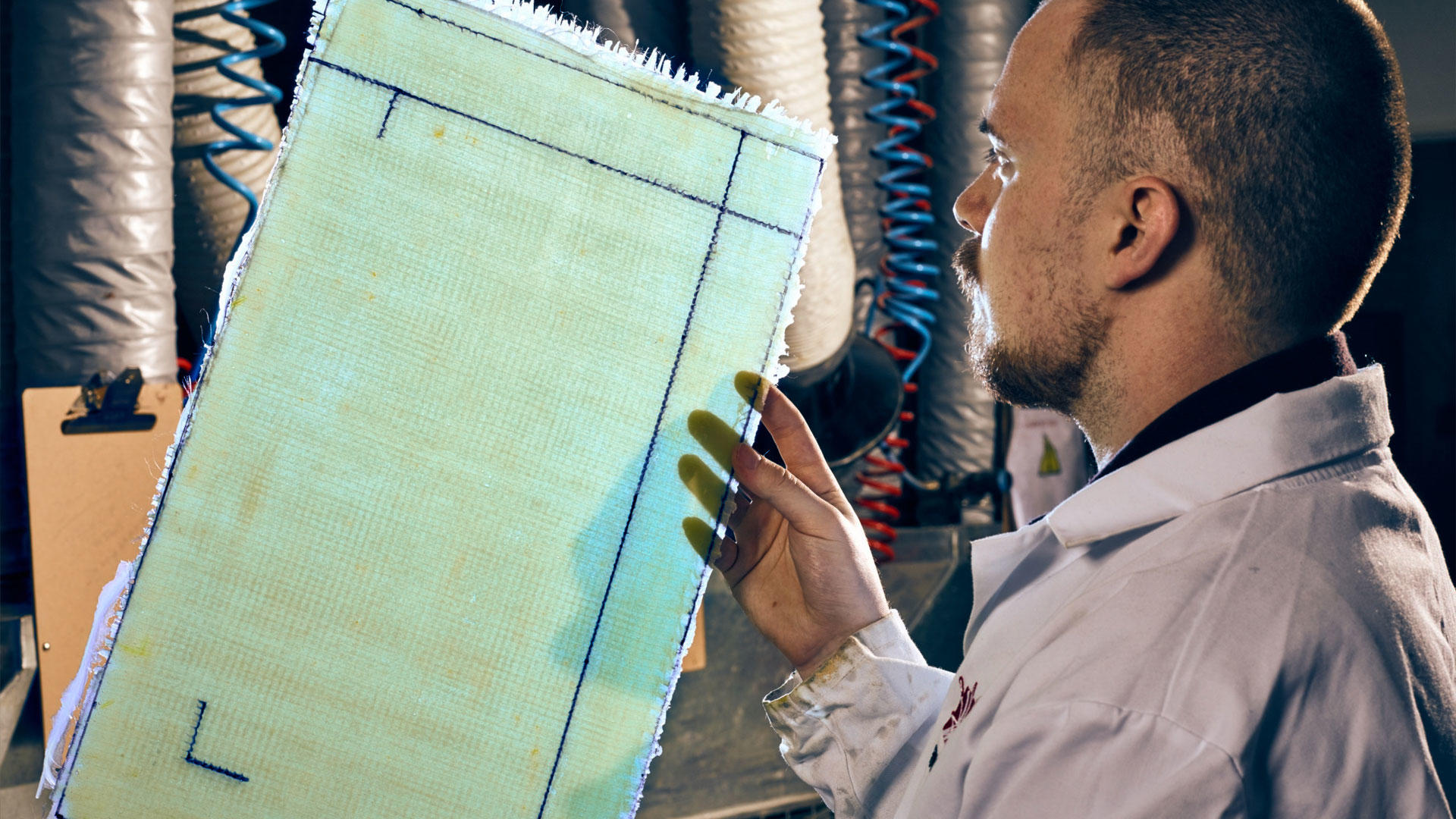
You will explore how to manufacture cored and single skin fibre reinforced composite (FRC) structures specifically for use in marine production processes. This involves a theoretical knowledge reinforced by practical experience of how to manufacture a comprehensive range of sample panels in controlled environments.
In this module you will develop an understanding of sailing yacht design principles and the theories specifically associated with yachts. You will be exposed to specific design areas relevant to sailing yachts to gain experience of design practice by completing both formative and summative design tasks.
You will learn about the components of each survey type whether surveying new builds or existing vessels and gain an understanding of how different skills and methodologies are applicable to different types of survey such as purchase, insurance, repair, refit, sea trials and valuation surveys and how results should be presented.
This module will guide you through the use of classical structural design theories for isotropic materials conventionally used in the shipbuilding industry. You'll focus on resolution of typical structural problems, such as grillages and buckling of panel and assemblies due to global loads. You will also further develop the study of beam theory by expanding to the resolution of superstatic schemes and frames.
You will learn to use advanced design and analytical software, whether hull related or for the parametric modelling of the design. You will also study the theory for sailing yacht force and moment balance as commonly used in commercial VPP software.
This module enables you to undertake an independent project focused on the design, analysis, production, or operational performance of sailing yachts, motor vessels or commercial ships.
Contact international admissions
Email: Call:As part of this course, you will study one module at a time, giving you the chance to build a deeper understanding and see the results of your hard work more quickly. With regular assessments and feedback, rather than exams all at once, you’ll also benefit from improved focus, and a more manageable workload.
Learn more about block teaching
The student achievement team are on hand to help you succeed during your studies at Solent. They aim to contact you at key times during your time here with personalised information, advice and guidance, by email or phone.
The disability advice team provides information, advice and guidance for disabled students.
All students can access Succeed@Solent, Solent's online guide to getting better grades. It offers extensive, practical information and advice on topics such as academic writing, research and presentations.
The UK has a strong pedigree in yacht design. According to British Marine, the industry is supported by over 38,000 jobs across a variety of roles, with over 10,000 new boats produced in 2019 for both domestic and international markets.
Solent’s yacht design and production degree boasts race-winning designers amongst its graduates. Other have also gone on to work as naval architects, design engineers and yacht designers at companies such as Dubois Yachts, Sunseeker, Monaco Marine and Viareggio Shipyards.
During the course you will benefit from a full programme of RINA Southern Joint Branch lectures, as well as guest speakers from industry companies such as Nigel Gee BMT, Babcock Engineering and Gurit.
You’ll be encouraged to attend local boat shows, including the Southampton International Boat Show and Seawork International. We also organise yard visits, with recent trips including Sunseeker International and Solent Refit.
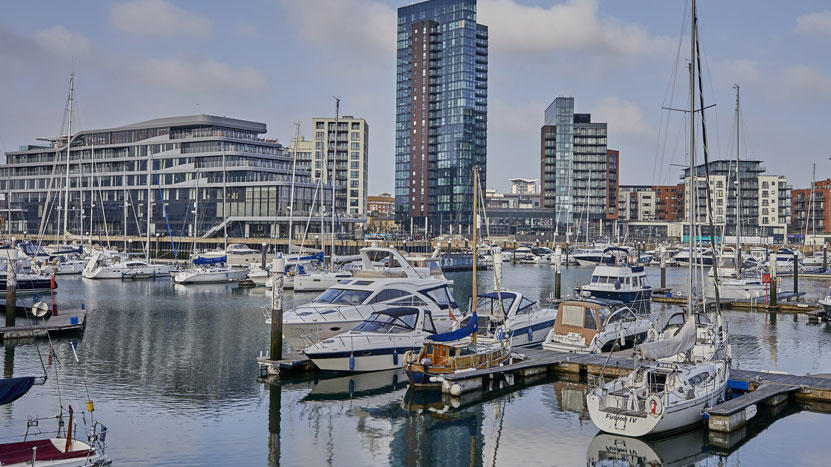
Starting salary: £25,000 to £35,000
With experience, salaries can range from £35,000 to £50,000, rising to £60,000 in some instances for senior naval architect posts.
The stated salaries are published on prospects.ac.uk.
Hear from Solent alumni about where their careers have taken them and how studying at Solent prepared them for their future.
Read more stories“The facilities are amazing, with FRP labs, and a CAD suite specifically for use by yacht design students”
The Solent Careers team is committed to getting students into great careers.
While you are studying, the team can help you with finding work experience or placements, link you with a mentor, check your CV, or offer one-to-one guidance.
We also have graduate job opportunities just for Solent graduates.

Top 25%
of UK unis for sustained employment
Longitudinal Educational Outcomes, 2025
Every student at Solent University will also have the option to study an additional Certificate in Practical Artificial Intelligence qualification alongside their course. Free of charge, the course ensures you'll be prepared for a fantastic and varied career after graduation.

Thinking about studying further than an undergraduate degree? Alumni can get 20% off their postgraduate study.
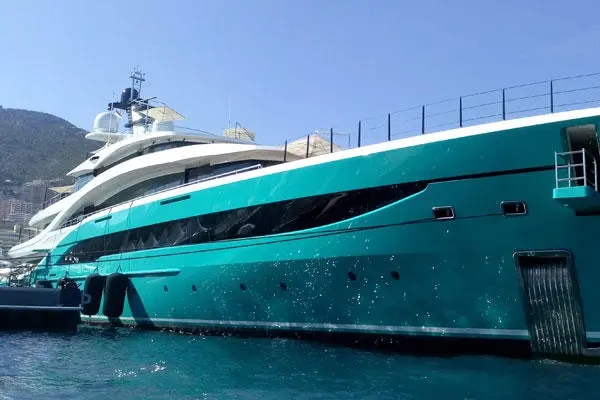
Discover the latest techniques to develop new, sustainable superyacht and marine craft designs. Benefit from the combined expertise of our yacht engineering teaching team and Solent's Centre for Marine Sustainability to build your knowledge.
Find out moreThe tuition fees for the 2026/27 academic year are:
For further information, please visit our tuition fees page.
While most course costs are covered by your tuition fees, some essential resources and optional extras may need to be paid for separately. These additional costs are listed below. For advice on budgeting and managing your money, please contact student.funding@solent.ac.uk.
The additional costs for this academic year are not yet available. For guidance, previous additional costs have been:
Optional costs
Solent University offers a range of bursaries and scholarships that provide financial assistance or waive fees for tuition or accommodation. Each bursary or scholarship has specific eligibility criteria. Check out our bursaries and scholarships pages to find out more.
Cost of living support
At Solent, we understand that the cost of living crisis may be of some concern. To help, we've put together some detailed information to show what support is available and how to make your money go further.
Graduation costs
There is no charge to attend graduation, but you will be required to pay for the rental of your academic gown (approximately £45 per graduate, depending on your award). You may also wish to purchase official photography packages, which range in price from £15 to £200+. Graduation is not compulsory, so if you prefer to have your award sent to you, there is no cost. Extra guest tickets will go on sale after results publication and will be sold on a first-come-first-served basis. The cost per ticket is currently £20. Please note, we do not guarantee there will be any extra tickets available to purchase.
Contact international admissions
Email: Call:Please select an option below:
As a general guide, we look for qualifications that are equivalent to the British high school A-levels.
If you are applying from outside the UK, find information about entry requirements, visas and agents for your country here.
For further information about EU qualifications, please see our course entry requirements document.
As a general guide, we look for qualifications that are equivalent to the British high school A-levels.
If you are applying from outside the UK, find information about entry requirements, visas and agents for your country here.
For further information about international qualifications, please see our course entry requirements document.
All international applicants need to be aware that the English language requirements to attend Solent University, and the English language requirements to obtain a visa from the Home Office, may be different. This means that if you meet the Solent University language requirement to gain a place on the course, you may still have to meet additional requirements to be granted with a visa by the Home Office.
We strongly advise all applicants to visit the Home Office website which outlines all the requirements for a successful visa application.
Full-time
Any student applying for the first year of a full-time/sandwich undergraduate course must apply through UCAS (University and Colleges Admissions Service). This includes mature, overseas and EU students.
Nearly all schools and colleges offer their students the facility of applying electronically through the UCAS website using 'Apply'; it may also be used by those applying independently in the UK and overseas. This facility and all course information can be found on the UCAS website: www.ucas.com.
Your application should reach UCAS by 14 January if you hope to enter a course the following autumn. Early application is advised for the most popular subject areas. Late applications may be made until the end of June. The UCAS Code for the University is S30, code name SOLNT.
Find out what happens after you apply
Contextual offers
Solent endeavours to offer learning opportunities to students from all backgrounds. When we receive and review an application, we take into consideration the context and personal circumstances of applicants when making a decision, which means our advertised entry tariff could be reduced.
Find out more about Solent's contextual offers
Top-up route:
We welcome applications from students currently studying a Foundation Degree, DipHE, HNC, HND or modules of an undergraduate degree course at another university, who wish to enter directly into Years 2 or 3 of one of our undergraduate degree courses. Please contact our admissions team for more information: contact us
Applicants who do not have English as their first language will be required to demonstrate an approved level of proficiency in the use of the English language. The agreed minimum requirements for this course are:
IELTS 6.0 overall with a minimum of 5.5 in each individual component
or equivalent.
Qualifications are checked before enrolment, and international students must bring their original certificates or certified copies when coming to study at the University.
The University also offers a pre-sessional English programme for international students who wish to improve their level of English before starting a degree course.
Contact international admissions
Email: Call: