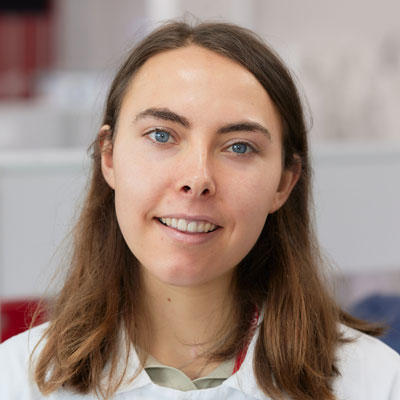
“Solent gave me the confidence to believe I was already becoming a scientist, not just studying to be one.”



Biomedical scientists are at the forefront of diagnosing and treating diseases. Our biomedical science degree will give you the lab and research skills to help drive modern medicine.
Contact international admissions
Email: Call:Our expert teaching teams will help you to develop the skills required to succeed in biomedical science. You'll be supported to develop practical and analytical skills, exploring the latest technologies and experimental treatments. You’ll learn to undertake biomedical science research that can lead to the development of new diagnostic procedures or therapeutic intervention strategies. You’ll also look at the way that advances in technology can support the self-management of health.
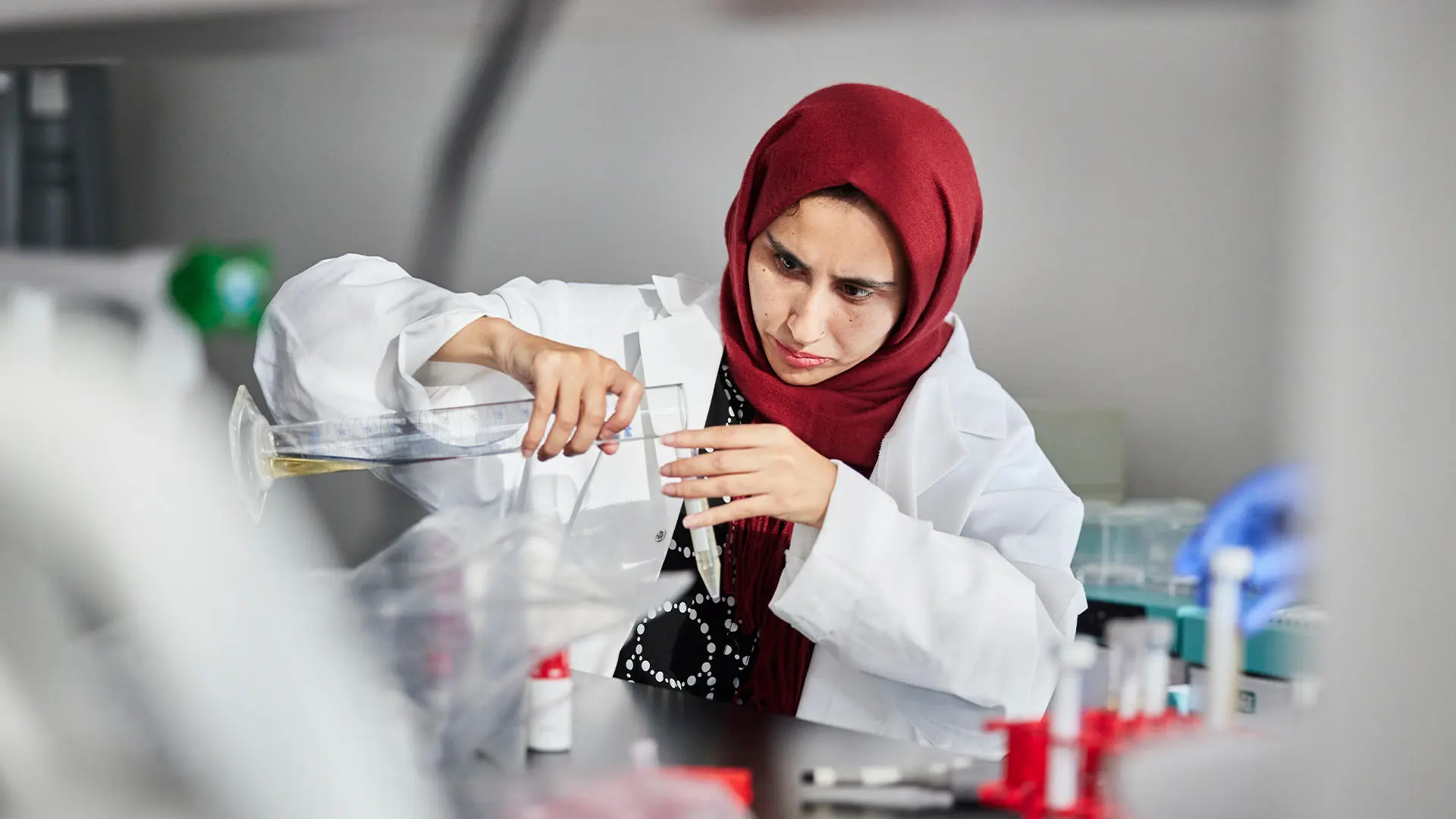
Throughout this course you'll have the opportunity to study in our bespoke laboratory facilities. These have been created specifically to support small groups of students as they build their portfolio of lab experience. Your competency will be developed through practical classes and reinforced by our virtual learning environment. Professional development and reflective practice assignments ensure that you are able to apply what you have learnt.
Employability sits at the heart of our teaching. An individual final year research project and work-related laboratory assignments mean that you’ll graduate feeling ready to take the next steps in your career. You'll work with biomedical science practitioners and other professionals throughout all three years of the course.
Registering as a biomedical scientist with the Health and Care Professions Council (HCPC) is required for many NHS careers. The IBMS Registration Training Portfolio must be completed in an IBMS accredited laboratory following graduation from Solent.
Accredited by:
This course is ideally suited to students who are motivated to explore the scientific basis of health and disease and eager to develop strong laboratory and analytical skills. It is designed for learners who enjoy hands-on practical work and evidence-based thinking and who want to apply scientific understanding to real-world clinical and research challenges.
This course is a great fit for those aspiring to any healthcare related careers. Applicants should have an interest in human biology and be ready to engage in theoretical and practical learning in a professional, laboratory focussed environment.
This broad scientific programme provides the foundation for a wide range of scientific careers. You could be working within the NHS, pharmaceutical or biotechnology industries. You could also choose to continue your studies at postgraduate level.
Hear from Solent alumni about where their careers have taken them and how studying at Solent prepared them for their future.
“Solent gave me the confidence to believe I was already becoming a scientist, not just studying to be one.”
Biomedical science at Solent is taught by researchers, academics, practitioners, and technicians with a variety of professional backgrounds. The course is in the UK's top 10 for teaching (NSS 2022). Technical instructors help you to develop your practical and analytical skills. Visiting practitioners emphasises current industry practise and ensure that you are working at the cutting edge of biomedical technology.
The University cannot guarantee any particular members of staff will teach specific aspects of the course in the future, but will endeavour to ensure the teaching team maintains their balance of experience and qualifications.
You will make extensive use of our specialist teaching biochemistry and biology labs, all of which have a laminar flow hood and incubators for microbiology; spectrophotometers for biochemistry; PCR and gel electrophoresis imaging systems for molecular biology; and microscopes.
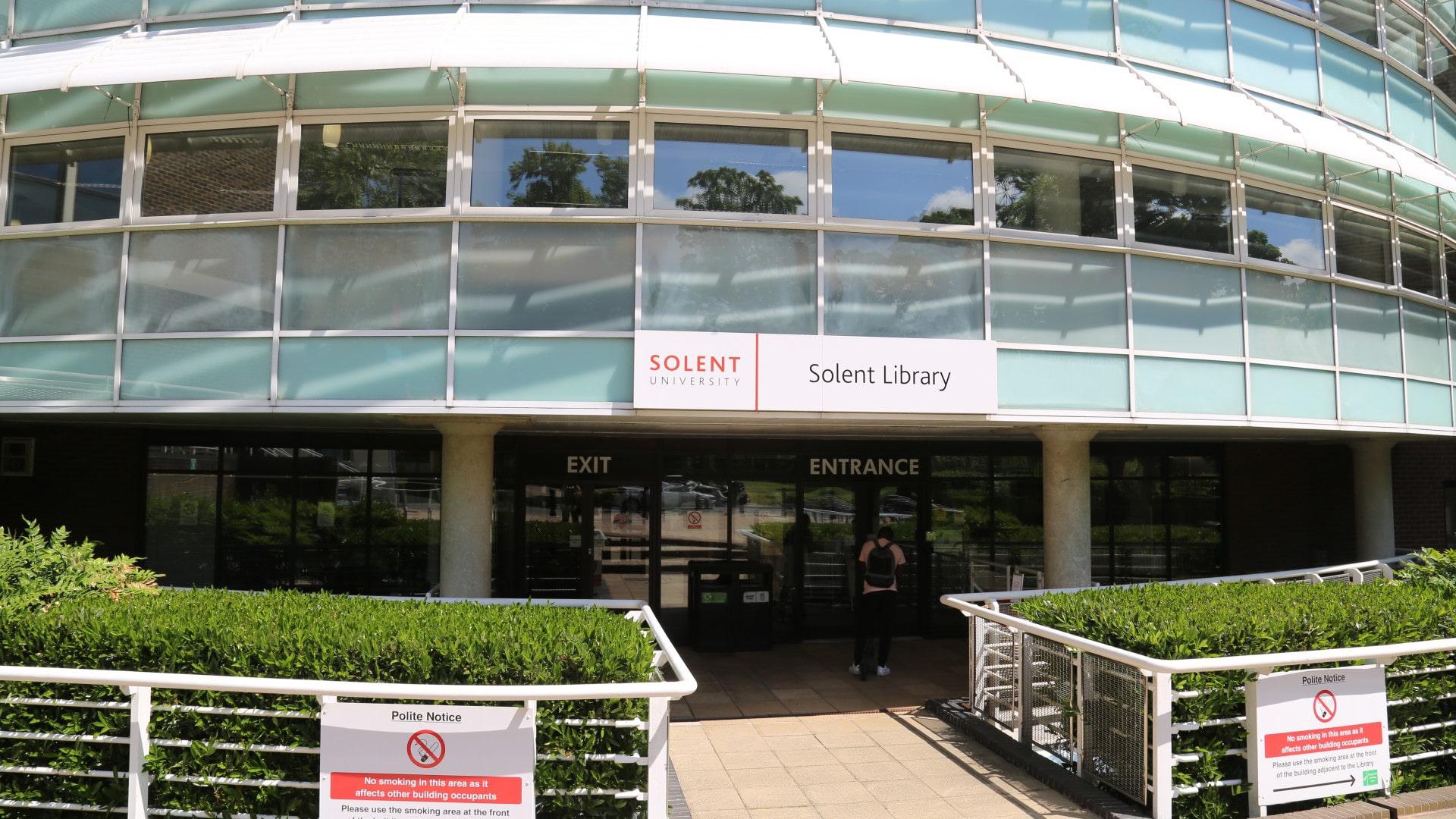
Our vibrant campus brings state-of-the-art facilities to enhance your learning and elevate your student experience. Our award-winning teaching building, The Spark is centred around students and offers a stimulating study environment with flexible learning spaces. Away from studying, why not try out the gyms, fitness studios and sports halls in our £28 million Sports Complex, or watch a blockbuster film at our student-run cinema with Dolby Atmos audio.
Broaden your horizons by adding an international dimension to your CV – essential to achieving success in today’s fast-changing, global environment.
Studying, working or volunteering in another country could be the experience of a lifetime. Enhance your degree by developing important global skills such as knowledge of other countries, language skills, intercultural awareness, adaptability and confidence.
For more information, please email international.mobility@solent.ac.uk.

This module introduces you to the basic biochemistry and genetics that underpin life on Earth. You'll develop an understanding of the structures of key biological molecules and explain how molecular structure determines biological function, while also building knowledge of enzymes and enzyme kinetics, including their importance in biological systems. You'll then be introduced to the structure and function of nucleic acids (DNA and RNA) and how these relate to essential cellular processes. Throughout, you'll be equipped with early experience in laboratory practical skills, enabling you to perform simple biochemical and genetic experiments and analyse laboratory data.
In this module you'll be introduced to how humans are structured, from the basic cellular level through to full organ systems. You will develop knowledge of cell biology, including overall cell structure, key functional requirements for life, and the differences between prokaryotic and eukaryotic cells. You'll also learn about higher order cellular processes and how these contribute to the formation of major organ systems, and how structure supports functional capabilities in the human body. Throughout, you'll gain practical experience in introductory laboratory techniques for assessing cell biological processes and evaluating bodily function and provided with early exposure to laboratory quality and safety practices, and the analysis of laboratory data.
This module provides an introduction to the fundamental principles of haematology and immunology. You'll develop an understanding of basic haematology and common haematological disorders, with an emphasis on the basic features and underlying mechanisms. You'll also develop a detailed knowledge of the structure and function of the immune system, including innate and adaptive immunity, and how immune mechanisms support health or contribute to disease.
This module introduces you to key concepts in haematology and transfusion science, enabling you to understand factors affecting transfusion science. You'll develop a further understanding of named haematological disorders, focusing on the basic features and mechanisms. You'll also learn about the basic processes essential to support microbial life and be provided with an understanding of simple pathogenic elements of different microbial groups, helping you understand how microorganisms survive, interact with hosts, and contribute to human health and disease. Throughout, you will be equipped with practical experience in haematology and microbiology, including how to safely work with microorganisms, developing fundamental competency in laboratory procedures.
In this module you'll explore the core disciplines of clinical biochemistry, cellular pathology, and molecular genetics. Clinical biochemistry will develop your knowledge of biochemical disorders and their effects on the human body. Cellular pathology will allow you to build an understanding of how histopathology works and how tissue is processed. Molecular genetics will provide you with a detailed appreciation of molecular genetic processes and how genetic changes contribute to human disease. The roles of clinical laboratories in the patient pathway, including how diagnostic services contribute to sampling, analysis, interpretation, and patient management will also be addressed.
In this module you'll explore the core disciplines of cellular pathology and clinical microbiology. Cellular pathology will develop your knowledge of tissue structure under normal and diseased conditions. Clinical microbiology will provide you with a detailed knowledge of the pathogenesis of different microbial groups in both healthy and immunocompromised individuals. The roles of clinical laboratories in the patient pathway, including how diagnostic services inside and outside of the clinic contribute to diagnosis, interpretation, and patient management will be addressed. You will gain practical exposure to pathology and microbiology techniques to understand how disease develops at the cellular level and how different microbial groups are identified and diagnosed.
In this module you'll examine the core disciplines of clinical blood sciences and clinical immunology. Clinical blood sciences will develop your knowledge of laboratory diagnostics and how laboratory processes contribute to diagnosis and treatment, and will emphasise how clinical blood sciences is an integrated discipline. Clinical immunology will provide you with an understanding of autoimmune and autoinflammatory diseases, focussing on underlying pathogenesis and how this informs clinical diagnosis and disease management. You'll also develop an understanding of diagnostic pathways in clinical haematology and immunology, including how laboratory results support patient management and how these disciplines interact with other clinical services.
This module exposes you to a broad range of careers in biomedical science through guest lectures and employer-led activities. You'll have the opportunity to work with employers to develop you professional skills and take part in workshops dedicated to practical employability focussing on CV writing, interview preparation, networking and placements. You'll also be supported in developing your professional network. In addition, you'll be introduced to elements of professional practice within laboratory settings, including research proposals, grant applications, ethics, and scopes of working practice.
You'll develop an advanced understanding of microbiology, focusing on the pathogenic mechanisms of microorganisms of current concern. You'll be provided with a detailed appreciation of microbial pathogenesis, in named microorganisms and will evaluate current and future diagnostic, treatment and management strategies, as well as explore the clinical and public health implications of microbial threats. Throughout the module you will assess the role of clinical microbiologists in diagnostic workflows, and critically evaluate clinical and research driven microbiological data to link the mechanisms of microbial behaviour to diagnosis, treatment, surveillance, and infection control strategies.
In this module you'll develop your understanding of how genomic knowledge is applied in clinical practice, including the interpretation of genetic variations and their implications for human disease. You'll gain a detailed appreciation of clinical genetics and genomics, and related mechanisms implicated in pathological change, and will develop an understanding of the principles and clinical applications of modern genetic testing technologies. You'll evaluate how genetic information informs diagnosis, prognosis, risk assessment, and treatment decisions, including personalised and precision medicine approaches. You'll also develop an understanding of the ethical, legal, and social implications (ELSI) of using genetic data in clinical contexts, and will learn how to interpret genetic test results, evaluating evidence for pathogenicity, and integrating genetic information into clinical case analysis.
This module aims to develop you into an independent, confident, and critically reflective researcher. You will learn how to design, plan, and execute a research project using appropriate scientific methodologies, analytical approaches, and professional research practices, as well as understand the ethical, legal, and professional responsibilities associated with conducting scientific research. You will collect, analyse, and interpret scientific data using suitable statistical and analytical tools, and draw evidence based conclusions. You'll also be expected to develop strong scientific communication skills, to produce a professionally structured research report, and defend your research.
This module will equip you with a comprehensive understanding of how biomedical science disciplines integrate within real clinical pathways. You will develop an appreciation of how laboratory investigations support clinical decision making, therapeutic monitoring, and multidisciplinary care; and how how laboratory data informs diagnosis, prognosis, and treatment across a range of patient scenarios. You will develop clinical reasoning skills through interpreting laboratory results in clinical contexts, linking biological mechanisms to disease expression and patient presentation. You'll also consider multidisciplinary team (MDT) approaches, demonstrating how laboratory scientists, clinicians, nurses, and allied healthcare professionals contribute to patient management.
Contact international admissions
Email: Call:Solent’s curriculum framework builds on our unique, creative and applied approach to teaching. The transformation of students’ lives is at the heart of our mission as a university, and our curriculum – informed by the latest theory – reflects this shared educational vision.
Find out more
The student achievement team are on hand to help you succeed during your studies at Solent. They aim to contact you at key times during your time here with personalised information, advice and guidance, by email or phone.
The disability advice team provides information, advice and guidance for disabled students.
All students can access Succeed@Solent, Solent's online guide to getting better grades. It offers extensive, practical information and advice on topics such as academic writing, research and presentations.
Seventy per cent of all diagnoses in the NHS are based on results provided by laboratory services, according to the Institute of Biomedical Science. Biomedical science underpins much of modern medicine and biomedical scientists contribute extensively to health and care, handling over 1 billion tests in the UK each year, analysing patient samples to diagnose diseases and evaluate the effectiveness of treatment.
Biomedical science is a fast-changing, dynamic and complex science that requires accuracy, efficiency and attention to detail - biomedical scientists are at the heart of healthcare, providing vital information on laboratory investigations to allow healthcare professionals to make informed clinical decisions.

Starting salary: £31,049 to £37,796
These are starting salaries for the NHS (Band 5). With experience and/or specialist knowledge, you can earn a salary of £38,682 to £46,580 (Band 6), rising to £47,810 to £54,710 (Band 7).
Starting salary from: £38,682
Trainee clinical scientists in the NHS are usually employed at Band 6. Once qualified, you could move to Band 7 with a salary range of £437,810 to £54,710.
Starting salary: £20,000 to £30,000
With experience and at a senior level, you can earn in the region of £32,000 to £50,000. Salaries for highly experienced toxicologists working at management level can rise to more than £75,000.
The stated salaries are published on prospects.ac.uk. Income figures are intended as a guide only.
Hear from Solent alumni about where their careers have taken them and how studying at Solent prepared them for their future.
“Solent gave me the confidence to believe I was already becoming a scientist, not just studying to be one.”
The Solent Careers team is committed to getting students into great careers.
While you are studying, the team can help you with finding work experience or placements, link you with a mentor, check your CV, or offer one-to-one guidance.
We also have graduate job opportunities just for Solent graduates.

Top 25%
of UK unis for sustained employment
Longitudinal Educational Outcomes, 2025
Every student at Solent University will also have the option to study an additional Certificate in Practical Artificial Intelligence qualification alongside their course. Free of charge, the course ensures you'll be prepared for a fantastic and varied career after graduation.

The tuition fees for the 2027/28 academic year are not yet available. For guidance, the 2026/27 fees were:
For further information, please visit our tuition fees page.
While most course costs are covered by your tuition fees, some essential resources and optional extras may need to be paid for separately. These additional costs are listed below. For advice on budgeting and managing your money, please contact student.funding@solent.ac.uk.
The 2026/27 additional costs are not yet available. For guidance, previous additional costs have been:
Compulsory costs
Optional costs
Solent University offers a range of bursaries and scholarships that provide financial assistance or waive fees for tuition or accommodation. Each bursary or scholarship has specific eligibility criteria. Check out our bursaries and scholarships pages to find out more.
Cost of living support
At Solent, we understand that the cost of living crisis may be of some concern. To help, we've put together some detailed information to show what support is available and how to make your money go further.
Graduation costs
There is no charge to attend graduation, but you will be required to pay for the rental of your academic gown (approximately £45 per graduate, depending on your award). You may also wish to purchase official photography packages, which range in price from £15 to £200+. Graduation is not compulsory, so if you prefer to have your award sent to you, there is no cost. Extra guest tickets will go on sale after results publication and will be sold on a first-come-first-served basis. The cost per ticket is currently £20. Please note, we do not guarantee there will be any extra tickets available to purchase.
Contact international admissions
Email: Call:Please select an option below:
As a general guide, we look for qualifications that are equivalent to the British high school A-levels.
If you are applying from outside the UK, find information about entry requirements, visas and agents for your country here.
For further information about EU qualifications, please see our course entry requirements document.
As a general guide, we look for qualifications that are equivalent to the British high school A-levels.
If you are applying from outside the UK, find information about entry requirements, visas and agents for your country here.
For further information about international qualifications, please see our course entry requirements document.
All international applicants need to be aware that the English language requirements to attend Solent University, and the English language requirements to obtain a visa from the Home Office, may be different. This means that if you meet the Solent University language requirement to gain a place on the course, you may still have to meet additional requirements to be granted with a visa by the Home Office.
We strongly advise all applicants to visit the Home Office website which outlines all the requirements for a successful visa application.
Full-time
Any student applying for the first year of a full-time/sandwich undergraduate course must apply through UCAS (University and Colleges Admissions Service). This includes mature, overseas and EU students.
Nearly all schools and colleges offer their students the facility of applying electronically through the UCAS website using 'Apply'; it may also be used by those applying independently in the UK and overseas. This facility and all course information can be found on the UCAS website: www.ucas.com.
Your application should reach UCAS by 14 January if you hope to enter a course the following autumn. Early application is advised for the most popular subject areas. Late applications may be made until the end of June. The UCAS Code for the University is S30, code name SOLNT.
Find out what happens after you apply
Contextual offers
Solent endeavours to offer learning opportunities to students from all backgrounds. When we receive and review an application, we take into consideration the context and personal circumstances of applicants when making a decision, which means our advertised entry tariff could be reduced.
Find out more about Solent's contextual offers
Applicants who do not have English as their first language will be required to demonstrate an approved level of proficiency in the use of the English language. The agreed minimum requirements for this course are:
TOEFL IBT tests taken prior to 21 January 2026
TOEFL IBT tests taken from 21 January 2026
Qualifications are checked before enrolment, and international students must bring their original certificates or certified copies when coming to study at the University.
Pre-Sessional English programme
The University also offers a pre-sessional English programme for international students who wish to improve their level of English before starting a degree course.
Contact international admissions
Email: Call: