“The course is just tailor-made to learn about the foundations of multiple disciplines within these industries”


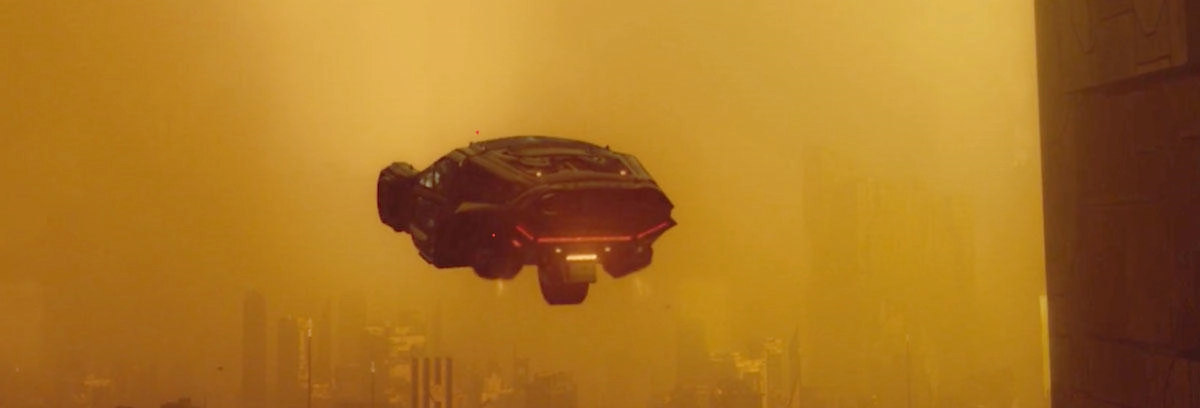
With great industry connections and fully up-to-date facilities, this flexible course can help you get your dream job in any of the 3D or visual effects industries.
Contact international admissions
Email: Call:This is a thriving sector in the UK, and Solent’s CGI and Visual Effects degree can take you in so many directions, from explosive film VFX to 3D character design, from architectural visualisation to motion graphics, from virtual production to motion capture.
You'll study a balanced blend of technical and creative elements aligned to current professional demands, while fostering a proactive attitude toward self-learning, problem solving, and critical creative awareness to help you thrive in an ever-evolving industry. Throughout your studies, you'll receive support to develop your own creative or technical practice within a specialist area and will be connected with industry for informed learning, constructive feedback, and valuable networking opportunities.
You will grow from a strong foundation of skills taught during your first year to become a fully industry-ready practitioner in the direction of your choosing upon graduation. Our top-quality teaching, as well as our small course size, means you will be individually guided towards you ultimate career.
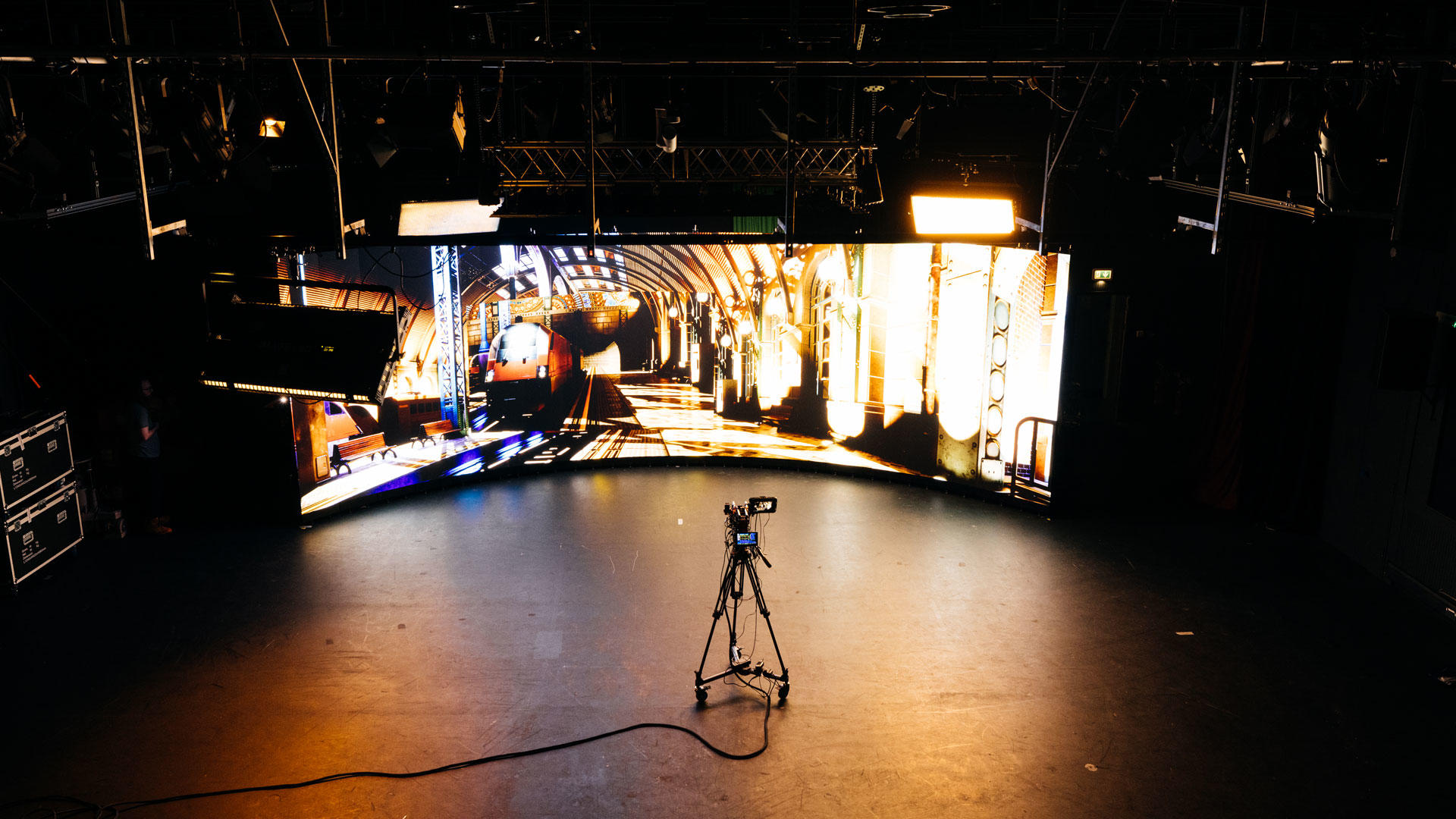
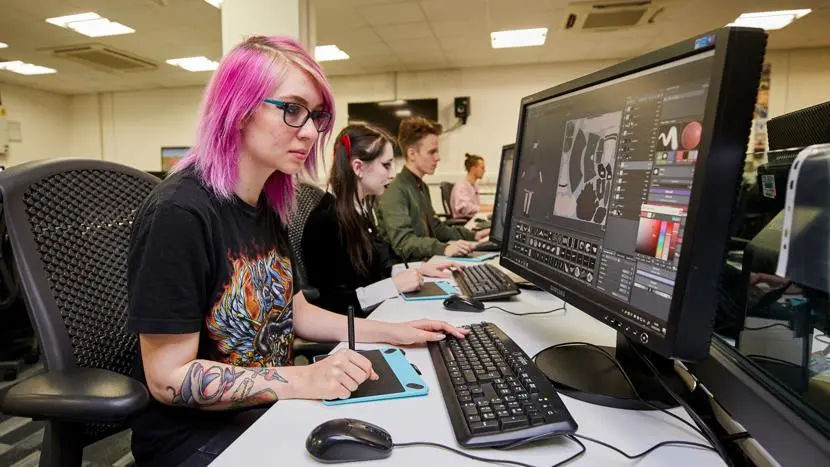
You'll have access to industry standard software, equipment and pipelines throughout your studies, enabling you to choose the most appropriate applications for different subjects and ensuring you have the tools for whatever career you have in mind. Facilities on the course are extensive, with a full LED virtual production stage, photogrammetry body scanner, motion capture, green screens, LIDAR, drone scanning, 3D printing, and all the expected VFX equipment such as 360° cameras, chrome balls and Macbeth charts. Additionally, you can collaborate with film students to access top industry cameras like the Arri Alexas or Blackmagic URSA Minis.
We support you to build an industry network during your degree to help you find that first entry-level position through networking and dissemination of your work, hearing from guest speakers at our weekly forums, attending annual events such as CGFX, Industry Week, and our Graduate Show, as well as studio trips.
Our annual guest speaker event, CGFX, draws in some of the industry's top experts, allowing students to network and ask questions during the Q&A. Previous companies that have attended the event include Rockstar, Aardman, Framestore, Airship Interactive, MPC, Jellyfish, Ubisoft and many more.
If you’re looking to study our CGI and visual effects degree but don’t have the relevant qualifications or experience, the digital arts foundation year will help you develop the core skills and knowledge to progress. Find out more about the digital arts foundation year.
This course also offers the option of a placement year. A placement year allows you to put what you've learned in your first and second years into practice in the workplace, gaining valuable real-world work experience before you graduate. Our course and placements teams will help you find the perfect industry placement in your chosen field.

Recognised as:

Academic Partner of Unreal Engine

Part of:

Blackmagic Design

Our creative degrees allow our students to develop a critical eye for design with a knowledge of different design approaches and problem solving techniques. Take a look at some of the great work they produce.









This course is ideal for students who want to develop skills in CGI and visual effects for film, television, and related industries. Applicants may have prior experience in art, design, media or technology, but no previous 3D or visual effects experience is required. A passion for visual creativity, problem-solving and digital production is essential. Applicants should have a portfolio of art, design or technical work to show at interview.
Although students are not expected to have examples of code, this is a perfectly valid portfolio choice for students choosing to pursue a more technical career path in the visual industries, particularly video games or visual effects.
CGI and visual effects can be found everywhere - this course can lead to many exciting careers in the film, TV, advertising, video games and visualisation sectors. Students build a solid portfolio perfect for a generalist or entry-level specialist position.
With emerging markets, we are increasingly seeing exciting opportunities in simulation, virtual/ augmented reality, visualisation, military and many other industries that we are excited to present to our students.
Hear from Solent alumni about where their careers have taken them and how studying at Solent prepared them for their future.
Read more stories“The course is just tailor-made to learn about the foundations of multiple disciplines within these industries”
The University cannot guarantee any particular members of staff will teach specific aspects of the course in the future, but will endeavour to ensure the teaching team maintains their balance of experience and qualifications.
Throughout your studies you will have access to a wide range of up-to-date industry-standard software and facilities.
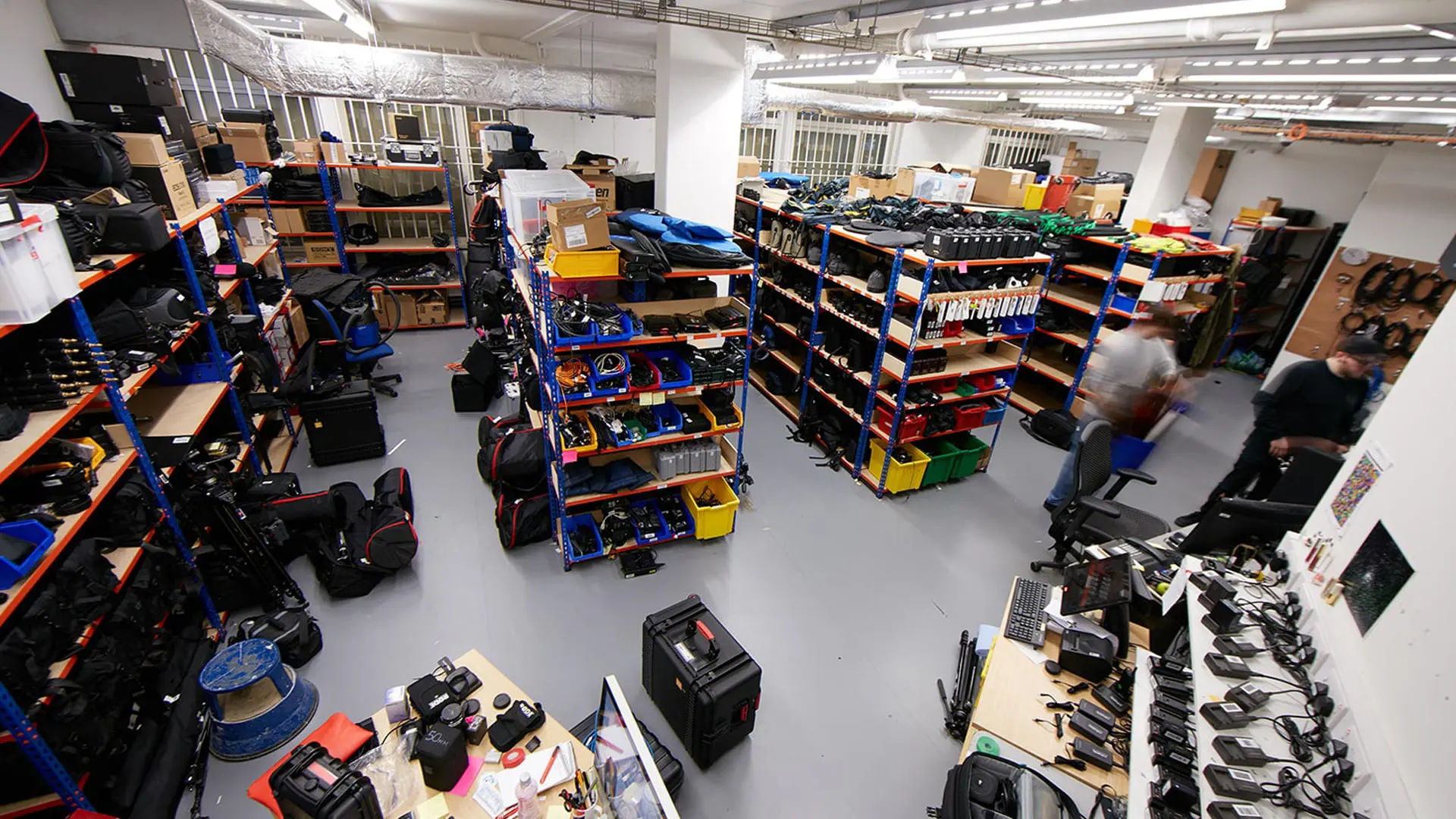
Virtual Production Studio with green screen and Mo-Sys tracking facilities; in-house Dolby Atmos cinema; specialist media production store with access to thousands of cameras and other items; computer suites with dedicated high-spec PCs and industry-standard software; motion capture suite; Oculus Rift, Oculus Go, HTC Vive and Microsoft HoloLens VR/AR equipment; Shotgun for asset management; Portable green screen; HDRI chrome/grey balls; portable Faro LIDAR scanner, Insta 360 Cameras; and 3D printing.
Broaden your horizons by adding an international dimension to your CV – essential to achieving success in today’s fast-changing, global environment.
Studying, working or volunteering in another country could be the experience of a lifetime. Enhance your degree by developing important global skills such as knowledge of other countries, language skills, intercultural awareness, adaptability and confidence.
For more information, please email international.mobility@solent.ac.uk.
This hands-on module introduces the creative and technical foundations of visual effects (VFX) for film and television. You’ll learn how digital elements are seamlessly integrated into live-action footage, developing essential compositing skills using the industry-standard tool Nuke. Through a series of structured workshops and demonstrations, you’ll explore key techniques including roto, keying, tracking, colour correction, and 3D compositing.
This module explores some of the key theories and software techniques required for creating 3D art assets and render them using different software. The module seeks to demonstrate a practical and reusable asset creation pipeline that can be applied to different scenarios and explain the theory and techniques required for good asset creation. Many of the skills learned will provide the foundational knowledge required to create 3D art assets for use in games and visual effects.
This module immerses you in the world of architectural visualisation. You’ll learn how to craft compelling environments that bring architectural designs to life and communicate spatial experiences effectively. Through hands-on exercises and guided tutorials, you’ll explore visualisation techniques, including modelling, texturing, and lighting as well as integration of 2D environmental elements, such as people, flora and fauna, to create realistic and engaging visual narratives.
This advanced module builds on your core compositing skills by focusing on film-grade plates and the complex challenges they present. You’ll explore refined workflows and tackle demanding visual problems through targeted exercises and practical shot work. By engaging with more intricate footage and higher production standards, you’ll develop the confidence and technical depth needed for complex visual effects.
During this module you'll apply advanced compositing and problem-solving skills to film-quality visual effects shots. Working to professional standards, you will troubleshoot complex technical issues, follow industry workflows, and manage a live brief from concept to completion. Through guided workshops and independent production, you will produce a professional breakdown reel and reflective journal demonstrating technical innovation, iteration, and industry engagement.
This module gives you the opportunity to collaboratively explore the exciting area of Virtual Production from the perspective of your chosen specialist area. In this way you can apply learning from your own practice to this highly interactive and interdisciplinary format.
In this module you'll be immersed in the creative and technical world of animation for games, film and television. You’ll discover how animated elements are crafted to enhance storytelling, and bring characters to life. Through hands-on exercises and guided tutorials, you’ll explore essential animation techniques, such as keyframing, timing, and motion principles, to character rigging, digital puppetry, and integrating secondary animation.
Please note: Not all optional modules are guaranteed to run each year.
With the complexities of modern digital production, it is often not efficient to produce individual assets, but rather produce procedural definitions which can be used to generate multiple assets with differing properties. This more technical approach to asset creation is highly sought after and is becoming ubiquitous in the games, CGI and VFX industries. This module explores node graphs and visual scripting methods to create procedural asset definitions of increasing complexity using Houdini.
In this module, you'll explore different capture technologies in a simulated studio environment, transforming the physical world into digital assets. Typical technologies you'll use will be mocap, photogrammetry, LiDAR scanning, HDRI capture and on-set data. You’ll experiment, research and test one method in depth to build specialised, industry-ready skills.
In this module you'll dive into the world of humanoid character development and sculpting. You'll learn about humanoid anatomy, muscle groups and physiology, combining this knowledge to build exciting characters. You'll also build a solid knowledge of sculpting software, while being made aware of key industry techniques to visualise your designs using the software.
It might be a stereotype, but Hollywood VFX blockbusters seem to have things exploding, buildings collapsing, tidal waves, smoke, fire and other forms of disaster. While the computer can help you create these effects, the artistic considerations such as drama, narrative and impact are key and the way you control the simulation involves a very different skill set. In this module you'll learn how to set up, combine and control these simulations to make them look and behave in the way you want them to as an artist.
In this module you'll build industry ready skills through mini projects designed to boost your technical confidence and prepare you for your final major project. You’ll explore new tools and workflows, complete essential previz and concept work, and shape the expertise you want to showcase to future employers. Each mini project targets a specific technique or pipeline element, helping you discover the methods best suited to your creative goals. You’ll also collaborate with students working on similar topics to share knowledge, solve problems, and strengthen your practice.
Showcase your talent and demonstrate your expertise with your major final year project. This module brings together everything you’ve learned and offers your biggest opportunity to collaborate across the course and with other creative disciplines. Your project will sit within art, technical art, or research, allowing you to specialise in the area that aligns with your skills and career ambitions. Working in a studio environment and independently, you’ll develop a substantial creative or technical outcome.
Please note: Not all optional modules are guaranteed to run each year.
In this module, you'll explore different capture technologies in a simulated studio environment, transforming the physical world into digital assets. Typical technologies you'll use will be mocap, photogrammetry, LiDAR scanning, HDRI capture and on-set data. You’ll experiment, research and test one method in depth to build specialised, industry-ready skills.
With the complexities of modern digital production, it is often not efficient to produce individual assets, but rather produce procedural definitions which can be used to generate multiple assets with differing properties. This more technical approach to asset creation is highly sought after and is becoming ubiquitous in the games, CGI and VFX industries. This module explores node graphs and visual scripting methods to create procedural asset definitions of increasing complexity using Houdini.
One of the most exciting areas within digital character art is creature FX. This practical, studio-based module introduces you to the key technical and creative elements of the field, giving you a strong foundation you can continue to develop as you specialise in your final major project (FMP). Typical topics covered include rigging and muscle systems, hair and fur grooming, cloth and flesh simulation, and facial blend shapes.
In this module you'll dive into the world of humanoid character development and sculpting. You'll learn about humanoid anatomy, muscle groups and physiology, combining this knowledge to build exciting characters. You'll also build a solid knowledge of sculpting software, while being made aware of key industry techniques to visualise your designs using the software.
Contact international admissions
Email: Call:As part of this course, you will study one module at a time, giving you the chance to build a deeper understanding and see the results of your hard work more quickly. With regular assessments and feedback, rather than exams all at once, you’ll also benefit from improved focus, and a more manageable workload.
Learn more about block teaching
The student achievement team are on hand to help you succeed during your studies at Solent. They aim to contact you at key times during your time here with personalised information, advice and guidance, by email or phone.
The disability advice team provides information, advice and guidance for disabled students.
All students can access Succeed@Solent, Solent's online guide to getting better grades. It offers extensive, practical information and advice on topics such as academic writing, research and presentations.
CGI and VFX artists create photoreal and digitally-generated imagery. The role requires the seamless integration of these effects into live action in feature films, television and, increasingly, online and console gaming. There are also other growing markets that need artists such as simulation, architecture/ military and traditional visualisation, Virtual and Augmented Reality.
You'll use the latest technology to produce computer-generated creatures, crowds and other digital assets. There is also the growing area of digital particle effects, which includes fluid and fire, as well as object and lighting manipulation.
In the UK, you'll mainly find VFX work in Cardiff, Bristol, Belfast and London. The UK VFX industry is the largest in Europe and second biggest in the world. The film industry is primarily in London, but there are smaller indie firms in smaller towns and cities around the UK if you want to work in advertising.
Junior VFX artist: £30,000 to £38,000
Entry level salaries for a VFX artist are £22,000 to £27,000. A junior VFX artist with several years’ experience can earn £30,000 to £38,000. Senior VFX artists with over seven years' experience can earn £50,000 and beyond.
Typical salary: £25,000 to £40,000
Starting salaries for entry-level or junior concept artist positions are in the region of £17,000 to £20,000. Experienced concept artists can earn between £25,000 and £40,000. Senior concept artists can earn around £55,000 and £75,000. Freelance rates for concept artists are around £14 per hour on average.
The stated salaries are published on prospects.ac.uk.
Hear from Solent alumni about where their careers have taken them and how studying at Solent prepared them for their future.
Read more stories“The course is just tailor-made to learn about the foundations of multiple disciplines within these industries”
The Solent Careers team is committed to getting students into great careers.
While you are studying, the team can help you with finding work experience or placements, link you with a mentor, check your CV, or offer one-to-one guidance.
We also have graduate job opportunities just for Solent graduates.

Top 25%
of UK unis for sustained employment
Longitudinal Educational Outcomes, 2025
Every student at Solent University will also have the option to study an additional Certificate in Practical Artificial Intelligence qualification alongside their course. Free of charge, the course ensures you'll be prepared for a fantastic and varied career after graduation.

Thinking about studying further than an undergraduate degree? Alumni can get 20% off their postgraduate study.

Got a passion for filmmaking? Want to improve your professional showreel and boost your employability? Solent’s MA Film Production programme is ideally suited to students who...
Find out more
Develop and refine your practice to professional standards and extend your experience and skills in a creative environment that encourages exploration and experimentation.
Find out more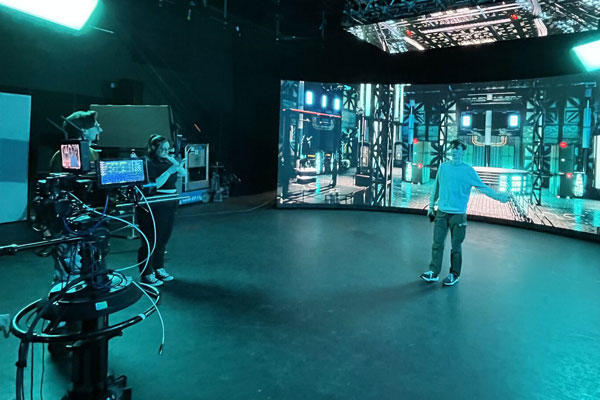
Explore, experiment and learn the industry skills to become a trailblazer in virtual production (VP) and extended reality (XR) using Solent's VP volume, XR green screen studio, Vicon mocap, and body scanner.
Find out more
Do you have an eye for design? Would you like to help influence the future of visual communications? Our MA Visual Communication degree is ideal for creatives keen to refine their practice, working as part of an interdisciplinary group of students.
Find out moreThe tuition fees for the 2026/27 academic year are:
For further information, please visit our tuition fees page.
While most course costs are covered by your tuition fees, some essential resources and optional extras may need to be paid for separately. For advice on budgeting and managing your money, please contact student.funding@solent.ac.uk.
Solent University offers a range of bursaries and scholarships that provide financial assistance or waive fees for tuition or accommodation. Each bursary or scholarship has specific eligibility criteria. Check out our bursaries and scholarships pages to find out more.
Cost of living support
At Solent, we understand that the cost of living crisis may be of some concern. To help, we've put together some detailed information to show what support is available and how to make your money go further.
Graduation costs
There is no charge to attend graduation, but you will be required to pay for the rental of your academic gown (approximately £45 per graduate, depending on your award). You may also wish to purchase official photography packages, which range in price from £15 to £200+. Graduation is not compulsory, so if you prefer to have your award sent to you, there is no cost. Extra guest tickets will go on sale after results publication and will be sold on a first-come-first-served basis. The cost per ticket is currently £20. Please note, we do not guarantee there will be any extra tickets available to purchase.
Contact international admissions
Email: Call:Please select an option below:
As a general guide, we look for qualifications that are equivalent to the British high school A-levels.
If you are applying from outside the UK, find information about entry requirements, visas and agents for your country here.
For further information about EU qualifications, please see our course entry requirements document.
For international students who do not meet the direct entry requirements for this undergraduate degree, our trusted partner, QA Higher Education offers the following pathway programme designed to develop your academic and English language skills:
As a general guide, we look for qualifications that are equivalent to the British high school A-levels.
If you are applying from outside the UK, find information about entry requirements, visas and agents for your country here.
For further information about international qualifications, please see our course entry requirements document.
For international students who do not meet the direct entry requirements for this undergraduate degree, our trusted partner, QA Higher Education offers the following pathway programme designed to develop your academic and English language skills:
All international applicants need to be aware that the English language requirements to attend Solent University, and the English language requirements to obtain a visa from the Home Office, may be different. This means that if you meet the Solent University language requirement to gain a place on the course, you may still have to meet additional requirements to be granted with a visa by the Home Office.
We strongly advise all applicants to visit the Home Office website which outlines all the requirements for a successful visa application.
Full-time
Any student applying for the first year of a full-time/sandwich undergraduate course must apply through UCAS (University and Colleges Admissions Service). This includes mature, overseas and EU students.
Nearly all schools and colleges offer their students the facility of applying electronically through the UCAS website using 'Apply'; it may also be used by those applying independently in the UK and overseas. This facility and all course information can be found on the UCAS website: www.ucas.com.
Your application should reach UCAS by 14 January if you hope to enter a course the following autumn. Early application is advised for the most popular subject areas. Late applications may be made until the end of June. The UCAS Code for the University is S30, code name SOLNT.
Find out what happens after you apply
Contextual offers
Solent endeavours to offer learning opportunities to students from all backgrounds. When we receive and review an application, we take into consideration the context and personal circumstances of applicants when making a decision, which means our advertised entry tariff could be reduced.
Find out more about Solent's contextual offers
Applicants who do not have English as their first language will be required to demonstrate an approved level of proficiency in the use of the English language. The agreed minimum requirements for this course are:
TOEFL IBT tests taken prior to 21 January 2026
TOEFL IBT tests taken from 21 January 2026
Qualifications are checked before enrolment, and international students must bring their original certificates or certified copies when coming to study at the University.
Pre-Sessional English programme
The University also offers a pre-sessional English programme for international students who wish to improve their level of English before starting a degree course.
Contact international admissions
Email: Call: