“Lecturers had plenty of industry experience and provided expertise as well as insightful anecdotes from the sector. ”


Turn your love of sports into a writing career. Join the longest running BJTC-accredited sports journalism degree in the UK, where graduates go into jobs with the biggest names in the industry.
Contact international admissions
Email: Call:The sports journalism course gets you into the thick of the action straight away, reporting on local and national sports for both online and traditional media platforms. You will be a practicing journalist from day one – benefiting from outstanding teaching, facilities and contacts, along with plenty of opportunities to put your learning into practice.
The course has been developed to meet the needs of the modern sports journalism industry and is accredited by the Broadcast Journalism Training Council (BJTC), which ensures you are ready to work for their industry partners (BBC, Sky News, ITN, Channel 4 News, Global Radio, Associated Press, Reuters and National Union of Journalists). The degree boasts a broad spectrum of transferable skills - from print or broadcast to online and social media reporting – training you to produce a comprehensive news package that will engage and excite your audience.
The proof is in our graduates. Solent sports journalists operate at some of the top broadcast companies, including Sky Sports, BBC Sport, ESPN and talkSPORT, as well as national newspapers such as The Daily Mail and The Times. Other graduates work in the media offices of football, cricket and rugby clubs, as well as creative agencies and organisations.
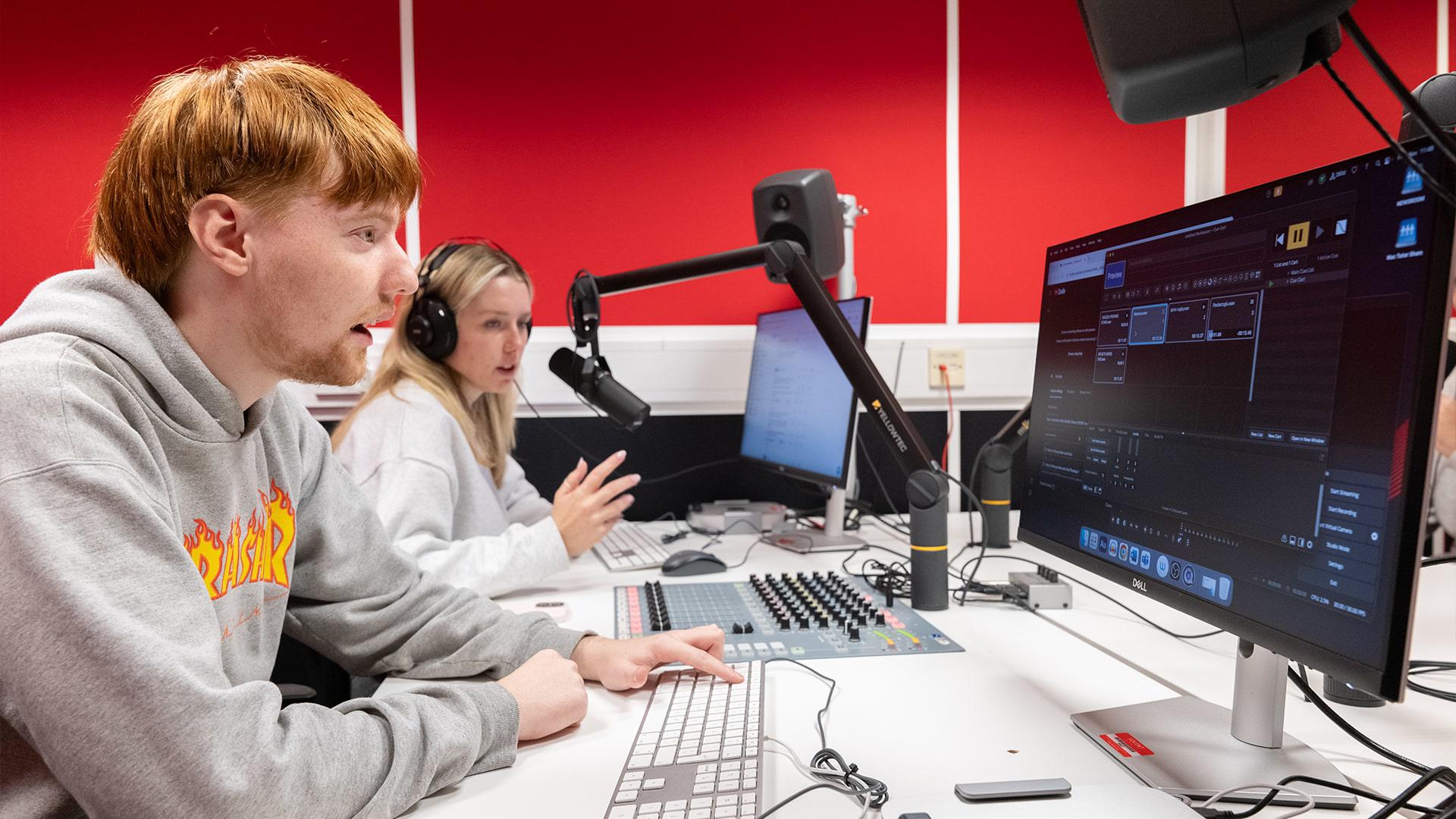
At Solent, you'll have access to industry-standard software and work with real news agency material and interviews with the biggest names, via our partnership with Press Association (PA) and Independent Radio News (IRN). In a dedicated newsroom, you will engage in news productions for Solent Sports News using high-end media equipment, where you'll be encouraged to report on a variety of sporting events and stories. You'll also use our other industry-standard broadcast facilities including television and radio studios, editing and production facilities, and professional grade camera, audio and lighting equipment.
The course also hosts guest speakers and masterclasses from high‑profile figures in sports journalism and broadcasting, including leading writers, commentators, and editors from national newspapers, Sky Sports, ITV and the BBC.
And the south is a fantastic location to engage with sporting activity. Solent University is the official education partner of Championship side Southampton Football Club, while the nearby Utilita Bowl is home to Hampshire Cricket and hosts regular national and international matches. The Solent is a popular race sailing location, hosting major events such as the America’s Cup. Plus, the University has many successful sporting teams and athletes for you to create content from.
If you’re looking to study our sports journalism degree but don’t have the relevant qualifications or experience, the foundation year in media will help you develop the core skills and knowledge to progress. Find out more about the foundation year in media.
This course also offers the option of a placement year. A placement year allows you to put what you've learned in your first and second years into practice in the workplace, gaining valuable real-world work experience before you graduate. Our course and placements teams will help you find the perfect industry placement in your chosen field.

Accredited by:

Enhance your editorial and technical skills. Create a portfolio of video, audio, and academic work to impress potential employers. Explore student examples for inspiration.


Solent’s sports journalism degree is ideally suited for people with a passion for sport, excited by the prospect of working in a demanding, deadline-driven environment, and looking to build experience in state-of-the-art facilities and using the kind of professional-grade equipment you will find out in the industry.
Applicants should have studied a creative or humanities subject and be able to demonstrate strong writing ability, analytical thinking, and an interest in storytelling across print, broadcast, and digital platforms.
If you want to make an impact on the world, sports journalism at Solent could be the best choice you make.
Graduating with hands-on experience as a practising journalist, you will find many doors open to you when looking for work in sports media. From reporting live matches as sports journalists and broadcasters, to shaping narratives as feature writers, digital content creators, and social media managers, graduates have gone on to hugely diverse careers. We have former students working in the media teams of football clubs, presenting TV and radio bulletins on Sky Sports and talkSPORT, creating videos for social media giants, writing for broadsheet newspapers, digital media, and magazines, and much more.
Hear from Solent alumni about where their careers have taken them and how studying at Solent prepared them for their future.
Read more stories“Lecturers had plenty of industry experience and provided expertise as well as insightful anecdotes from the sector. ”
Teaching staff for the BA (Hons) Sports Journalism degree have extensive experience of working in the journalism industry as practitioners and/or are actively engaged with current research within the creative industries.
The University cannot guarantee any particular members of staff will teach specific aspects of the course in the future, but will endeavour to ensure the teaching team maintains their balance of experience and qualifications.
Sports journalism students benefit from multi-million-pound investment in state-of-the-art media facilities. That means four TV studios and eight radio studios, a wide range of TV, photography and video equipment freely loaned to students, an industry-standard newsroom and dedicated edit suites with the latest software.
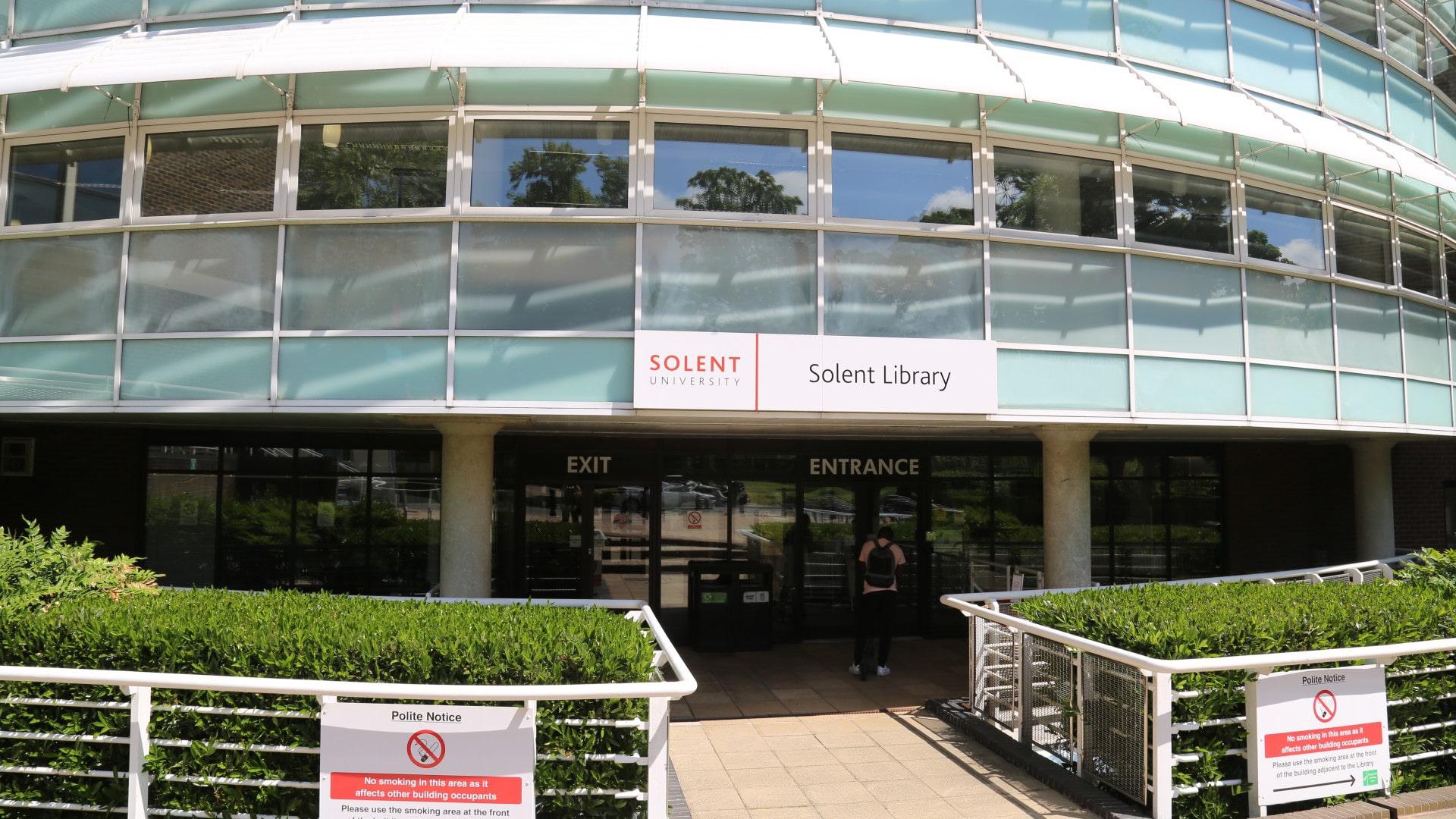
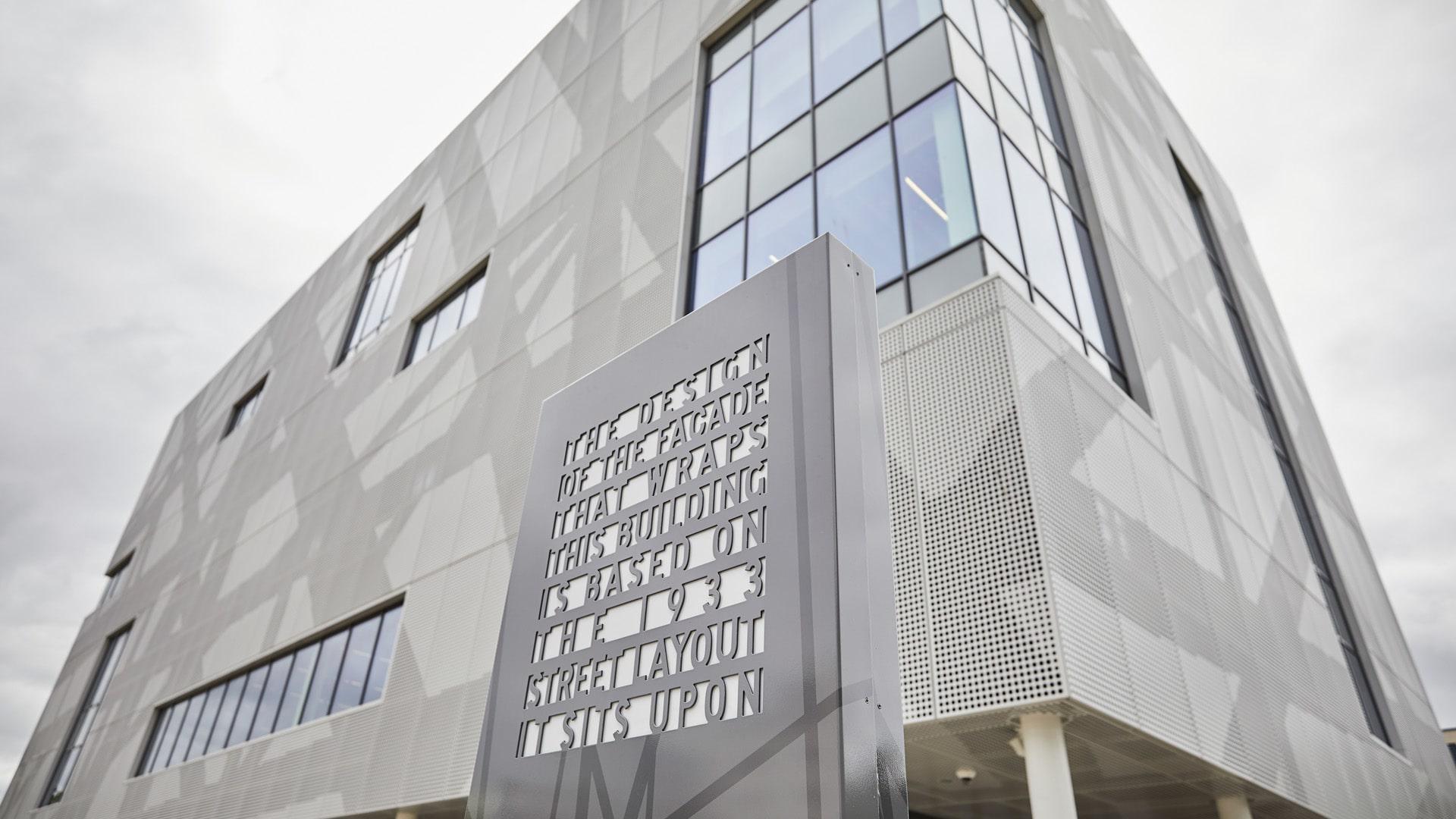
Our vibrant campus brings state-of-the-art facilities to enhance your learning and elevate your student experience. Our award-winning teaching building, The Spark is centred around students and offers a stimulating study environment with flexible learning spaces. Away from studying, why not try out the gyms, fitness studios and sports halls in our £28 million Sports Complex, or watch a blockbuster film at our student-run cinema with Dolby Atmos audio.
Broaden your horizons by adding an international dimension to your CV – essential to achieving success in today’s fast-changing, global environment.
Studying, working or volunteering in another country could be the experience of a lifetime. Enhance your degree by developing important global skills such as knowledge of other countries, language skills, intercultural awareness, adaptability and confidence.
For more information, please email international.mobility@solent.ac.uk.
In this module you'll work on your on-camera presenting skills through a range of different tasks, practising the type of things real life presenters and reporters do every day, such as pieces to camera, explainers and interviews. We also cover the key things you need to know in terms of media law. As a journalist this knowledge helps to ensure you remain legally safe when you broadcast.
This module introduces audio broadcasting and production skills which are supported by reflective and theoretical ideas to help place the practice in the context of the journalism industry, and the role you will play within that.
This module gets to the heart of what it is to be a sports journalist, starting with the written word and how to use it for the output you are working on. You'll explore the staples of sports journalism writing – such as sports news and match reports - and discover how best to find and write those stories considering approaches for different outlets, platforms and styles, and how your stories will work visually.
If you want to work as a journalist, learning how to create informative, entertaining and educational video content is vital. This module will take you through the basics of how to make films just like the professionals do - you’ll learn how to operate professional camera kit, and how to edit on industry standard equipment. It’s the foundation for everything you’ll produce in a video environment, and introduce you to ideas about how sports journalism and its broadcasts fit in a wider cultural context.
To be an effective journalist you must be able to tell compelling stories across multiple formats. This module focuses on audio and video, two of the most powerful mediums available to you, and teaches you how to use them to enhance your feature storytelling and news reporting. You'll gain hands-on experience with industry-standard equipment, learning how to film, record audio and edit to a professional standard.
This module provides the necessary skills to analyse, visualise, and communicate information - particularly data - clearly and accurately. It also addresses ethical considerations, ensuring you understand the importance of data accuracy and transparency. By mastering these skills, you'll be equipped to work in a digital world saturated with data.
This module equips you with the skills to create high-quality audio and video content for a multi-platform audience. You’ll learn to produce broadcast-standard content using your smartphone, industry-grade equipment, and advanced editing techniques. You’ll also record podcasts using professional tools and develop strategies to ensure success in the audio realm. Through simulated news days, you’ll gain practical experience in gathering and delivering news content to real deadlines, while refining your technical expertise.
This module focuses on conducting in-depth interviews, allowing you to uncover exclusive insights and perspectives that might not emerge through typical reporting. You'll learn to plan, conduct, and produce professional video interviews, alongside writing compelling profile pieces for web, newspaper, or magazine outlets. You’ll also gain technical skills in filming, recording, and editing, while refining your editorial judgement to craft impactful, engaging content.
This module critically examines the evolving landscape of sports journalism in response to technological, economic, and cultural shifts. You will explore key issues shaping the industry, including the decline of traditional notions of balance, globalisation and its impact on local fan engagement, the integration of AI and automation, platformisation and its impact, ethical challenges such as corruption and gambling, and changing patterns of ownership and regulatory priorities.
This practice-led module is the culminating experience to prepare you for transition into the creative industries. By bridging academic learning with industry realities, you'll create a specialised, industry-ready portfolio of work that showcases advanced technical execution, ethical responsibility, and a critical understanding of future employment or business launch potential.
As a mobile broadcast journalist, your newsgathering, editorial decision-making and production abilities must be finely honed to deliver factual, compelling outputs quickly and efficiently, without compromising on quality. This module provides an in-depth understanding of how TV and radio broadcasts are crafted, combining technical expertise with editorial judgment.
This capstone module gives you the opportunity to design and deliver a major project that showcases your skills, creativity, and critical thinking. You will choose one of two broad pathways: a journalistic project, such as a documentary video, podcast series, investigative feature, or a highly converged multimedia piece; or an academic pathway, producing a primary-research-informed dissertation.
Contact international admissions
Email: Call:As part of this course, you will study one module at a time, giving you the chance to build a deeper understanding and see the results of your hard work more quickly. With regular assessments and feedback, rather than exams all at once, you’ll also benefit from improved focus, and a more manageable workload.
Learn more about block teaching
The student achievement team are on hand to help you succeed during your studies at Solent. They aim to contact you at key times during your time here with personalised information, advice and guidance, by email or phone.
The disability advice team provides information, advice and guidance for disabled students.
All students can access Succeed@Solent, Solent's online guide to getting better grades. It offers extensive, practical information and advice on topics such as academic writing, research and presentations.
The sports media industry is one of the fastest‑growing and most influential sectors worldwide, driven by the global popularity of sport and the constant demand for engaging, real‑time coverage across digital, broadcast, and print platforms. Careers in this field are dynamic, creative, and impactful - from reporting on major events to shaping the way audiences experience sport through storytelling, analysis, and multimedia production.
Working in sports journalism can carry with it long, demanding and unsociable hours – but there is nothing better than being able to mix your working life with your passions. If you are willing to work hard and you have the right approach, the job satisfaction is huge.
Being a sports journalist gives you a free pass to some of the best events in the sporting calendar and the chance to meet your sporting heroes. Plus you can adapt the skills you learn on this degree to almost any workplace, as we embed in our students a need to question, research, fact-check and network.





Starting salary: £15,000 to £24,000
Starting salaries can vary between local and national broadcasters. At senior level, or with several years' experience, salaries may range from £30,000 to £60,000.
Starting salary: £20,000 to £28,000
These are starting salaries for assistant or junior social media managers. Social media managers can typically earn between £25,000 and £45,000.
The stated salaries are published on prospects.ac.uk. Income figures are intended as a guide only.
Hear from Solent alumni about where their careers have taken them and how studying at Solent prepared them for their future.
Read more stories“Lecturers had plenty of industry experience and provided expertise as well as insightful anecdotes from the sector. ”
The Solent Careers team is committed to getting students into great careers.
While you are studying, the team can help you with finding work experience or placements, link you with a mentor, check your CV, or offer one-to-one guidance.
We also have graduate job opportunities just for Solent graduates.

Top 25%
of UK unis for sustained employment
Longitudinal Educational Outcomes, 2025
Every student at Solent University will also have the option to study an additional Certificate in Practical Artificial Intelligence qualification alongside their course. Free of charge, the course ensures you'll be prepared for a fantastic and varied career after graduation.

Thinking about studying further than an undergraduate degree? Alumni can get 20% off their postgraduate study.

Bring your sports knowledge to radio, the internet or television screens for an exciting career in sports journalism.
Find out more
Got a passion for filmmaking? Want to improve your professional showreel and boost your employability? Solent’s MA Film Production programme is ideally suited to students who...
Find out more
Build your creative post-production skills to make your mark in the film and television industry. Solent’s MA Post Production in Film and Television will see you working with...
Find out moreThe tuition fees for the 2026/27 academic year are:
For further information, please visit our tuition fees page.
While most course costs are covered by your tuition fees, some essential resources and optional extras may need to be paid for separately. These additional costs are listed below. For advice on budgeting and managing your money, please contact student.funding@solent.ac.uk.
The additional costs for this academic year are not yet available. For guidance, previous additional costs have been:
Compulsory costs
Purchase of an external hard drive (approx £50) and SD cards (approx £6-£20).
Solent University offers a range of bursaries and scholarships that provide financial assistance or waive fees for tuition or accommodation. Each bursary or scholarship has specific eligibility criteria. Check out our bursaries and scholarships pages to find out more.
Cost of living support
At Solent, we understand that the cost of living crisis may be of some concern. To help, we've put together some detailed information to show what support is available and how to make your money go further.
Graduation costs
There is no charge to attend graduation, but you will be required to pay for the rental of your academic gown (approximately £45 per graduate, depending on your award). You may also wish to purchase official photography packages, which range in price from £15 to £200+. Graduation is not compulsory, so if you prefer to have your award sent to you, there is no cost. Extra guest tickets will go on sale after results publication and will be sold on a first-come-first-served basis. The cost per ticket is currently £20. Please note, we do not guarantee there will be any extra tickets available to purchase.
Contact international admissions
Email: Call:Please select an option below:
As a general guide, we look for qualifications that are equivalent to the British high school A-levels.
If you are applying from outside the UK, find information about entry requirements, visas and agents for your country here.
For further information about EU qualifications, please see our course entry requirements document.
As a general guide, we look for qualifications that are equivalent to the British high school A-levels.
If you are applying from outside the UK, find information about entry requirements, visas and agents for your country here.
For further information about international qualifications, please see our course entry requirements document.
All international applicants need to be aware that the English language requirements to attend Solent University, and the English language requirements to obtain a visa from the Home Office, may be different. This means that if you meet the Solent University language requirement to gain a place on the course, you may still have to meet additional requirements to be granted with a visa by the Home Office.
We strongly advise all applicants to visit the Home Office website which outlines all the requirements for a successful visa application.
Full-time
Any student applying for the first year of a full-time/sandwich undergraduate course must apply through UCAS (University and Colleges Admissions Service). This includes mature, overseas and EU students.
Nearly all schools and colleges offer their students the facility of applying electronically through the UCAS website using 'Apply'; it may also be used by those applying independently in the UK and overseas. This facility and all course information can be found on the UCAS website: www.ucas.com.
Your application should reach UCAS by 14 January if you hope to enter a course the following autumn. Early application is advised for the most popular subject areas. Late applications may be made until the end of June. The UCAS Code for the University is S30, code name SOLNT.
Find out what happens after you apply
Contextual offers
Solent endeavours to offer learning opportunities to students from all backgrounds. When we receive and review an application, we take into consideration the context and personal circumstances of applicants when making a decision, which means our advertised entry tariff could be reduced.
Find out more about Solent's contextual offers
Applicants who do not have English as their first language will be required to demonstrate an approved level of proficiency in the use of the English language. The agreed minimum requirements for this course are:
TOEFL IBT tests taken prior to 21 January 2026
TOEFL IBT tests taken from 21 January 2026
Qualifications are checked before enrolment, and international students must bring their original certificates or certified copies when coming to study at the University.
Pre-Sessional English programme
The University also offers a pre-sessional English programme for international students who wish to improve their level of English before starting a degree course.
Contact international admissions
Email: Call: