“By studying at Solent I was able to find where my strengths lay, filmmaking-wise.”



Launch your film career with hands-on training from industry pros. Master your craft with the latest gear and join our graduates as their films screen at Cannes, Venice, or stream on Netflix and MUBI.
Contact international admissions
Email: Call:Step into professional filmmaking with our immersive, hands-on Film Production degree, designed to guide you from idea development to festival-ready work through a carefully structured, practice-led curriculum.
You’ll be taught by experienced industry practitioners and film scholars, combining professional insight with critical and creative development. Teaching is delivered through an innovative block structure that allows you to focus deeply on each stage of the filmmaking process, from concept to completion.
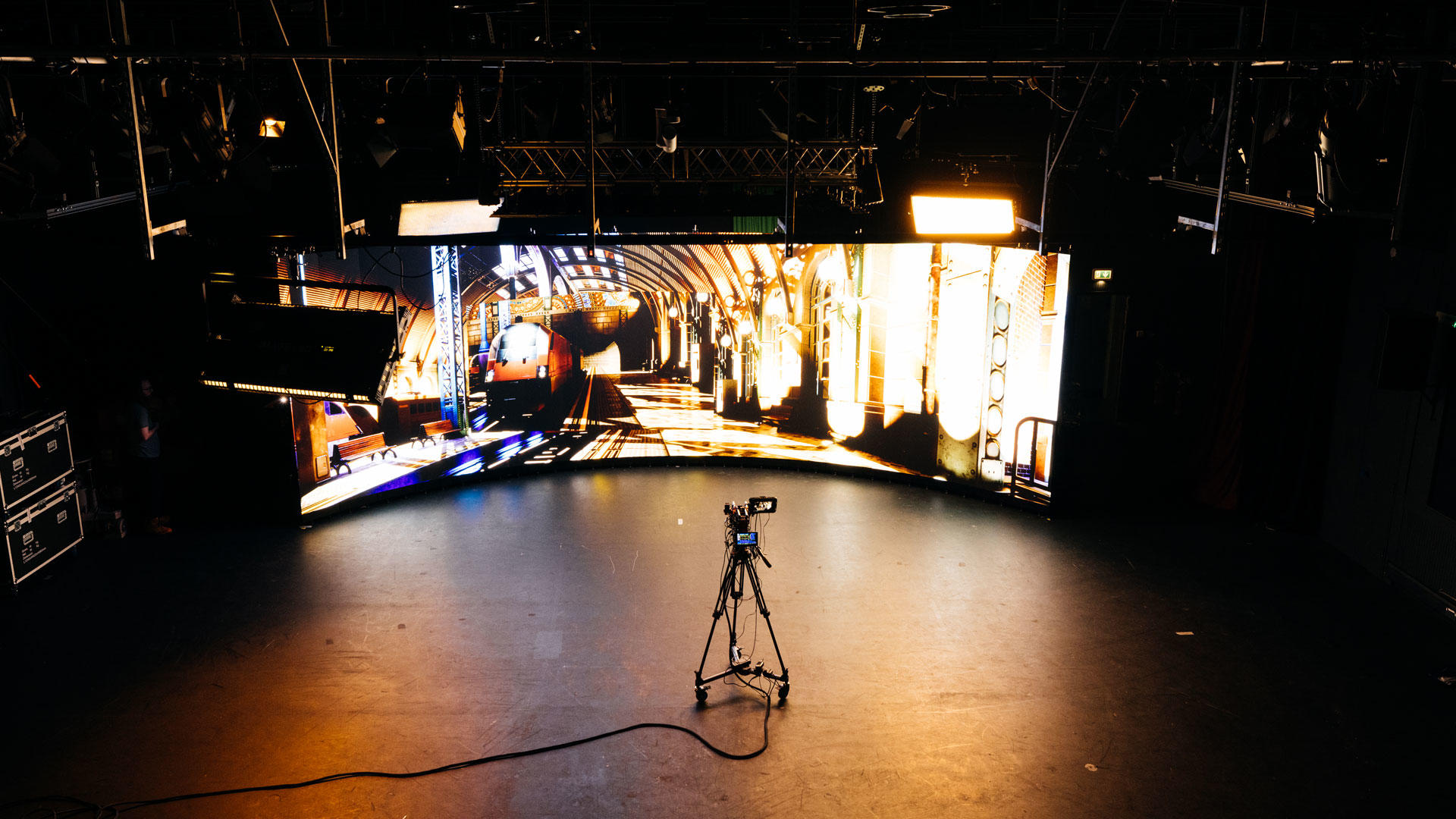
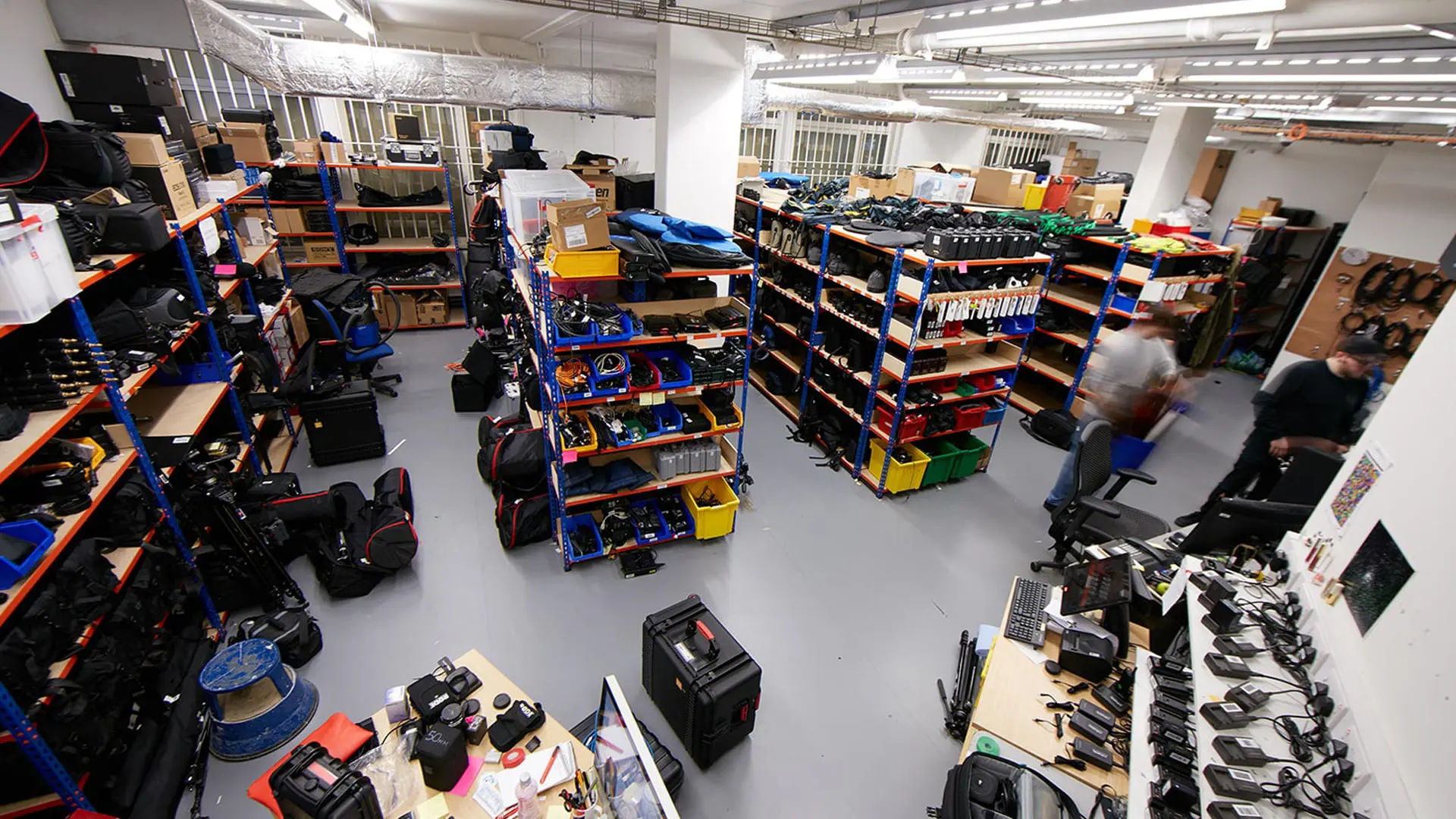
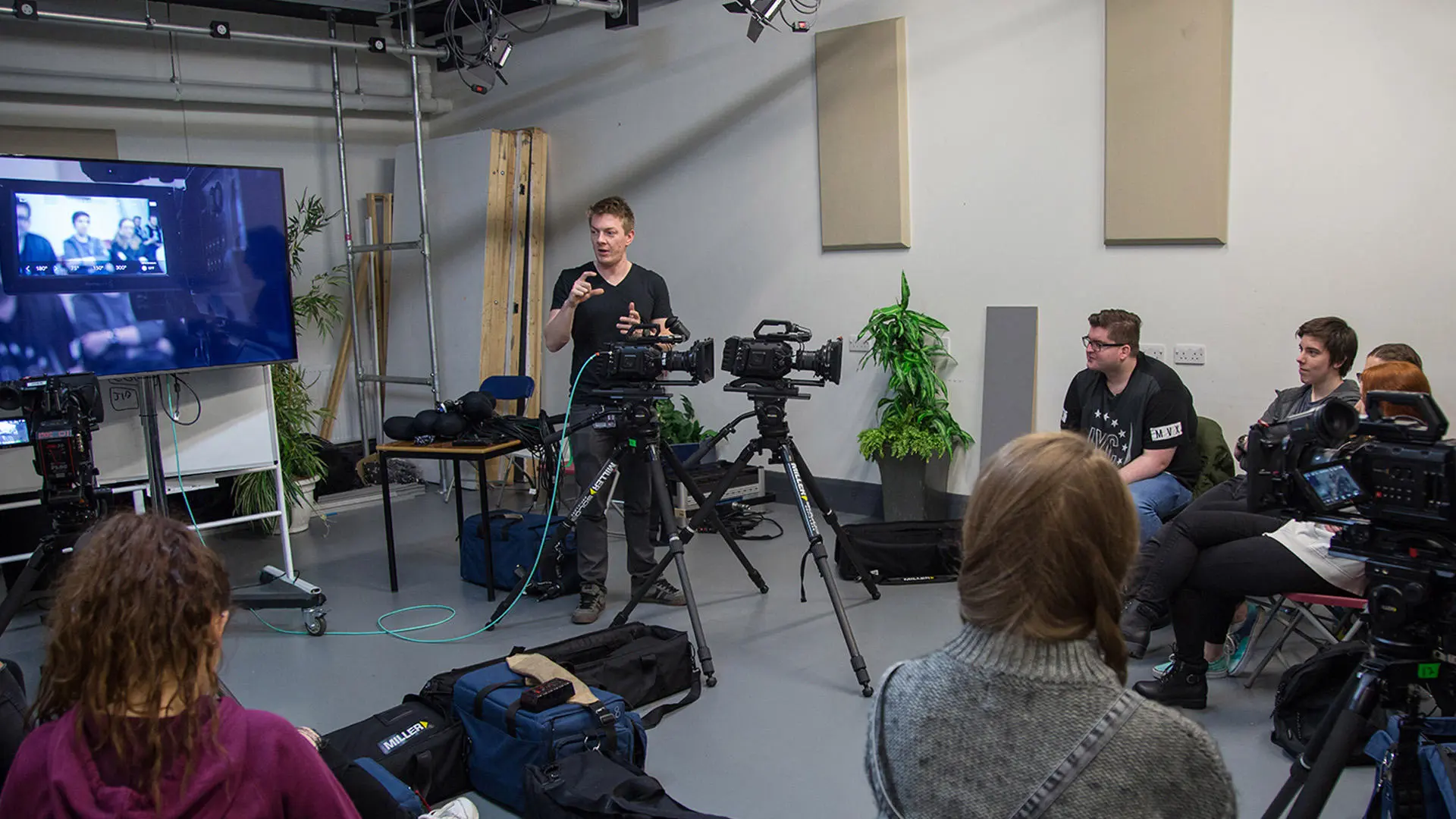
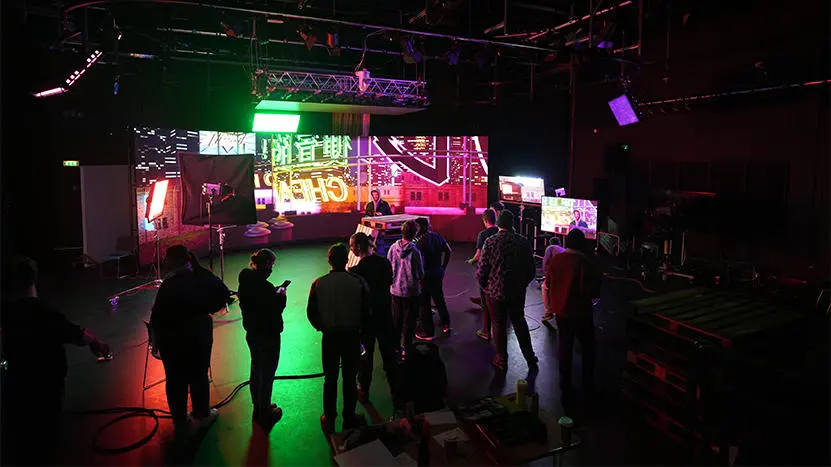
From day one, you’ll work with industry-standard facilities including professional camera equipment, post-production suites and a state-of-the-art virtual production stage, gaining practical experience within a supportive learning environment.
In your first year, you’ll build strong foundations across four interconnected blocks, developing film ideas into a five- to six-minute fiction film. You’ll explore film theory, creative development, screenwriting, production roles, cinematography, and post-production, learning each stage of the process in sequence while producing a complete short film.
The second year deepens your creative and analytical skills. You’ll explore global film movements and cinematic aesthetics, rotate key crew roles, and develop more ambitious work. You’ll choose between documentary practice or commercials and music video production using virtual production, before progressing through a two-stage development and production process for a 10-minute film.
In your final year, you’ll bring everything together in a final major film project, working towards professional, festival-ready outcomes. You’ll develop advanced specialisms in directing, cinematography, or post-production, while learning fundraising, audience strategy and career planning to support your transition into the film and screen industries.
With a strong emphasis on practical filmmaking, creative experimentation and professional development, Solent University provides an environment where emerging filmmakers can develop their voice, skills and confidence for a sustainable career in film production.
If you’re looking to study our film production degree but don’t have the relevant qualifications or experience, the foundation year in media will help you develop the core skills and knowledge to progress. Find out more about the foundation year in media.

Accredited by:

Certified by:
Educational partner:

Blackmagic Design

This course is ideal for creative students who are passionate about filmmaking and visual storytelling, and who are motivated to learn through hands-on practice.
It suits applicants who enjoy being challenged, are open to experimentation, and understand the importance of combining practical skills with critical and theoretical frameworks.
The course is well suited to students who are collaborative, curious, and interested in how stories can be shaped through image, sound and structure, across fiction, documentary and commercial screen work
Graduates of this course pursue careers across the film and screen industries in roles such as director, producer, cinematographer, editor, sound designer, art director and assistant director.
Many begin in essential secondary crew roles, gaining on-set experience and progressing into senior creative positions over time. Others work in documentary, commercials, music videos, branded content and digital media, or progress into postgraduate study.
The course also supports freelance and entrepreneurial pathways, equipping graduates with the creative, technical and professional skills needed to sustain long-term careers in a competitive industry.
Hear from Solent alumni about where their careers have taken them and how studying at Solent prepared them for their future.
Read more stories“By studying at Solent I was able to find where my strengths lay, filmmaking-wise.”
You'll be taught by award-winning industry professionals with films screened at major international festivals including TIFF, BFI London Film Festival and IFF Rotterdam, alongside leading film scholars specialising in contemporary cinema, American film, the superhero genre, post-9/11 cinema, and the cultural impact of digital media.
The University cannot guarantee any particular members of staff will teach specific aspects of the course in the future, but will endeavour to ensure the teaching team maintains their balance of experience and qualifications.
You’ll have access to a range of professional production spaces designed to support hands-on learning and creative exploration. Facilities include a virtual production stage used for green screen shooting and virtual environments, alongside an acoustically treated film studio, immersive filming areas and flexible studio spaces.
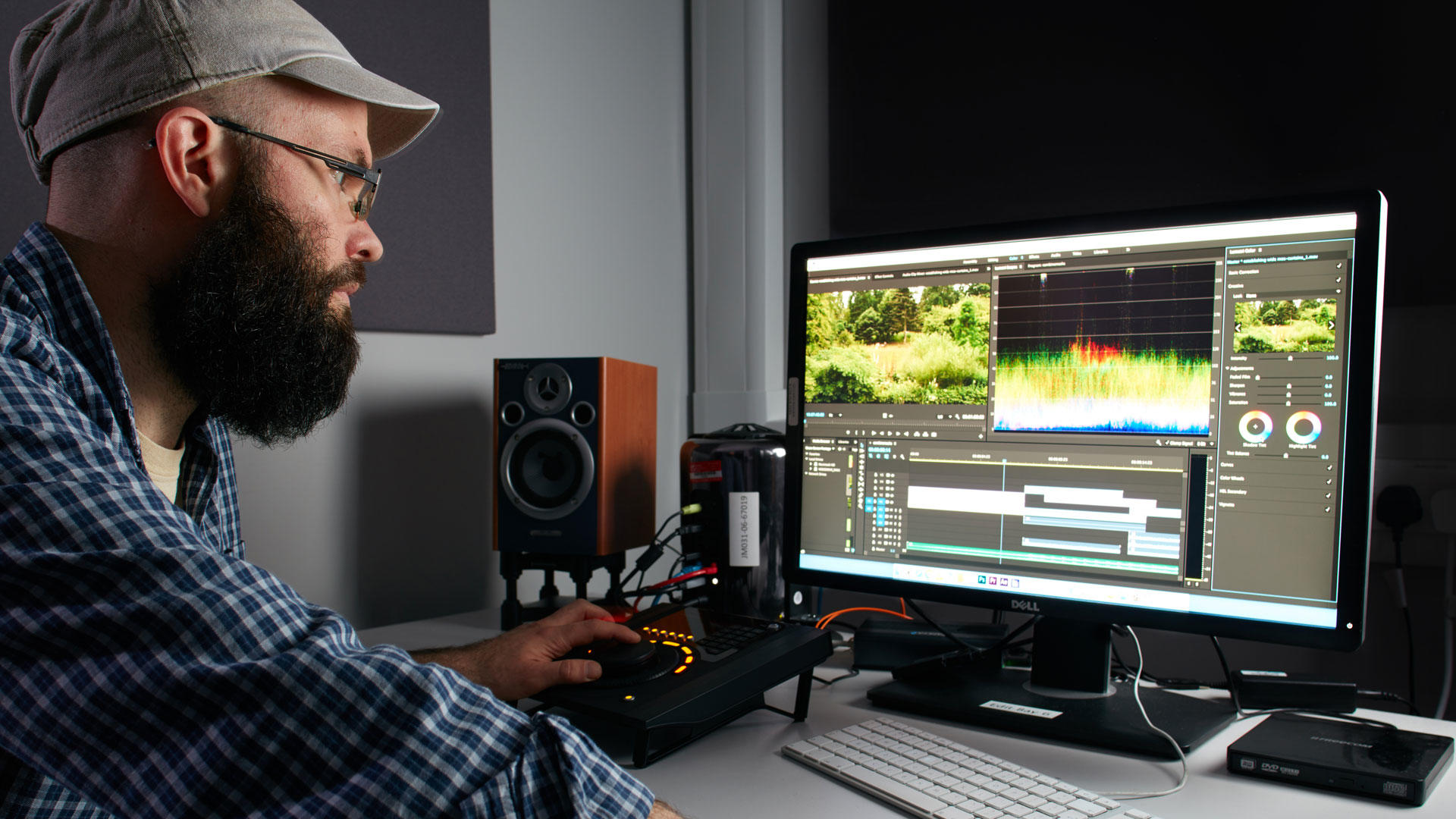
Two professional film studios provide flexible spaces for lighting, set-building and camera movement, supported by high-end grip equipment such as dollies, tracks and cranes. Post-production is supported through specialist edit suites with Mac Pro workstations and industry-standard software including Premiere Pro, Avid Media Composer, DaVinci Resolve and ProTools, as well as access to a professional sound library. Students can also screen their work in a digital cinema with 2K projection and Dolby Atmos sound, offering a cinematic context for viewing and reflection.
Broaden your horizons by adding an international dimension to your CV – essential to achieving success in today’s fast-changing, global environment.
Studying, working or volunteering in another country could be the experience of a lifetime. Enhance your degree by developing important global skills such as knowledge of other countries, language skills, intercultural awareness, adaptability and confidence.
For more information, please email international.mobility@solent.ac.uk.
This module introduces your to the creative, technical, and professional foundations of film editing and post production. You'll address real-world challenges such as shaping narrative and emotion through editing, maintaining continuity, managing complex media workflows, and delivering polished work to industry standards. Key themes include editorial decision-making, rhythm and pacing, montage and continuity traditions, and the use of sound and colour as storytelling tools.
This module introduces you to the practical and conceptual foundations of cinematography, focusing on how visual decisions shape storytelling in professional screen production. You'll explore real-world challenges such as translating script to screen, working within technical and logistical constraints, and making creative choices under production pressures.
In this module you'll gain a foundational understanding of how stories are developed for film and television, addressing real-world challenges such as audience engagement, industry conventions, collaboration, and creative problem-solving. You'll explore key themes including narrative structure, character development, genre, and the relationship between storytelling and contemporary screen industries.
This module provides the essential foundations for your journey as a filmmaker. Whether you're completely new to film practice or already have some experience, you'll be introduced to the core principles of film language, visual storytelling, production roles, and on-set protocol. You'll explore how ideas move from concept to screen, gaining an understanding of narrative, performance, and the collaborative nature of filmmaking.
This module sets out the development of a short film project through an intensive, research-led preproduction process, establishing the creative and professional foundations for the Intermediate Major Film 2 module. You'll focus on developing, interrogating, and refining a film concept through preproduction, responding to the real-world demands of professional filmmaking and culminating in a clearly articulated, production-ready proposal.
This module focuses on the production and postproduction of the intermediate major film, guiding you through the practical realisation of a ten-minute short film developed in the Intermediate Major Film 1 module. You'll focus on translating preproduction plans into a completed cinematic work, responding to the creative, technical, and logistical demands of professional filmmaking practice.
This module focuses on crafting cinematic scenes, examining how directorial methodologies directly shape mise-en-scène and artistic outcomes. You'll explore how theoretical, cultural, and political approaches to filmmaking inform framing, performance, lighting, sound, rhythm, and spatial design, and how these choices affect meaning on screen.
Please note: Not all optional modules are guaranteed to run each year.
This module examines promotional filmmaking as a key area of contemporary screen practice, focusing on how creative, technical, and strategic decisions are shaped by client briefs, brand identity, and audience engagement. You'll explore how storytelling, visual language, pacing, and tone function within commercial contexts to communicate meaning and value effectively.
This module aims to develop your understanding of contemporary documentary filmmaking as both a creative practice and a critical mode of inquiry. It responds to the significant transformation of documentary cinema since the early 2000s, during which the form has expanded beyond traditional informational models to embrace more personal, experimental, and aesthetically driven approaches.
As you prepare to enter the screen industries, understanding how to position yourself professionally is essential. In this module you'll analyse the landscape of career pathways within the film and screen industries, understand the tools needed to access them, and build a targeted portfolio that represents your professional identity. You'll practise pitching, developing a career plan, applying for funding, and curating an online profile. You'll also consider how your future role can contribute to a more sustainable and greener industry.
Your final major film represents the culmination of your degree and the most ambitious filmmaking work you will undertake at Solent. This module empowers you to realise the developmental foundation of a significant, meaningful, and professionally structured film project of up to 15 minutes. It is the first stage of a two-part journey where you'll take your idea from its earliest conceptual form through to a robust, well-researched, and strategically designed project ready to enter pre-production.
Your final major film is the most significant creative undertaking of your degree, enabling you to realise a complex short film of up to 15 minutes that synthesises every skill, discipline and creative insight developed throughout your time at Solent. Across this module you'll work collectively within your established roles to bring your film into production, shape it through post production, and prepare it for distribution, festivals, and professional exhibition.
Please note: Not all optional modules are guaranteed to run each year.
Building on cinematography skills developed across earlier production-based modules in years one and two, this module advances your ability to design, lead and execute sophisticated visual strategies for narrative filmmaking. At this level, your cinematographic choices must be intentional, concept-driven and aligned with the demands of your final major film.
Building on the postproduction knowledge developed across earlier production-based modules, this advanced module focuses on the creative, technical and narrative decision-making required to complete a fiction film to a professional standard. As you prepare for your final major film, the ability to shape story, rhythm, emotional tone, and sonic identity becomes essential.
Building on directing principles introduced across production-based modules in years one and two, this module supports you in developing an advanced, personal and intentional directorial approach. At this level, the focus shifts from simply understanding directing to designing, leading and innovating a fully realised creative vision.
Contact international admissions
Email: Call:As part of this course, you will study one module at a time, giving you the chance to build a deeper understanding and see the results of your hard work more quickly. With regular assessments and feedback, rather than exams all at once, you’ll also benefit from improved focus, and a more manageable workload.
Learn more about block teaching
The student achievement team are on hand to help you succeed during your studies at Solent. They aim to contact you at key times during your time here with personalised information, advice and guidance, by email or phone.
The disability advice team provides information, advice and guidance for disabled students.
All students can access Succeed@Solent, Solent's online guide to getting better grades. It offers extensive, practical information and advice on topics such as academic writing, research and presentations.
The international film and TV industries are an exciting, challenging and dynamic place to work. It is one of the key creative industries in the UK and beyond and employs a large number of people in all sorts of interesting roles.
Spend on UK film and high-end TV production was £4.23bn in 2023, of which, £2.87bn was invested in 187 high-end television production (HETV) shows and £1.36bn was spend on producing 207 feature films. With a strong creative industry there are wide ranging roles in film and television and beyond, including camera operator, editor, producer, vision mixer, location manager, researcher, script writer and more.
There is also a visiting speaker and masterclass programme from a diverse number of industry guests, and recent speakers have included; Maisie Williams (Game of Thrones), Paul Franklin (Batman Begins, Inception), Terry Rawlings (Alien, Blade Runner), Jan Harlan (The Shining, Full Metal Jacket), Walter Murch (Apocalypse Now, The Godfather Trilogy), Michael Apted (The World is Not Enough, Masters of Sex), Mike Hodges (Get Carter, Croupier), Fay Rusling (Green Wing, Smack the Pony), Dave Calhoun (Time Out).
This course is designed with the needs of the international film and TV industries in mind. These industries need a balance of literal and lateral thinkers, critically minded individuals who can shape ideas but also understand the craft and expertise in conveying those ideas via the screen.
Minimum per hour (BECTU): £11.95 to £16.70
This would depend on the type of production you're working on. The BECTU suggested minimum hourly rate for documentary/factual TV, entertainment/live TV, scripted TV and feature films, for example, is £12.50 excluding holiday pay and £14 with holiday pay.
Starting salary (trainee): £25,000
Experienced production managers can earn in the region of £35,000 to £45,000. In more senior roles, depending on the level of responsibility, salaries are in the region of £40,000 to in excess of £60,000.
Starting salary: £17,000 to £19,000
With experience, salaries can rise to around £35,000. Freelance work is common - you'll need to negotiate rates according to your experience and the type of production. Recommended rates of pay are set by BECTU. Daily rates for a 10-hour day are set at around £180 for third sound assistants, £280 to £360 for second sound assistants, and £380 to £480 for first sound assistants.
The stated salaries are published on prospects.ac.uk. Income figures are intended as a guide only.
Hear from Solent alumni about where their careers have taken them and how studying at Solent prepared them for their future.
Read more stories“By studying at Solent I was able to find where my strengths lay, filmmaking-wise.”
The Solent Careers team is committed to getting students into great careers.
While you are studying, the team can help you with finding work experience or placements, link you with a mentor, check your CV, or offer one-to-one guidance.
We also have graduate job opportunities just for Solent graduates.

Top 25%
of UK unis for sustained employment
Longitudinal Educational Outcomes, 2025
Every student at Solent University will also have the option to study an additional Certificate in Practical Artificial Intelligence qualification alongside their course. Free of charge, the course ensures you'll be prepared for a fantastic and varied career after graduation.

Thinking about studying further than an undergraduate degree? Alumni can get 20% off their postgraduate study.

Got a passion for filmmaking? Want to improve your professional showreel and boost your employability? Solent’s MA Film Production programme is ideally suited to students who...
Find out more
Bring your sports knowledge to radio, the internet or television screens for an exciting career in sports journalism.
Find out more
Do you have an eye for design? Would you like to help influence the future of visual communications? Our MA Visual Communication degree is ideal for creatives keen to refine their practice, working as part of an interdisciplinary group of students.
Find out moreThe tuition fees for the 2026/27 academic year are:
For further information, please visit our tuition fees page.
While most course costs are covered by your tuition fees, some essential resources and optional extras may need to be paid for separately. These additional costs are listed below. For advice on budgeting and managing your money, please contact student.funding@solent.ac.uk.
The 2026/27 additional costs are not yet available. For guidance, previous additional costs have been:
Compulsory costs
There are no compulsory production costs that you are required to meet in order to fully participate on the course. Students choosing to raise a budget for their film or TV productions are encouraged to crowdfund and seek advice from project supervisors on budgetary matters where applicable.
Optional costs
The course features optional trips to international film festivals. These trips are subject to student demand. Prices will be dependent on the location of the trip as well as the travel and accommodation costs at the time of booking.
Solent University offers a range of bursaries and scholarships that provide financial assistance or waive fees for tuition or accommodation. Each bursary or scholarship has specific eligibility criteria. Check out our bursaries and scholarships pages to find out more.
Cost of living support
At Solent, we understand that the cost of living crisis may be of some concern. To help, we've put together some detailed information to show what support is available and how to make your money go further.
Graduation costs
There is no charge to attend graduation, but you will be required to pay for the rental of your academic gown (approximately £45 per graduate, depending on your award). You may also wish to purchase official photography packages, which range in price from £15 to £200+. Graduation is not compulsory, so if you prefer to have your award sent to you, there is no cost. Extra guest tickets will go on sale after results publication and will be sold on a first-come-first-served basis. The cost per ticket is currently £20. Please note, we do not guarantee there will be any extra tickets available to purchase.
Contact international admissions
Email: Call:Please select an option below:
As a general guide, we look for qualifications that are equivalent to the British high school A-levels.
Applicants from outside the UK will be required to attend an interview over Teams or Zoom.
If you are applying from outside the UK, find information about entry requirements, visas and agents for your country here.
For further information about UK, EU and international qualifications, please see our course entry requirements document.
For international students who do not meet the direct entry requirements for this undergraduate degree, our trusted partner, QA Higher Education offers the following pathway programme designed to develop your academic and English language skills:
As a general guide, we look for qualifications that are equivalent to the British high school A-levels.
Applicants from outside the UK will be required to attend an interview over Teams or Zoom.
If you are applying from outside the UK, find information about entry requirements, visas and agents for your country here.
For further information about UK, EU and international qualifications, please see our course entry requirements document.
For international students who do not meet the direct entry requirements for this undergraduate degree, our trusted partner, QA Higher Education offers the following pathway programme designed to develop your academic and English language skills:
All international applicants need to be aware that the English language requirements to attend Solent University, and the English language requirements to obtain a visa from the Home Office, may be different. This means that if you meet the Solent University language requirement to gain a place on the course, you may still have to meet additional requirements to be granted with a visa by the Home Office.
We strongly advise all applicants to visit the Home Office website which outlines all the requirements for a successful visa application.
Full-time
Any student applying for the first year of a full-time/sandwich undergraduate course must apply through UCAS (University and Colleges Admissions Service). This includes mature, overseas and EU students.
Nearly all schools and colleges offer their students the facility of applying electronically through the UCAS website using 'Apply'; it may also be used by those applying independently in the UK and overseas. This facility and all course information can be found on the UCAS website: www.ucas.com.
Your application should reach UCAS by 14 January if you hope to enter a course the following autumn. Early application is advised for the most popular subject areas. Late applications may be made until the end of June. The UCAS Code for the University is S30, code name SOLNT.
Find out what happens after you apply
Contextual offers
Solent endeavours to offer learning opportunities to students from all backgrounds. When we receive and review an application, we take into consideration the context and personal circumstances of applicants when making a decision, which means our advertised entry tariff could be reduced.
Find out more about Solent's contextual offers
Top-up route:
We welcome applications from students currently studying a Foundation Degree, DipHE, HNC, HND or modules of an undergraduate degree course at another university, who wish to enter directly into Years 2 or 3 of one of our undergraduate degree courses. Please contact our admissions team for more information: contact us
Applicants who do not have English as their first language will be required to demonstrate an approved level of proficiency in the use of the English language. The agreed minimum requirements for this course are:
TOEFL IBT tests taken prior to 21 January 2026
TOEFL IBT tests taken from 21 January 2026
Qualifications are checked before enrolment, and international students must bring their original certificates or certified copies when coming to study at the University.
Pre-Sessional English programme
The University also offers a pre-sessional English programme for international students who wish to improve their level of English before starting a degree course.
Contact international admissions
Email: Call: