“Seeing your work on TV makes all the long days worth it—it's incredibly rewarding to watch it all come together.”



Ever wondered how a single frame can tell a story? How a scene can shift culture? How screen content shapes how we see the world? This is where you learn to make that happen.
Contact international admissions
Email: Call:Solent's BAFTA albert-accredited BA (Hons) in Film and Television is designed for students who want to create screen content that matters - whether that's directing compelling dramas, producing documentaries that spark change, crafting screenplays that captivate audiences, or becoming the critical voices analysing contemporary screen culture. This degree gives you both the creative skills to make professional film and TV content and the analytical insight to understand its cultural power.
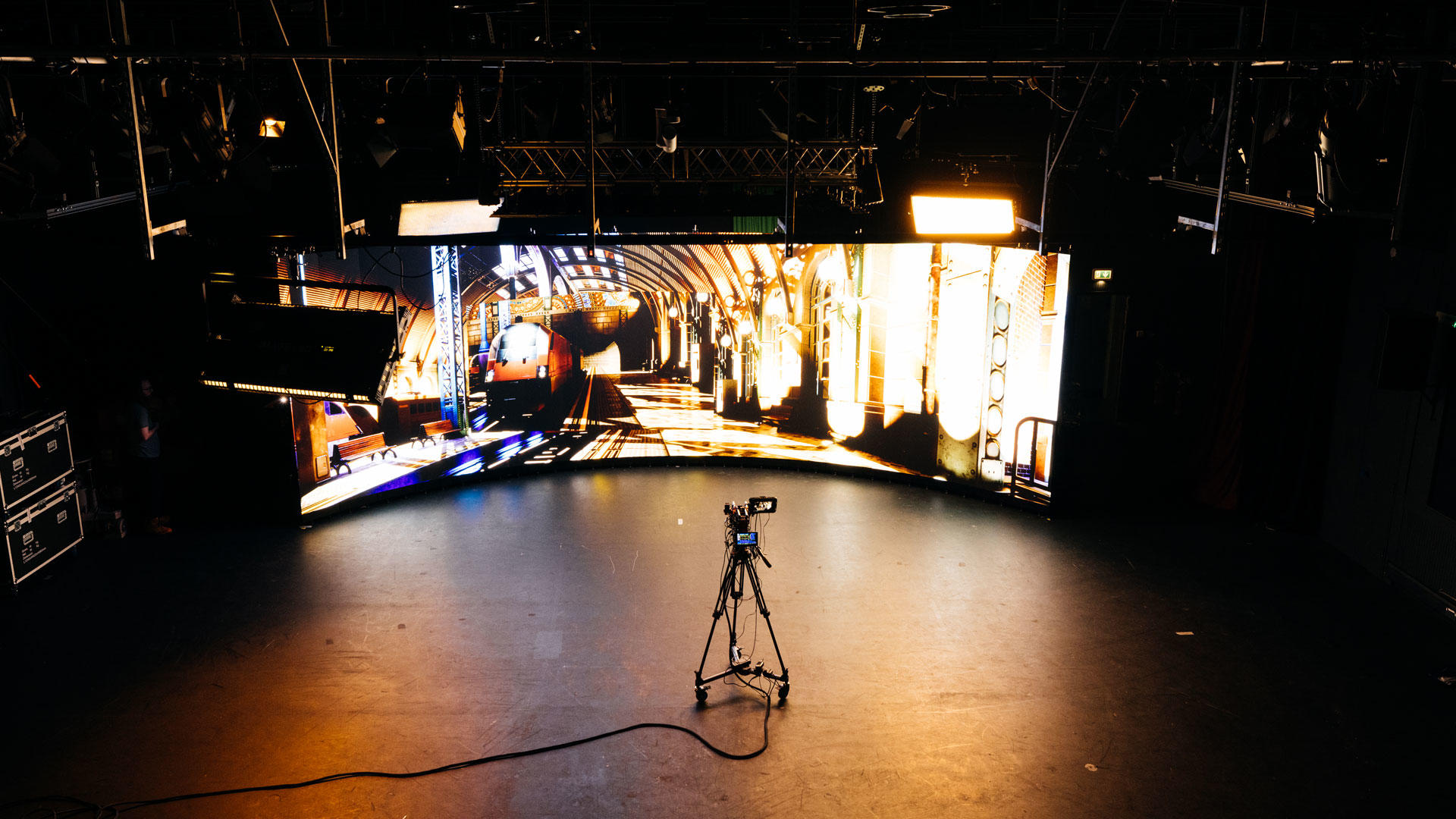
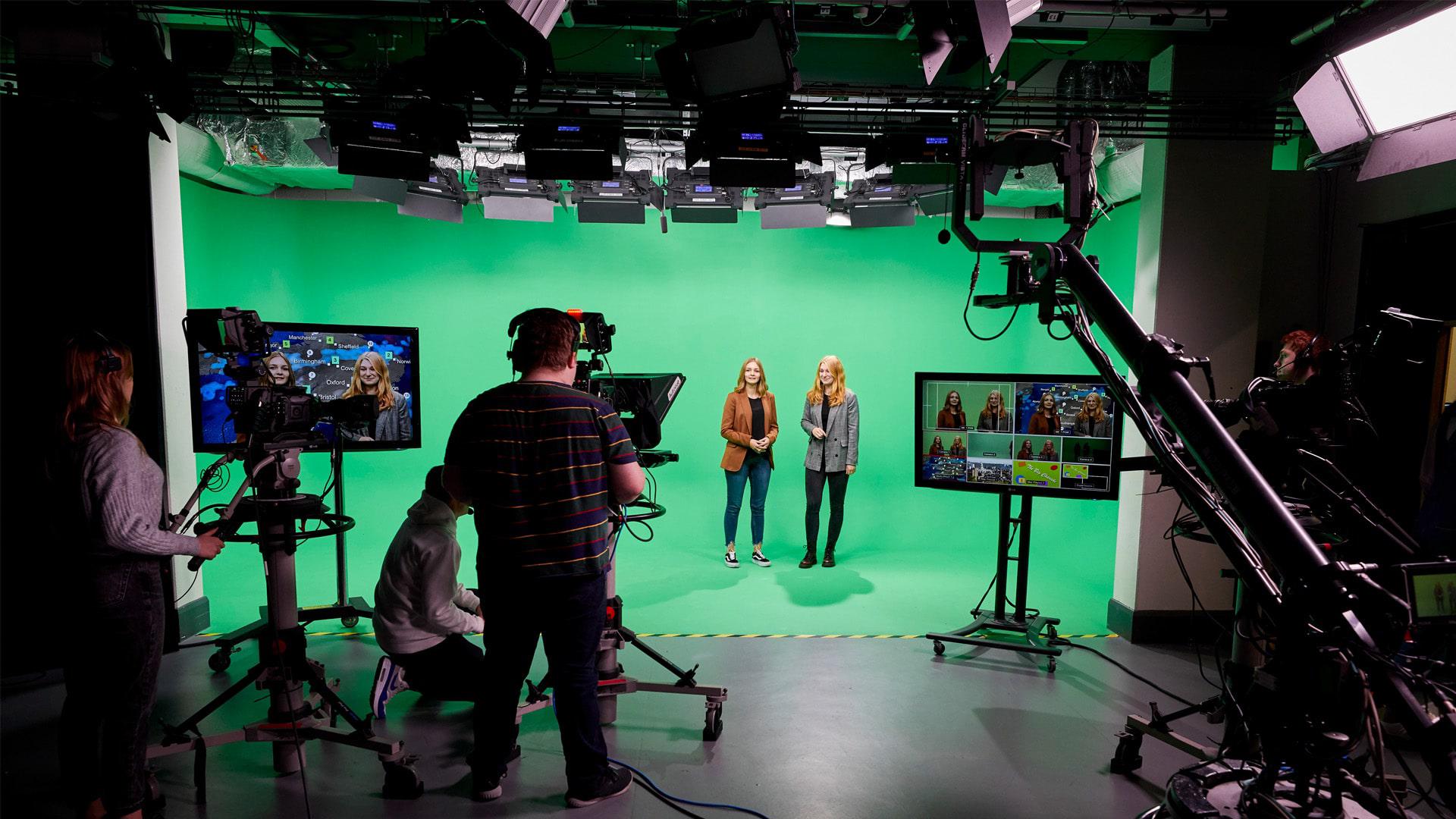
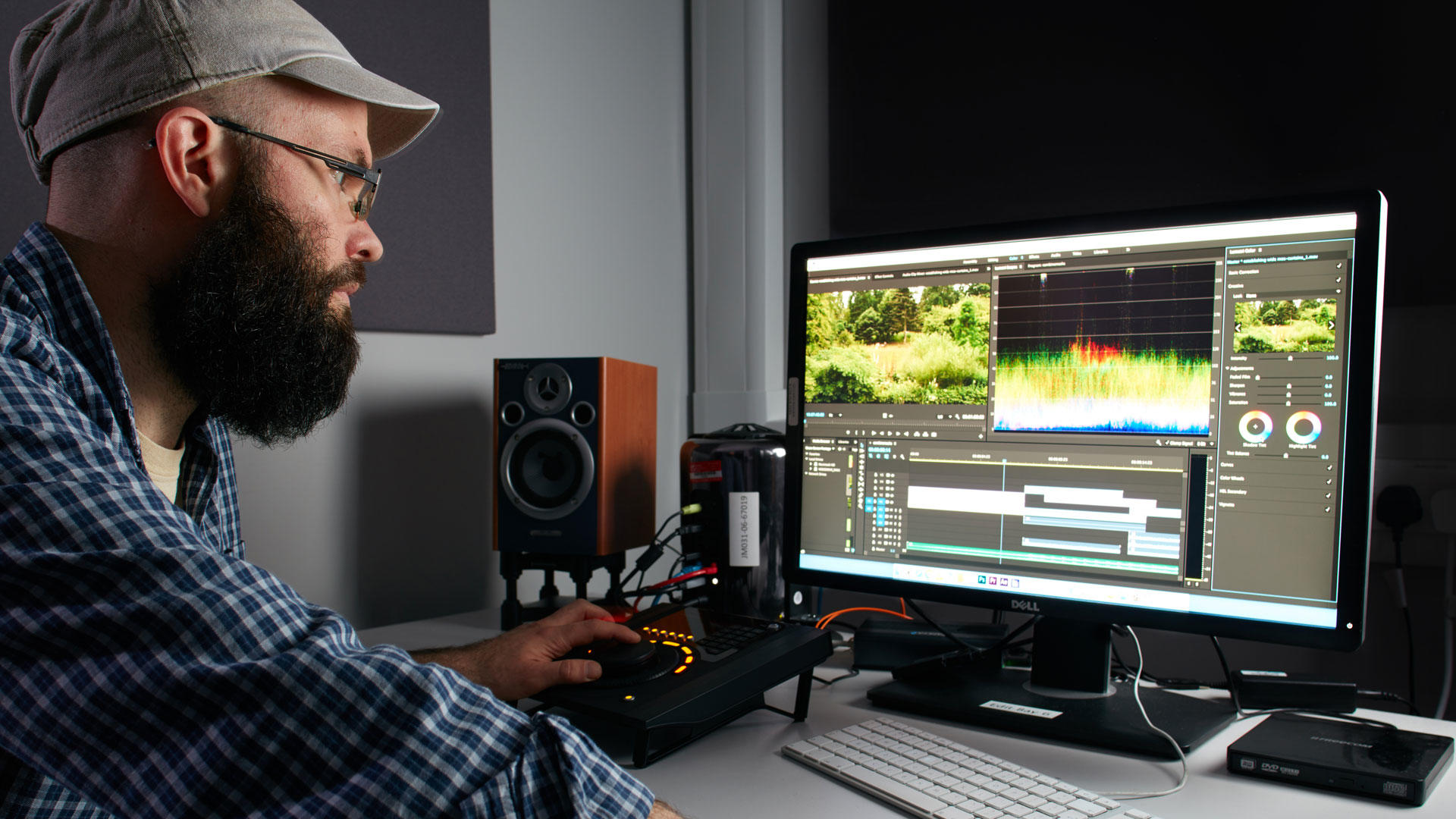
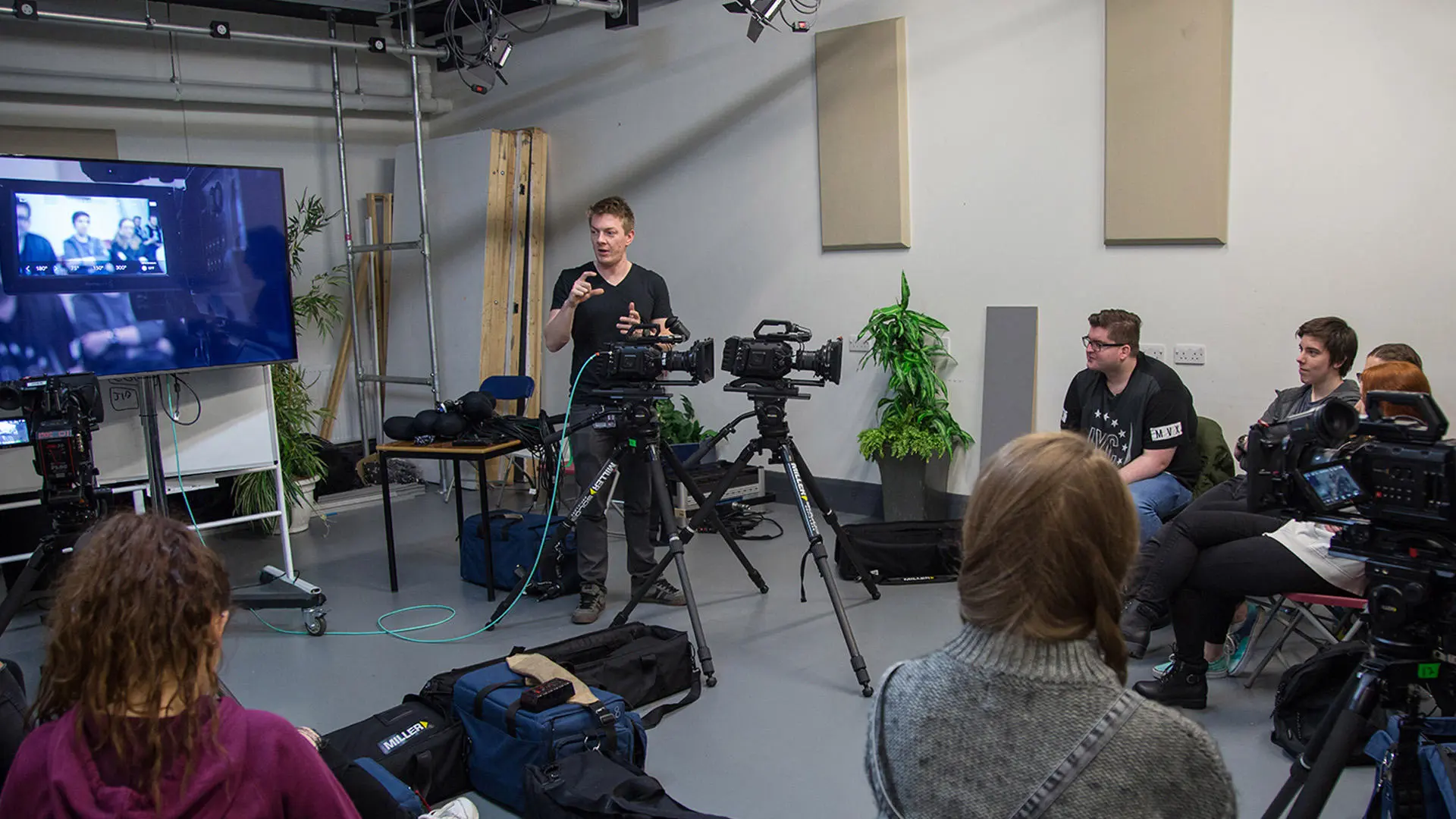
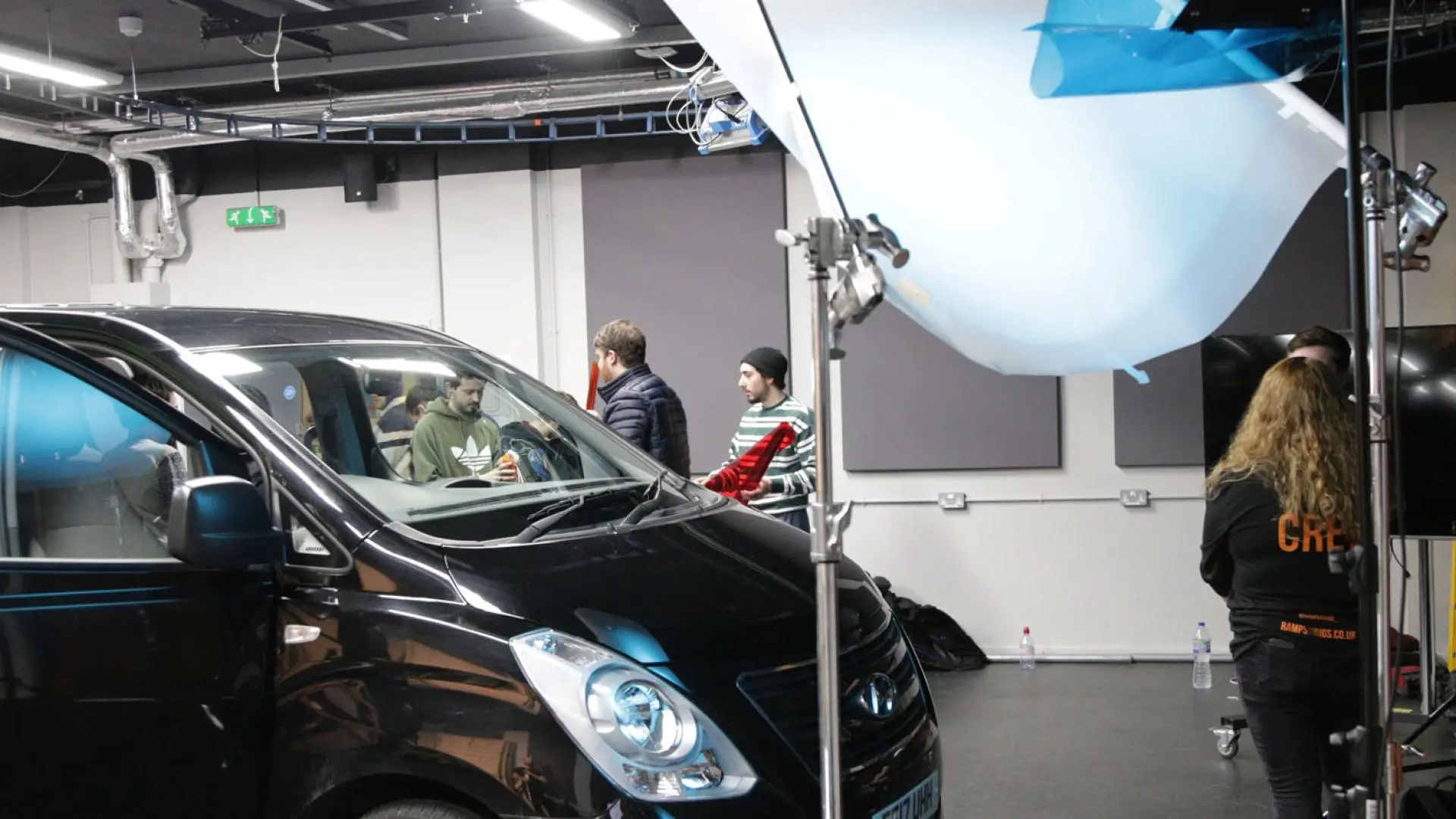
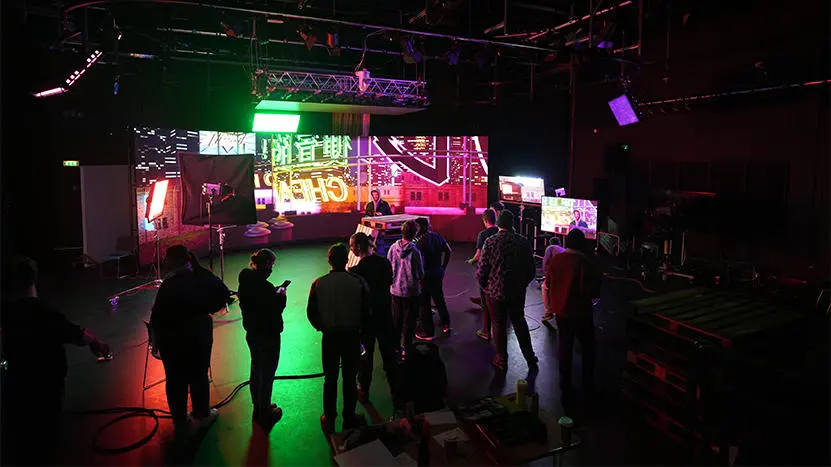
You'll work in some of the largest HD television studios in the south of England, equipped with multi-camera setups, green screen, and virtual production technologies. You'll edit in industry-standard post-production suites using Adobe Creative Cloud and professional workflows. You'll learn from practitioner-academics who bring real-world industry experience and cutting-edge research directly into your teaching. And crucially, you'll have the flexibility to follow your passion - whether that's filmmaking, television production, screenwriting, criticism, or research.
What makes this course different is how we integrate practice with understanding. Your creative work isn't just technically competent - it's informed by cultural context, audience awareness, and critical thinking about representation, ethics, and social impact. You'll explore how political, social, and historical forces shape what appears on screen, while developing the practical skills to create content that reflects today's diverse screen landscape. Through collaborative projects, live briefs, and hands-on production work, you'll build the teamwork, communication, and creative problem-solving skills that employers actively seek.
By final year, you'll complete an independent Final Major Project tailored to your career ambitions—a short film, television pilot, feature screenplay, documentary, or critical portfolio that showcases your unique voice and professional readiness. With BAFTA albert accreditation backing your qualification, industry networking opportunities throughout, and professional development workshops preparing you for the transition from student to working creative, you'll graduate with a portfolio that opens doors and the confidence to walk through them.
If you’re looking to study our film and television degree but don’t have the relevant qualifications or experience, the foundation year in media will help you develop the core skills and knowledge to progress. Find out more about the foundation year in media.

Certified by:
Accredited by:

Educational partner:

Blackmagic Design
Our creative degrees allow our students to develop a critical eye for design with a knowledge of different design approaches and problem solving techniques. Take a look at some of the great work they produce.

If you're the person who watches a film and immediately wants to talk about how it was made, why it matters, and what it means - this course is for you.
Maybe you're already making short films on your phone, writing scripts in your spare time, or running a YouTube channel where you analyse screen content. Perhaps you love the idea of directing but aren't sure yet whether your passion lies in fiction, documentary, or television production. Maybe you're fascinated by how film and TV shape culture, politics, and identity, and you want to create content that contributes to those conversations. Or you might simply know you love screen storytelling and want to explore all its possibilities before specialising.
This course welcomes curious, motivated students who see film and television as more than entertainment - as powerful cultural forces worth both making and questioning. You don't need to arrive with all the answers or a fixed career path. You need intellectual curiosity, creative ambition, and the willingness to collaborate, experiment, and develop your voice across multiple forms of screen practice.
Many graduates build portfolio careers combining freelance production work with teaching, criticism, or entrepreneurship. With streaming platforms, broadcasters, and production companies hungry for diverse voices and skilled storytellers, your career opportunities span traditional broadcast, digital platforms, corporate production, and independent filmmaking.
Alumni have worked with a range of organisations including; BBC, ITV, Sky, Warner Bros, Disney, Ignition, Global Radio, Absolute Post, Fox, Channel 4, Optomen, JOE Media, Royal Caribbean Cruises, Premier League Productions, Microsoft and Digital Cinema Media.
Hear from Solent alumni about where their careers have taken them and how studying at Solent prepared them for their future.
“Seeing your work on TV makes all the long days worth it—it's incredibly rewarding to watch it all come together.”
The University cannot guarantee any particular members of staff will teach specific aspects of the course in the future, but will endeavour to ensure the teaching team maintains their balance of experience and qualifications.
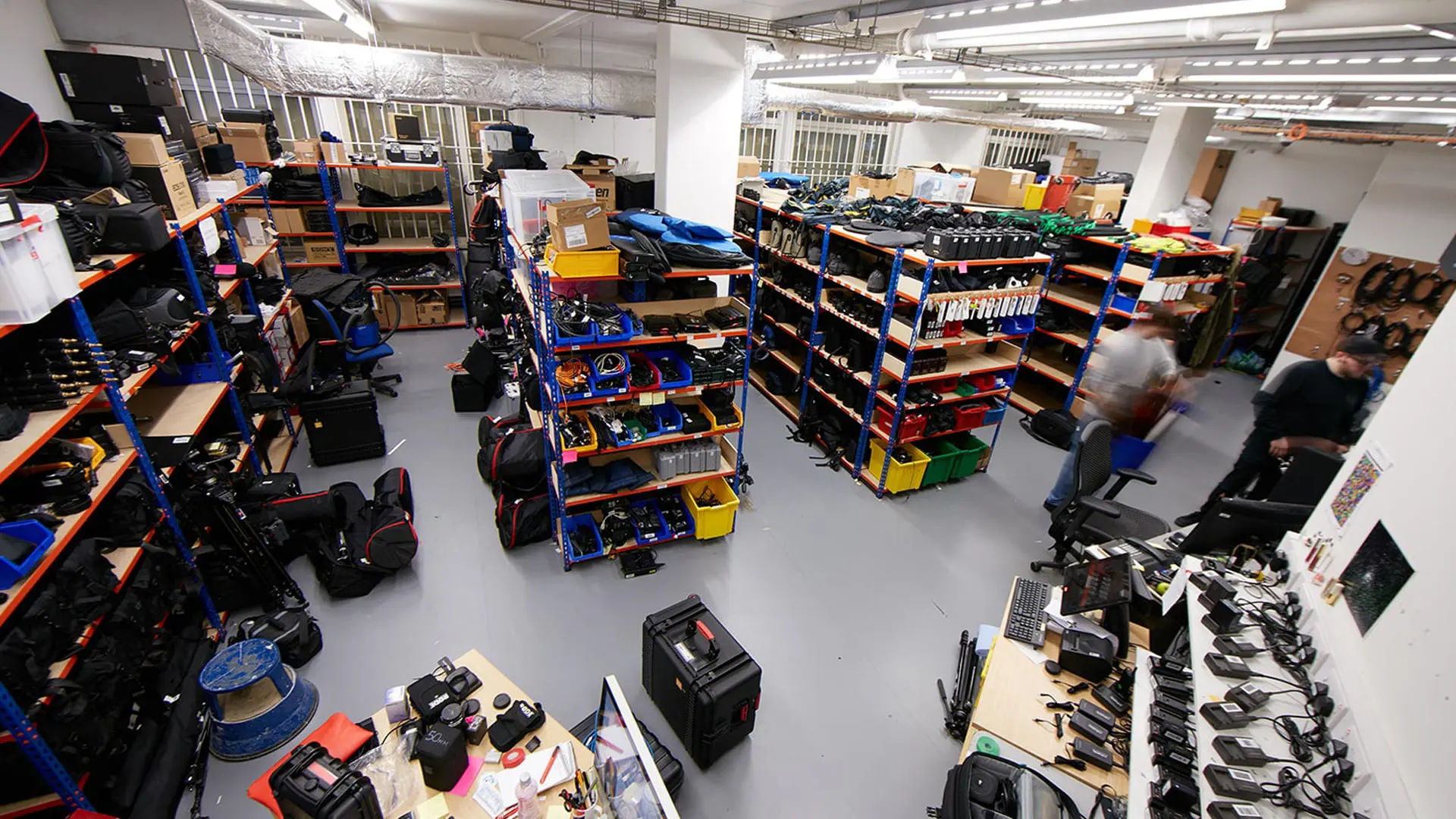
Students will make extensive use of the University’s professional film and television facilities throughout the course. Teaching and assessment take place in industry-standard studios, edit suites and production spaces, supporting both practical production work and research-informed creative practice.
Facilities include multi-camera HD television studios, green screen and virtual production environments, and professional post-production suites equipped with industry-standard software. These spaces are used across core production and practice-based modules to support collaborative learning and professional workflows.
Broaden your horizons by adding an international dimension to your CV – essential to achieving success in today’s fast-changing, global environment.
Studying, working or volunteering in another country could be the experience of a lifetime. Enhance your degree by developing important global skills such as knowledge of other countries, language skills, intercultural awareness, adaptability and confidence.
For more information, please email international.mobility@solent.ac.uk.
Working in small teams, you'll craft an original 3-5 minute short film from concept to screen, mastering the fundamentals of single camera production that every filmmaker needs to know. Through hands-on practice, you'll learn how to frame the perfect shot, capture compelling sound, direct performances, and edit for maximum impact, while discovering how to tell powerful stories. The module culminates in a film showcase where you'll present your work, explain your creative choices, and respond to audience questions just like filmmakers do at festivals worldwide.
In this module you'll explore how stories are crafted across a number of platforms, learning screenwriting fundamentals including premise, structure, character, and dialogue that bring narratives to life. You'll develop your analytical eye by breaking down scenes from your favourite shows then apply those insights to create your own original script extract. You'll also research cultural contexts, genre conventions, and audience expectations while exploring critical issues of representation, diversity, and ethics that shape contemporary storytelling.
In this module you'll learn to transform raw footage into captivating stories that work across every screen. You'll discover how professional editors use pictures, sound, rhythm, and tension to grip audiences, learning the grammar of editing, including continuity, montage, transitions, and motivated cuts that make stories flow seamlessly. Through hands-on workshops, you'll develop both the technical skills and creative eye needed to assemble compelling sequences, understanding how every cut serves the story.
Step into the dynamic world of film and television production with this practice-led module designed to give you hands-on experience from day one. Working in studio and on location, you will explore the full production ecosystem – developing essential skills in camera operation, lighting, sound, and editing workflows. Through interactive workshops, you will gain confidence in teamwork, professional practice, and creative problem-solving. You'll also learn health and safety protocols and understand how technical decisions shape creative outcomes across screens.
This module gives you the opportunity to collaboratively explore the exciting area of Virtual Production from the perspective of your chosen specialist area. In this way you can apply learning from your own practice to this highly interactive and interdisciplinary format.
This module enables you to craft compelling documentaries from concept to screen using industry-standard cameras and equipment. Whether responding to live briefs from industry partners or developing your own original idea, you'll master the complete production cycle and you'll be guided through everything with personalised tutorials focused on your creative vision. Choose your assessment path - produce a documentary with production portfolio or write a critical essay - as you develop the technical skills and analytical frameworks used by today's leading factual filmmakers.
In this module you'll develop advanced skills in cinematography, lighting design, and sound recording, crafting visual narratives through sophisticated shot composition, dynamic camera movement, and premium colour grading. Experience the complete production journey – from script breakdown and shot listing to directing performances and post-production polish. You'll analyse contemporary case studies to understand how opening episodes hook audiences, then apply these insights to create your own opening sequence for a pilot episode or critical analysis that showcases your command of cinematic storytelling.
In this module you'll master the art of film and television criticism across the formats that matter - written reviews, video essays for YouTube and TikTok, and compelling podcasts that spark conversation. This module transforms you into a multi-platform content creator, exploring how screen media engages with representation, ethics, politics, and the issues shaping our world today. Through weekly micro-production challenges, you'll experiment with different journalistic formats while developing your unique critical voice, learning to balance scholarly depth with engaging storytelling that captures audiences.
This module transforms you from student to professional, bridging the gap with real-world connections and strategic career planning. Network with industry professionals through informational interviews, guest speaker events, and sector gatherings, and master the skills employers demand through career-focused workshops. Develop your Individual Learning Plan - a strategic roadmap that identifies your unique strengths, maps transferable skills from your studies, recognises growth areas, and charts concrete next steps into your chosen field - then present and defend it, building the professional communication skills essential for pitches, interviews, and industry meetings.
This module connects you directly to the United Nations' Sustainability and Development Goals (SDGs). You'll earn industry-recognised BAFTA albert accreditation - a credential that opens doors with major broadcasters, streaming platforms, and production companies committed to sustainable practices. Working with real external clients on live sustainability briefs, you'll develop professional-grade projects that matter. Analyse contemporary case studies of films and TV shows tackling climate change, social justice, and economic inequality while mastering storytelling techniques that move audiences to action.
This module is where your final major project truly begins - whether you're preparing a dissertation, screenplay, film/television production, or screen criticism portfolio. Master professional research methodologies through workshop-based seminars, learning to evaluate primary and secondary sources, map the critical field of your subject, and identify gaps in existing knowledge or the market that your project will address. Consider contemporary cultural issues, and engage with screen representations that inspire your unique response, developing your project and crafting a compelling rationale with a detailed plan that gives you confidence and direction.
The Final Major Project enables you to produce one extraordinary, defining piece of work that's entirely yours. Choose your path - create a compelling short film, write a competition-ready screenplay, produce an academic dissertation, or build a professional screen criticism portfolio. You'll pitch your idea, manage your timeline, navigate real challenges, and present your progress with supervisors acting as critical friends throughout your journey. This isn't just coursework - it's authentic industry practice that develops the independence, resilience, and project management skills employers and graduate programmes actively seek.
Contact international admissions
Email: Call:As part of this course, you will study one module at a time, giving you the chance to build a deeper understanding and see the results of your hard work more quickly. With regular assessments and feedback, rather than exams all at once, you’ll also benefit from improved focus, and a more manageable workload.
Learn more about block teaching
The student achievement team are on hand to help you succeed during your studies at Solent. They aim to contact you at key times during your time here with personalised information, advice and guidance, by email or phone.
The disability advice team provides information, advice and guidance for disabled students.
All students can access Succeed@Solent, Solent's online guide to getting better grades. It offers extensive, practical information and advice on topics such as academic writing, research and presentations.
The film and television industry continues to grow as demand for high-quality screen content expands across streaming platforms, broadcasters and digital media, offering diverse and evolving career opportunities.
Spend on UK film and high-end TV production was £4.23bn in 2023, of which, £2.87bn was invested in 187 high-end television production (HETV) shows and £1.36bn was spend on producing 207 feature films. With a strong creative industry there are wide ranging roles in film and television and beyond, including camera operator, editor, producer, vision mixer, location manager, researcher, script writer and more.
With an academic team made up of active filmmakers and creative practitioners, at Solent you can access a wealth of experience and build networks by working on live client briefs both within and beyond the curriculum.
There is also a visiting speaker and masterclass programme from a diverse number of industry guests, and recent speakers have included; Maisie Williams (Game of Thrones), Paul Franklin (Batman Begins, Inception), Terry Rawlings (Alien, Blade Runner), Jan Harlan (The Shining, Full Metal Jacket), Walter Murch (Apocalypse Now, The Godfather Trilogy), Michael Apted (The World is Not Enough, Masters of Sex), Mike Hodges (Get Carter, Croupier), Fay Rusling (Green Wing, Smack the Pony), Dave Calhoun (Time Out).
Over 250 students and graduates have also had their work (writing, video essays, photography) published in Diegesis magazine, which is produced by staff and students in the film department, and published in print and online.
Per day: £230 to £360
For a camera assistant, Bectu recommends a day rate of between £230 and £360, depending on the type of television programme, based on a nine-hour day, plus a one-hour break for lunch. For a studio cameraperson, the recommended day rate rises to £325 for 9 hours, plus lunch, and £415 for 11 hours, plus lunch. On major motion pictures camera operators earn a day rate of £723 for 10 hours, plus lunch and £831 for 11 hours, plus lunch.
Starting salary: £18,000 to £25,000
Starting salaries for assistant editors employed by a television or post-production studio are in the region of £18,000 to £25,000. With experience as a film or video editor, you could earn £21,000 to £35,000. At a senior level, your earnings could potentially reach £37,000 to £70,000, but the higher end of this scale is only available to senior editors working on big-budget projects.
Per hour: £22 to £28
Many television production coordinators are freelance and are paid on a contract basis. Rates depend on the type of production and its budget, with pay at a suggested £22 to £28 hourly rate by the Broadcasting Entertainment Cinematograph and Theatre Union (BECTU). According to the Televisual Salary Survey 2017, the average salary for production coordinators is £30,600.
The stated salaries are published on prospects.ac.uk. Income figures are intended as a guide only.
Hear from Solent alumni about where their careers have taken them and how studying at Solent prepared them for their future.
“Seeing your work on TV makes all the long days worth it—it's incredibly rewarding to watch it all come together.”
The Solent Careers team is committed to getting students into great careers.
While you are studying, the team can help you with finding work experience or placements, link you with a mentor, check your CV, or offer one-to-one guidance.
We also have graduate job opportunities just for Solent graduates.

Top 25%
of UK unis for sustained employment
Longitudinal Educational Outcomes, 2025
Every student at Solent University will also have the option to study an additional Certificate in Practical Artificial Intelligence qualification alongside their course. Free of charge, the course ensures you'll be prepared for a fantastic and varied career after graduation.

Thinking about studying further than an undergraduate degree? Alumni can get 20% off their postgraduate study.

Got a passion for filmmaking? Want to improve your professional showreel and boost your employability? Solent’s MA Film Production programme is ideally suited to students who...
Find out more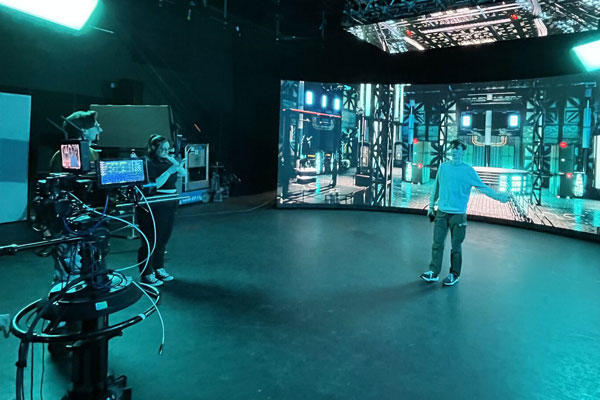
Explore, experiment and learn the industry skills to become a trailblazer in virtual production (VP) and extended reality (XR) using Solent's VP volume, XR green screen studio, Vicon mocap, and body scanner.
Find out more
Do you have an eye for design? Would you like to help influence the future of visual communications? Our MA Visual Communication degree is ideal for creatives keen to refine their practice, working as part of an interdisciplinary group of students.
Find out moreThe tuition fees for the 2026/27 academic year are:
For further information, please visit our tuition fees page.
While most course costs are covered by your tuition fees, some essential resources and optional extras may need to be paid for separately. These additional costs are listed below. For advice on budgeting and managing your money, please contact student.funding@solent.ac.uk.
The additional costs for this academic year are not yet available. For guidance, previous additional costs have been:
Compulsory costs
Students may be required to self-finance up to £300 for their final major project film or TV productions. Students choosing to raise a budget for their productions are encouraged to crowdfund and seek advice from project supervisors on budgetary matters where applicable. Financial assistance is available for students facing financial difficulties and will be determined based on their individual situation through an eligibility assessment.
Optional costs
The course features optional trips to international film festivals. These trips are subject to student demand. Prices will be dependent on the location of the trip as well as the travel and accommodation costs at the time of booking.
Solent University offers a range of bursaries and scholarships that provide financial assistance or waive fees for tuition or accommodation. Each bursary or scholarship has specific eligibility criteria. Check out our bursaries and scholarships pages to find out more.
Cost of living support
At Solent, we understand that the cost of living crisis may be of some concern. To help, we've put together some detailed information to show what support is available and how to make your money go further.
Graduation costs
There is no charge to attend graduation, but you will be required to pay for the rental of your academic gown (approximately £45 per graduate, depending on your award). You may also wish to purchase official photography packages, which range in price from £15 to £200+. Graduation is not compulsory, so if you prefer to have your award sent to you, there is no cost. Extra guest tickets will go on sale after results publication and will be sold on a first-come-first-served basis. The cost per ticket is currently £20. Please note, we do not guarantee there will be any extra tickets available to purchase.
Contact international admissions
Email: Call:Please select an option below:
As a general guide, we look for qualifications that are equivalent to the British high school A-levels.
If you are applying from outside the UK, find information about entry requirements, visas and agents for your country here.
For further information about EU qualifications, please see our course entry requirements document.
For international students who do not meet the direct entry requirements for this undergraduate degree, our trusted partner, QA Higher Education offers the following pathway programme designed to develop your academic and English language skills:
As a general guide, we look for qualifications that are equivalent to the British high school A-levels.
If you are applying from outside the UK, find information about entry requirements, visas and agents for your country here.
For further information about international qualifications, please see our course entry requirements document.
For international students who do not meet the direct entry requirements for this undergraduate degree, our trusted partner, QA Higher Education offers the following pathway programme designed to develop your academic and English language skills:
All international applicants need to be aware that the English language requirements to attend Solent University, and the English language requirements to obtain a visa from the Home Office, may be different. This means that if you meet the Solent University language requirement to gain a place on the course, you may still have to meet additional requirements to be granted with a visa by the Home Office.
We strongly advise all applicants to visit the Home Office website which outlines all the requirements for a successful visa application.
Full-time
Any student applying for the first year of a full-time/sandwich undergraduate course must apply through UCAS (University and Colleges Admissions Service). This includes mature, overseas and EU students.
Nearly all schools and colleges offer their students the facility of applying electronically through the UCAS website using 'Apply'; it may also be used by those applying independently in the UK and overseas. This facility and all course information can be found on the UCAS website: www.ucas.com.
Your application should reach UCAS by 14 January if you hope to enter a course the following autumn. Early application is advised for the most popular subject areas. Late applications may be made until the end of June. The UCAS Code for the University is S30, code name SOLNT.
Find out what happens after you apply
Contextual offers
Solent endeavours to offer learning opportunities to students from all backgrounds. When we receive and review an application, we take into consideration the context and personal circumstances of applicants when making a decision, which means our advertised entry tariff could be reduced.
Find out more about Solent's contextual offers
Top-up route:
We welcome applications from students currently studying a Foundation Degree, DipHE, HNC, HND or modules of an undergraduate degree course at another university, who wish to enter directly into Years 2 or 3 of one of our undergraduate degree courses. Please contact our admissions team for more information: contact us
Applicants who do not have English as their first language will be required to demonstrate an approved level of proficiency in the use of the English language. The agreed minimum requirements for this course are:
TOEFL IBT tests taken prior to 21 January 2026
TOEFL IBT tests taken from 21 January 2026
Qualifications are checked before enrolment, and international students must bring their original certificates or certified copies when coming to study at the University.
Pre-Sessional English programme
The University also offers a pre-sessional English programme for international students who wish to improve their level of English before starting a degree course.
Contact international admissions
Email: Call: